
Medical Disclaimer
The information on this website is for educational purposes only and is not a substitute for professional medical advice, diagnosis, or treatment. Always consult a qualified healthcare provider before starting any hormone therapy. Individual results may vary. TRTmatch does not provide medical services or prescribe medications.
Key Takeaways
- TRT is an FDA-recognized treatment for clinically low testosterone (hypogonadism), not a lifestyle supplement — proper diagnosis is essential before starting.
- The most commonly reported benefits include improved energy, libido, mood, body composition, and sleep quality, often noticeable within 3-8 weeks.
- Side effects like elevated hematocrit, estrogen conversion, and temporary fertility reduction are well understood and manageable with proper medical supervision.
- TRT works best as part of a comprehensive health approach — combining therapy with resistance training, sleep, and nutrition consistently produces the best outcomes.
- The cost of TRT has decreased significantly; options range from $50-$300/month, with online clinics offering all-inclusive packages that make access easier than ever.
- Finding a qualified, monitoring-focused provider is the single most important factor in having a safe, effective TRT experience.
If you've been feeling drained, foggy, or just not yourself lately, you've probably started asking the question thousands of men ask every year: is TRT worth it? Testosterone replacement therapy has helped millions of men reclaim their energy, confidence, and quality of life — but it's also a medical treatment that deserves a thoughtful, informed decision. This article will walk you through the honest pros and cons, what real men experience, and how to know if TRT is the right path for you.
Medical disclaimer: This article is for educational purposes only and does not constitute medical advice. Always consult a qualified healthcare provider before starting any hormone therapy.
If you're not sure whether your symptoms point to low testosterone, consider taking the free Low T symptom quiz to get a clearer picture before speaking with a provider.

What Is TRT and Who Is It For?
Testosterone replacement therapy (TRT) is an FDA-recognized medical treatment designed to restore testosterone levels in men diagnosed with hypogonadism — the clinical term for chronically low testosterone. It's not a performance-enhancing shortcut or a wellness trend; it's a legitimate therapy prescribed and monitored by licensed physicians.
According to the American Urological Association (AUA), hypogonadism is diagnosed when total testosterone falls below 300 ng/dL alongside symptoms that meaningfully impact quality of life. That threshold matters — TRT is most effective and appropriate for men who meet both criteria, not just one.
TRT is available in several delivery formats, each with different advantages depending on your lifestyle and medical profile. Common options include:
- Intramuscular or subcutaneous injections (testosterone cypionate or enanthate)
- Topical gels and creams applied daily to the skin
- Transdermal patches worn on the body
- Subcutaneous pellets implanted under the skin every 3-6 months
- Oral or buccal formulations for select patients
To understand the full landscape of options, check out our guide on TRT Injections vs Gel: Which Is Better? and our overview of What Is Testosterone Replacement Therapy (TRT)?
The right format depends on your lab results, lifestyle, cost considerations, and doctor's recommendation. A qualified TRT provider will walk you through all of these factors at your first consultation. If you haven't done that yet, read our guide on Your First TRT Consultation: What to Expect so you know what's ahead.
Men between the ages of 30 and 70 are most commonly treated with TRT, though low testosterone can affect men at any age. If you're over 40 and wondering whether your symptoms are age-related or clinical, our article on Low Testosterone Symptoms After 40 (What's Normal?) is a great starting point.
The Real Benefits of TRT: What Men Actually Experience
When men ask whether testosterone replacement therapy is worth it, they're usually thinking about results — not lab values. And the research, along with the experiences of hundreds of thousands of men, paints a genuinely compelling picture.
Energy, Mood, and Mental Clarity
One of the most commonly reported benefits is a dramatic improvement in energy levels. Men who previously struggled to get through the workday without fatigue often describe feeling like themselves again within weeks of starting therapy. A 2017 randomized controlled trial published in the New England Journal of Medicine (the Testosterone Trials) found significant improvements in sexual function, physical capacity, and mood in men with low testosterone treated with TRT compared to placebo.
Brain fog — that frustrating inability to think clearly or stay focused — is another symptom that many men report fading after their testosterone levels normalize. While research is still building in this area, clinical observations are consistent: cognitive sharpness often improves alongside energy and mood.
Libido and Sexual Function
Low testosterone is one of the leading physiological causes of reduced sex drive in men. TRT has a well-documented track record of improving libido and, in many cases, erectile quality. For a deeper look at this specific benefit, see our article on TRT for Low Libido: Does It Work?
Body Composition and Muscle
Testosterone plays a central role in maintaining lean muscle mass and regulating fat metabolism. Men on TRT often notice a gradual shift in body composition — reduced fat accumulation (particularly around the abdomen) and improved ability to build and maintain muscle. This isn't overnight, but men who combine TRT with resistance training typically see meaningful results within 3-6 months. Learn more in our guide on TRT and Muscle Growth: What to Expect and TRT and Weight Loss: Can It Help You Burn Fat?
Sleep Quality
Many men with low testosterone report poor or non-restorative sleep. Research suggests that restoring healthy testosterone levels can support better sleep architecture and reduce insomnia. Read more in TRT and Sleep: Does Testosterone Improve Sleep?
The timeline for these benefits varies. Some men notice changes in mood and energy within 3-6 weeks, while improvements in muscle mass and body composition can take 3-6 months. For a full breakdown, see How Long Does TRT Take to Work?

Is TRT Worth It? Understanding the Potential Side Effects
No medical treatment is without considerations, and TRT is no exception. But here's the key insight: the side effects associated with TRT are well understood, predictable, and in the vast majority of cases manageable with proper medical supervision. This is not a list of reasons to avoid TRT — it's a guide to having an informed conversation with your doctor.
Is TRT Worth It When You Consider Fertility?
TRT suppresses the body's natural production of luteinizing hormone (LH) and follicle-stimulating hormone (FSH), which signal the testes to produce testosterone and sperm. This means that exogenous testosterone can reduce sperm production, and in some cases, temporarily affect fertility. For men who are actively trying to conceive, this is an important consideration — your provider may recommend alternatives like clomiphene or HCG to preserve fertility while addressing low testosterone. With the right approach, fertility-friendly options exist for nearly every man in this situation.
Polycythemia (Elevated Red Blood Cell Count)
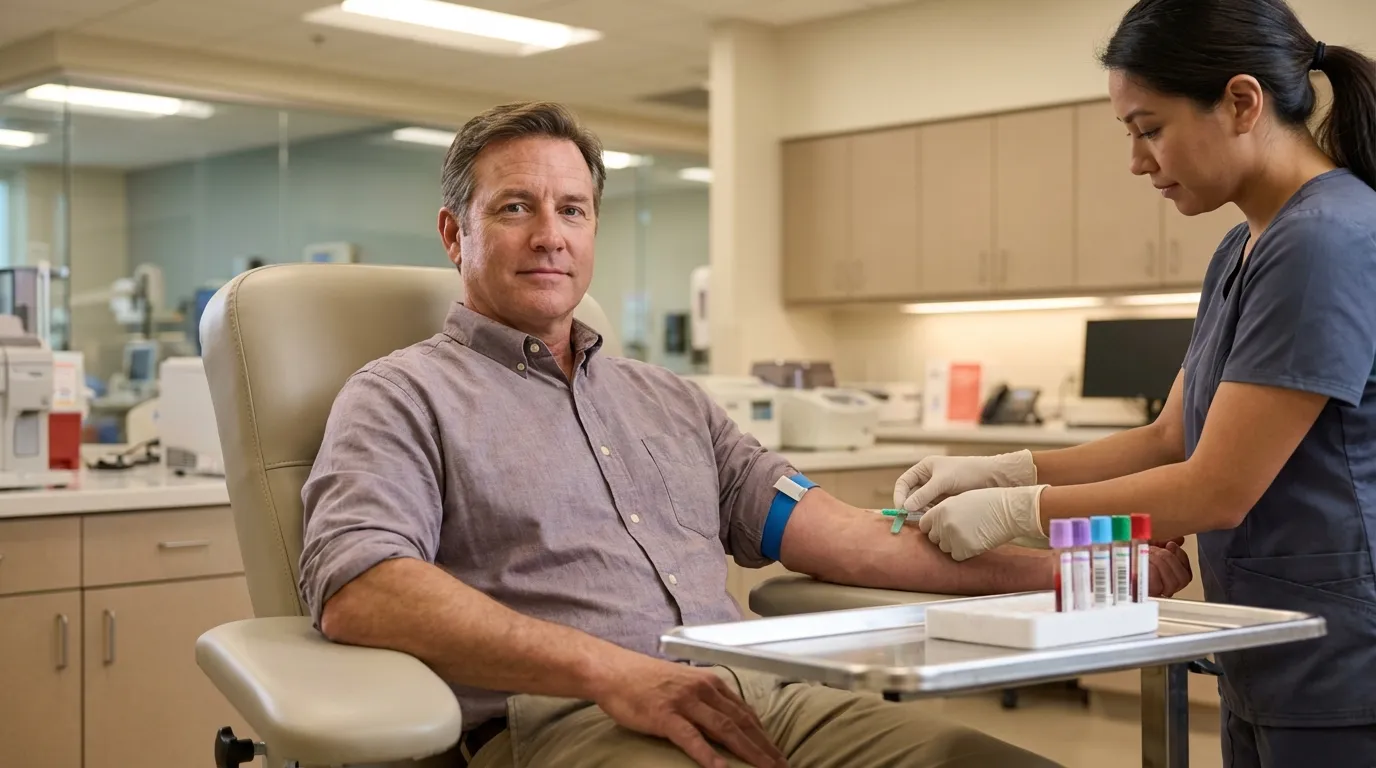
TRT can stimulate red blood cell production, which in some men leads to elevated hematocrit levels. When hematocrit rises too high, it can theoretically thicken the blood. This is exactly why routine blood monitoring is a standard part of any well-managed TRT protocol — your provider will check your hematocrit at regular intervals and adjust your dose or recommend therapeutic phlebotomy if needed. This is a manageable and well-understood aspect of therapy, not a reason for concern when you're working with a qualified provider.
Estrogen Conversion
Testosterone naturally converts to estradiol (estrogen) via an enzyme called aromatase. In some men on TRT, estrogen levels can rise, leading to symptoms like water retention or mood changes. A knowledgeable provider will monitor your estradiol levels and may prescribe an aromatase inhibitor if necessary. This is routine management in a good TRT practice. For more detail, see our article on Estradiol in Men on TRT: What You Need to Know.
Skin and Other Minor Effects
Some men experience mild acne, slight increases in body hair, or temporary testicular shrinkage (due to reduced natural production) when starting TRT. These effects vary in severity and frequency, and many resolve or can be mitigated with dosing adjustments. For a complete picture of what to expect, visit our dedicated article on TRT Side Effects: What to Expect (And How to Manage Them).
The bottom line: every side effect associated with TRT has a management strategy. The right provider doesn't just prescribe and disappear — they monitor your labs, adjust your protocol, and work with you to optimize your experience over time.
What Do Real Men Say About TRT?
Clinical data is important, but men making this decision also want to know: what does it actually feel like? Based on widespread patient reports, forum discussions, and clinical case studies, the experiences tend to cluster around a few consistent themes.
Men who respond best to TRT are typically those who had a clear clinical diagnosis, worked with an experienced provider, followed their protocol consistently, and combined therapy with healthy lifestyle habits like strength training, sleep hygiene, and proper nutrition. These men commonly describe TRT as life-changing — a return to the version of themselves they remember from their 20s and 30s.
Men who have mixed or neutral experiences often fall into a few categories: those who started with borderline-low levels and didn't have a strong symptom picture, those who were underdosed or poorly monitored, or those who expected TRT to compensate for poor sleep, diet, or high stress without making lifestyle changes. TRT is not a magic bullet — it's a medical foundation that works best when the rest of your health is being addressed too.
For an in-depth look at documented outcomes, visit TRT Before and After: Real Results Explained.
| Benefit Area | Typical Onset | Percentage of Men Reporting Improvement |
|---|---|---|
| Energy and fatigue | 3-6 weeks | ~75-80% |
| Libido | 3-6 weeks | ~70-80% |
| Mood and mental clarity | 3-8 weeks | ~60-75% |
| Body composition | 3-6 months | ~60-70% |
| Sleep quality | 4-8 weeks | ~55-65% |
These figures are approximate and drawn from aggregate clinical data and patient surveys. Individual results will always vary based on starting testosterone levels, age, overall health, and protocol quality.
How to Know If You're a Good Candidate for TRT
Before deciding whether testosterone replacement therapy is right for you, a proper evaluation is essential. This involves more than a single blood test — it requires a clinical picture that combines lab results with your symptom experience.
Start by understanding your testosterone levels in context. Total testosterone is the most commonly tested marker, but free testosterone and SHBG (sex hormone-binding globulin) are also critical pieces of the puzzle. Men with normal total testosterone but low free testosterone can still experience the full range of low T symptoms. To understand why, read Free vs Total Testosterone: What Really Matters? and our guide on What Is SHBG and Why It Matters for TRT.
Common signs that you may be a good candidate for evaluation include:
- Persistent fatigue or low energy that doesn't resolve with adequate sleep
- Reduced sex drive or difficulty with sexual performance
- Loss of muscle mass or increased body fat despite normal activity
- Mood changes, irritability, or mild depression
- Brain fog, poor concentration, or memory issues
- Reduced motivation or sense of drive
If several of these resonate with you, the first step is getting a comprehensive testosterone blood panel. Our article on Testosterone Blood Test Levels Explained (Total vs Free) explains exactly what your results mean. You can also review Testosterone Levels by Age (Full Chart + Explained) to understand where you stand relative to your age group.
Before jumping straight to TRT, it's also worth exploring whether lifestyle modifications could meaningfully improve your levels. Our guide on How to Increase Testosterone Naturally (Before TRT) covers evidence-based approaches like sleep optimization, resistance training, and dietary changes that can support testosterone production.
If you haven't yet identified what may be causing your low testosterone, What Causes Low Testosterone in Men? is a useful primer before your first appointment.
The Cost of TRT: Is It Affordable?
Cost is a practical concern that influences whether TRT is truly worth it for many men. The good news is that TRT has become significantly more accessible and affordable over the past decade, particularly with the rise of online TRT clinics and telehealth platforms.
Broadly speaking, the monthly cost of TRT ranges from around $50 to $300 per month depending on the delivery method, provider type, and whether you're using insurance. Testosterone injections tend to be the most affordable option, while pellets and certain topical formulations can cost more. On top of the medication itself, factor in consultation fees, lab testing (typically every 3-6 months), and follow-up appointments.
For a full breakdown, our detailed guide on How Much Does TRT Cost: Full Price Breakdown (Monthly + Yearly) covers everything from generic testosterone cypionate to premium clinic memberships.
Online TRT clinics have dramatically lowered the barrier to entry. Many offer all-inclusive monthly subscriptions that bundle consultations, labs, and medication — making it easier than ever to get started without navigating complex insurance paperwork. See our guide to Best Online TRT Clinics (Pros, Cons & Pricing) for a curated comparison.
If you prefer in-person care, Find a TRT clinic near you using our clinic directory, which lists vetted providers across the country. We also have state-specific pages for men in TRT clinics in Texas, TRT clinics in California, and TRT clinics in Florida.
How to Find the Right TRT Provider
The quality of your TRT experience depends enormously on the quality of your provider. A thorough, attentive physician makes all the difference — not just in initial diagnosis, but in ongoing monitoring and protocol optimization.
When evaluating a TRT provider, look for these qualities:
- Comprehensive lab work upfront: A good provider orders a full hormone panel — not just total testosterone — before prescribing anything.
- Individualized dosing: Cookie-cutter protocols are a red flag. Your dose should be based on your specific labs, symptoms, and goals.
- Regular follow-up monitoring: Labs should be checked at 6-12 week intervals initially, then every 3-6 months once stabilized.
- Clear communication: Your provider should explain what they're prescribing, why, and what to watch for.
- Willingness to adjust: If something isn't working or you're experiencing side effects, a good provider adapts your protocol — not just reassures you it's fine.
For a step-by-step guide to finding and vetting a provider, read How to Find a TRT Doctor (Step-by-Step Guide) and TRT Clinic Near Me: How to Find the Best One. For a nationally vetted list, check out our Best TRT Clinics in the USA (2026 Guide).
The right provider turns TRT from a shot in the dark into a precision-guided treatment. Don't settle for a provider who isn't willing to take the time to understand your full picture.
So, Is TRT Worth It? The Honest Verdict
For men with clinically confirmed low testosterone and the symptoms to match, the answer to is TRT worth it is — for the vast majority — a clear yes. The benefits are well-documented, the side effects are manageable, and the quality-of-life improvements reported by men on optimized therapy are substantial. This isn't anecdote; it's backed by decades of research and endorsed by major medical bodies including the Endocrine Society and the American Urological Association.
That said, TRT is not a decision to make casually. It's a medical therapy that requires proper diagnosis, a qualified provider, and a commitment to ongoing monitoring. Men who approach it that way consistently report the best outcomes. Those who treat it as a shortcut or skip the diagnostic steps are the ones most likely to be underwhelmed or encounter avoidable issues.
If you've been reading this article and nodding along to the symptoms described, the most important next step is getting your testosterone levels tested and having a genuine conversation with a qualified provider. Take the free Low T symptom quiz to assess your symptom burden, or use our directory to find a TRT clinic near you and book your first consultation.
Is TRT worth it for you specifically? That's a question only your labs, your symptoms, and a good doctor can answer — but the evidence suggests that for men with true hypogonadism, it very often is. Don't spend another year wondering. Get the information you need and take the next step toward feeling like yourself again.
Sources & References
- Testosterone Therapy in Men with Hypogonadism: An Endocrine Society Clinical Practice Guideline — Journal of Clinical Endocrinology & Metabolism / Endocrine Society [Link]
- The Testosterone Trials: Seven coordinated trials of testosterone treatment in elderly men — New England Journal of Medicine [Link]
- Cardiovascular Safety of Testosterone-Replacement Therapy (TRAVERSE Trial) — New England Journal of Medicine [Link]
- American Urological Association Guidelines on Testosterone Deficiency — American Urological Association [Link]
- Testosterone Therapy: What We Know and Don't Know — Mayo Clinic [Link]
- Hypogonadism in Men: Diagnosis and Treatment — Cleveland Clinic [Link]
- Effects of Testosterone Treatment on Body Fat and Lean Mass in Obese Men — PubMed / NCBI [Link]
Frequently Asked Questions
Ready to Take the Next Step?
Check your symptoms with our free quiz or browse 2,500+ verified TRT clinics.