
Medical Disclaimer
The information on this website is for educational purposes only and is not a substitute for professional medical advice, diagnosis, or treatment. Always consult a qualified healthcare provider before starting any hormone therapy. Individual results may vary. TRTmatch does not provide medical services or prescribe medications.
Key Takeaways
- A reputable TRT clinic will diagnose low testosterone with at least two morning blood tests plus a full hormone panel — not symptoms alone.
- Both in-person and online TRT clinics are legitimate options; the right choice depends on your health history, location, and preferences.
- Key things to look for include physician oversight, individualized treatment plans, transparent pricing, and structured lab monitoring every 3–6 months.
- Red flags include prescribing without bloodwork, no follow-up monitoring schedule, and high-pressure sales tactics.
- Most men with confirmed low testosterone begin noticing improvements in energy and libido within 3–6 weeks, with body composition changes appearing after 3–6 months.
- Use a trusted clinic directory, verify provider credentials, and prepare for your consultation with a symptom list and any previous lab results.
If you've been searching for a trt clinic near me, you're not alone. Millions of American men experience low testosterone — a condition that can quietly erode energy, motivation, mood, and quality of life. The good news is that testosterone replacement therapy (TRT) is a well-established, FDA-recognized medical treatment, and finding a qualified provider near you has never been more accessible.
Medical disclaimer: This article is for educational purposes only and does not constitute medical advice. Always consult a licensed healthcare provider before starting any hormone therapy.
Whether you're just beginning to research your options or you've already confirmed low testosterone levels on a blood test, this guide will help you understand what a reputable TRT clinic looks like, what questions to ask, and how to find the right provider for your specific situation. If you're still exploring whether your symptoms point to low T, learn the 10 signs of low testosterone in men before taking the next step.

Why Choosing the Right TRT Clinic Near Me Matters
Not all testosterone clinics are created equal. The quality of your care — from initial diagnosis to ongoing monitoring — depends heavily on the clinical protocols your provider follows. A well-run clinic will do far more than simply prescribe testosterone. It will conduct a thorough evaluation, interpret your lab work in the context of your symptoms, and monitor your health markers over time to keep your treatment both safe and effective.
According to the American Urological Association (AUA), appropriate TRT candidacy requires a confirmed diagnosis of hypogonadism — defined as consistently low serum testosterone alongside clinical symptoms. That means two separate morning blood tests, not just one. Clinics that skip this step and prescribe based on a single number or a symptom checklist alone are cutting corners that matter.
What separates a great clinic from a mediocre one often comes down to monitoring. Testosterone therapy affects multiple systems in the body — red blood cell production, estrogen balance, cardiovascular health, and more. A qualified provider will check your complete blood count (CBC), estradiol (E2), prostate-specific antigen (PSA), and other relevant markers at regular intervals. If you want to understand what those labs mean, read our breakdown of the testosterone blood test and why both total and free testosterone matter.
Choosing carefully also protects you financially. TRT is a long-term commitment, and the costs can vary significantly between clinics. Some bundle labs and consultations into a monthly fee; others charge separately for each visit. Understanding the pricing model upfront prevents surprises down the road. For a full breakdown, see our guide on how much TRT costs monthly and yearly.
In-Person vs. Online TRT Clinics: Which Is Right for You?
One of the first decisions you'll face is whether to seek care from a local, in-person clinic or an online TRT provider. Both are legitimate options — the right choice depends on your preferences, location, and health history.
In-Person TRT Clinics
A local men's health clinic or urology practice offers face-to-face care with a physician you can meet in person. This is often preferred by men who have complex health histories, existing conditions that require closer monitoring, or who simply feel more comfortable with an in-person relationship. In-person providers can also perform physical exams and administer certain treatments (like injections) at the clinic if needed.
The trade-off is convenience. Appointments, traffic, and wait times add up. Some areas also have a limited number of qualified TRT providers, which can mean longer waits or narrower choices. If you're in a state like Texas, California, or Florida, you'll find a robust network of clinics — you can browse TRT clinics in Texas, explore TRT clinics in California, or find TRT clinics in Florida directly through our directory.
Online TRT Clinics
Telehealth has transformed access to hormone therapy. Online TRT clinics allow you to consult with a licensed physician via video, receive lab orders electronically, and have medications shipped directly to your door. This model works well for men with straightforward low T presentations, busy schedules, or limited local options.
The key is ensuring the online clinic still follows evidence-based protocols — proper diagnostic testing, regular lab monitoring, and physician oversight. For a detailed comparison, check out our guide on the best online TRT clinics, including pros, cons, and pricing.
What to Look for in a Testosterone Clinic
Whether you're evaluating a local men's health clinic or an online provider, the following criteria should guide your decision. A clinic that checks all these boxes is one you can trust with your long-term hormonal health.
Comprehensive Diagnostic Testing
Before any prescription is written, a reputable clinic will order a thorough hormone panel. This should include total testosterone, free testosterone, sex hormone-binding globulin (SHBG), estradiol, LH, FSH, PSA, CBC, and a comprehensive metabolic panel. Understanding why SHBG matters — not just total T — is critical to accurate diagnosis. Learn what SHBG is and why it matters for TRT before your first appointment.
Licensed Physicians, Not Just Nurse Practitioners
Ideally, your TRT provider should be a physician with experience in endocrinology, urology, or men's health. Nurse practitioners and physician assistants can be excellent clinicians, but make sure there is physician oversight in the practice. Hormone therapy is nuanced — small adjustments in dosage or delivery method can have meaningful clinical effects.
Individualized Treatment Plans
A good clinic doesn't apply a one-size-fits-all protocol. Your starting dose, delivery method (injections, gels, pellets, or patches), and monitoring schedule should be tailored to your lab results, symptoms, lifestyle, and health history. If a clinic immediately pushes one specific product without discussing alternatives, that's worth noting. To compare options, read our article on TRT injections vs. gel.
Ongoing Monitoring and Follow-Up
TRT is not a set-it-and-forget-it treatment. Labs should be repeated at 3 months after starting, then every 6–12 months thereafter. Your provider should be checking estradiol balance, hematocrit levels, PSA, and symptoms at each follow-up. Clinics that don't schedule regular monitoring visits are not providing the standard of care you deserve.
Transparent Pricing
Ask upfront: What does the initial consultation cost? Are labs included? What is the monthly fee, and what does it cover? Are there cancellation fees? A trustworthy clinic will answer these questions clearly and without pressure.
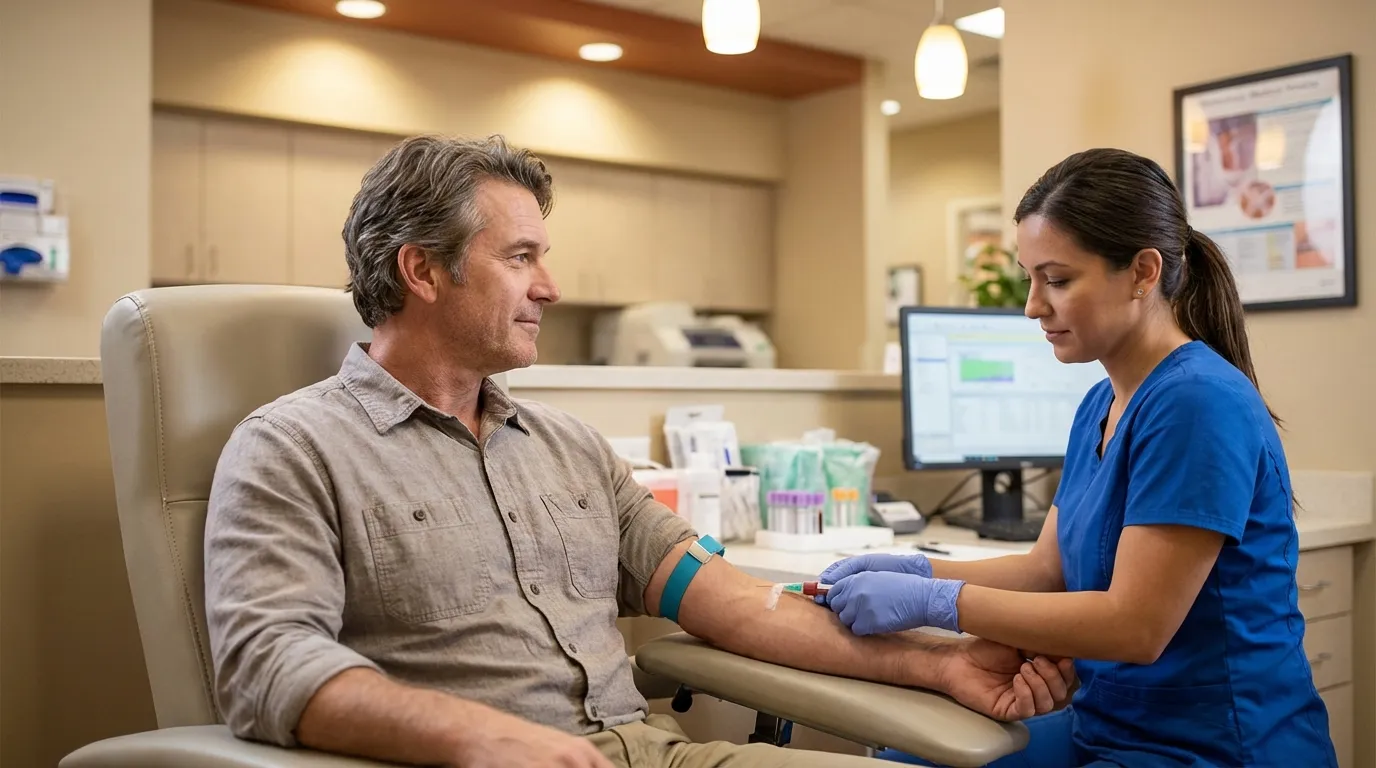
Red Flags to Avoid When Searching for a TRT Clinic
Just as important as knowing what to look for is knowing what to avoid. The growth of the men's health industry has brought some clinics that prioritize volume and revenue over patient care. Here are the warning signs that should give you pause.
Prescribing without bloodwork: Any clinic that offers TRT without first conducting a comprehensive hormone panel is not following evidence-based medicine. Testosterone therapy should only begin after a confirmed diagnosis — not based on symptoms alone.
No follow-up monitoring: If a clinic prescribes testosterone and then has no structured plan for lab rechecks, that's a serious gap in care. Unmonitored TRT can lead to elevated hematocrit, estrogen imbalance, or other manageable issues that go undetected simply because no one is looking. These are not reasons to avoid TRT — they are reasons to choose a clinic that monitors properly.
High-pressure sales tactics: If you feel rushed into a decision or upsold on expensive supplements, peptides, or packages during your first consultation, trust your instincts. A patient-focused clinic will give you time to ask questions and make an informed choice.
No discussion of side effects or alternatives: A responsible provider will discuss potential TRT side effects and how they're managed, and will also ask whether you've explored lifestyle interventions first. If a clinic skips this conversation entirely, look elsewhere.
Unlicensed practitioners: Always verify that your prescribing provider is licensed in your state. This is straightforward to confirm through your state's medical board website.
How to Prepare for Your First TRT Consultation
Walking into your first appointment prepared will help you get more out of the visit and make a better-informed decision. Here's what to do before you go.
Track your symptoms: Make a list of what you've been experiencing — low energy, reduced libido, brain fog, changes in mood or sleep, difficulty building muscle, increased body fat. The more specific you can be, the better your provider can connect your symptoms to your labs. If you're not sure whether what you're experiencing is related to testosterone, take the free Low T symptom quiz to get a clearer picture before your visit.
Gather any previous lab results: If you've had testosterone levels checked before, bring those results. Context matters — a downward trend over time tells a different story than a single low reading.
List your medications and supplements: Certain medications — including opioids, steroids, and some antidepressants — can affect testosterone levels. Your provider needs a complete picture.
Prepare your questions: Some good ones to ask include: What is your diagnostic protocol? How often will you monitor my labs? What delivery methods do you offer? What happens if I want to stop TRT? For a detailed walkthrough of what the appointment looks like, read our article on your first TRT consultation and what to expect.
Understand your baseline: Testosterone levels change with age, and what's normal at 35 is different from what's normal at 55. Review our testosterone levels by age chart to better understand where your numbers fall in context.
How Much Does TRT Cost at a Local Clinic?
Cost is a real consideration for most men, and TRT pricing varies widely depending on the clinic model, delivery method, and what's included in the monthly fee. Here's a general overview of what you can expect.
| Cost Item | Typical Range |
|---|---|
| Initial consultation | $0 – $250 |
| Initial lab panel | $100 – $400 |
| Monthly medication (injections) | $30 – $100 |
| Monthly medication (gels/patches) | $100 – $300 |
| Monthly clinic membership fee | $100 – $250 |
| Follow-up lab monitoring (per panel) | $100 – $300 |
Many men find that dedicated men's health clinics offer more competitive pricing than traditional endocrinology or urology practices, partly because they have streamlined systems built specifically for hormone management. Insurance coverage for TRT is inconsistent — some plans cover it with a confirmed hypogonadism diagnosis, while others do not. It's worth calling your insurer before your appointment. For a full picture of annual and long-term costs, see our complete TRT cost breakdown.
What Results Can You Realistically Expect from TRT?
One of the most common questions men have before starting therapy is: will this actually work? The honest answer is that TRT is highly effective for men with clinically confirmed low testosterone — and the research supports this clearly.
Studies published in the New England Journal of Medicine and other peer-reviewed journals show that TRT in hypogonadal men significantly improves energy levels, sexual function, mood, lean muscle mass, and bone density. The Testosterone Trials (TTrials), a landmark NIH-funded study of over 700 men, found meaningful improvements in sexual activity, physical capacity, and mood after one year of TRT.
That said, TRT is not an overnight transformation. Most men begin noticing improvements in energy and libido within 3–6 weeks. Improvements in body composition — more muscle, less fat — typically become more apparent after 3–6 months of consistent therapy. Mood and cognitive improvements often follow a similar timeline. For a realistic look at the timeline, read how long TRT takes to work.
The degree of improvement also depends on factors like your baseline testosterone level, your overall health, your diet and exercise habits, and whether you're addressing other contributing factors. Men who combine TRT with regular strength training and sound nutrition tend to see the most significant body composition changes. If you're curious about specific benefits, explore our articles on TRT and weight loss and TRT and muscle growth.

How to Find a TRT Clinic Near Me: Your Next Steps
If you've read this far, you're serious about addressing your symptoms — and that's the right instinct. Low testosterone is a real, diagnosable, and treatable medical condition. You don't have to accept fatigue, low libido, or mental fog as inevitable parts of aging.
Here's a simple action plan to find a qualified trt clinic near me and get started:
- Assess your symptoms: Take the free Low T symptom quiz to understand whether your symptoms align with low testosterone.
- Search for qualified providers: Use our directory to find a TRT clinic near you — you can filter by state, clinic type, and treatment approach.
- Verify credentials: Confirm the clinic employs licensed physicians with experience in hormone health, and that they follow AUA or Endocrine Society guidelines.
- Request a comprehensive lab panel: Ensure your first appointment includes a full hormone panel, not just a total testosterone reading.
- Ask about monitoring: Before committing, confirm the clinic has a structured follow-up and lab monitoring schedule.
- Compare costs: Get pricing details in writing so you understand exactly what you'll pay monthly and what's included.
For a deeper look at the full process of finding and working with a provider, read our step-by-step guide on how to find a TRT doctor. And if you want to see how real men have responded to treatment, our article on TRT before and after results offers honest, evidence-based perspective.
The right trt clinic near me is one that treats you as a whole person — not just a testosterone number. With the right provider, TRT is a safe, evidence-based path to reclaiming your energy, strength, and quality of life. The first step is simply getting informed and making that appointment.
Sources & References
- Testosterone Therapy in Men with Hypogonadism: An Endocrine Society Clinical Practice Guideline — Journal of Clinical Endocrinology & Metabolism [Link]
- Evaluation and Management of Testosterone Deficiency: AUA Guideline — American Urological Association [Link]
- Effects of Testosterone Treatment in Older Men (The Testosterone Trials) — New England Journal of Medicine [Link]
- Testosterone Therapy: Potential Benefits and Risks as You Age — Mayo Clinic [Link]
- Hypogonadism (Low Testosterone) — Cleveland Clinic [Link]
- Free and Total Testosterone: What's the Difference? — PubMed / National Library of Medicine [Link]
- Testosterone Replacement Therapy: Current Trends and Future Directions — PubMed / National Library of Medicine [Link]
Frequently Asked Questions
Ready to Take the Next Step?
Check your symptoms with our free quiz or browse 2,500+ verified TRT clinics.