
Medical Disclaimer
The information on this website is for educational purposes only and is not a substitute for professional medical advice, diagnosis, or treatment. Always consult a qualified healthcare provider before starting any hormone therapy. Individual results may vary. TRTmatch does not provide medical services or prescribe medications.
Key Takeaways
- Hematocrit measures the percentage of blood volume made up of red blood cells, and it commonly rises on TRT due to testosterone's stimulation of red blood cell production.
- The standard threshold for intervention is 54%; most men on properly managed TRT stay well below this with routine monitoring.
- Injectable testosterone — especially in larger, less frequent doses — tends to raise hematocrit more than daily gels or creams; switching delivery methods is one effective management tool.
- Men with untreated sleep apnea, smokers, and those living at altitude are at higher risk for elevated hematocrit and benefit most from closer monitoring.
- Elevated hematocrit is manageable through dose adjustment, delivery method changes, improved hydration, or therapeutic phlebotomy — most men never need to discontinue TRT.
- Choosing a provider who performs baseline labs and follows a structured monitoring schedule is the most important factor in keeping hematocrit — and overall TRT safety — under control.
Disclaimer: This article is for educational purposes only and does not constitute medical advice. Always consult a licensed healthcare provider before starting, stopping, or adjusting any medical treatment.
If you're on testosterone replacement therapy — or seriously considering it — you've probably heard your doctor mention blood work. One marker that comes up consistently is hematocrit. Understanding hematocrit levels TRT monitoring requires isn't just a technical detail; it's a cornerstone of safe, effective therapy. This guide breaks down exactly what hematocrit is, why it rises on TRT, what the numbers mean, and how a qualified provider keeps everything in check. For a broader look at all the lab values your provider will track, see our guide on TRT Blood Work: Which Tests You Need (Before & During Treatment).
What Is Hematocrit and Why Does It Matter on TRT?
Hematocrit (HCT) is a simple but revealing blood measurement. It represents the percentage of your total blood volume that is made up of red blood cells (RBCs). A standard complete blood count (CBC) will report this number every time you get labs drawn.
Normal hematocrit for adult men typically falls between 38% and 52%, depending on the lab's reference range and factors like altitude. Men living at higher elevations naturally run slightly higher due to reduced atmospheric oxygen. Most TRT guidelines use 54% as the upper threshold of concern, a benchmark established by major endocrinology organizations.
Red blood cells carry oxygen to your tissues, muscles, heart, and brain. Having enough RBCs is essential for energy, cognition, and physical performance — which is part of why men with low testosterone often feel chronically fatigued. Testosterone directly stimulates erythropoiesis, the biological process by which your bone marrow produces new red blood cells. When testosterone levels normalize through therapy, this stimulation increases RBC production, which raises hematocrit.
This is largely a beneficial mechanism — more oxygen-carrying capacity contributes to the improved stamina and recovery many men notice early in TRT. However, when hematocrit rises too high, blood viscosity (thickness) increases. Thicker blood moves more slowly through blood vessels, which in some men — particularly those with pre-existing cardiovascular conditions — can increase the workload on the heart. This is precisely why routine monitoring is standard practice and not optional.
Think of hematocrit as one dial on a dashboard. On its own, a single reading doesn't tell the whole story. Your provider will interpret it alongside hemoglobin, ferritin, blood pressure, hydration status, and your delivery method for testosterone. The goal is never to avoid any rise in hematocrit — it's to keep the number in a range that reflects the benefits of therapy without tipping into territory that requires intervention.
How TRT Raises Hematocrit Levels: The Biology Explained
Testosterone influences red blood cell production through several interrelated pathways, and understanding them helps you appreciate why different TRT protocols produce different hematocrit responses.
The primary mechanism involves erythropoietin (EPO), a hormone produced mainly by the kidneys. Testosterone stimulates EPO secretion, which in turn signals the bone marrow to increase RBC output. Testosterone also appears to suppress hepcidin, a liver protein that regulates iron availability. Lower hepcidin levels allow more iron to be mobilized for hemoglobin synthesis, further supporting RBC production.
A secondary pathway involves testosterone's direct effect on bone marrow stem cells, priming them to differentiate into red blood cell precursors at a higher rate. The net result is a measurable, often clinically significant rise in hematocrit — typically beginning within the first few weeks and stabilizing somewhere between three and twelve months into therapy.
Research published in the Journal of Clinical Endocrinology & Metabolism found that roughly 10–15% of men on TRT develop hematocrit values above 52%, with a smaller subset exceeding the 54% threshold. The rise is most pronounced with injectable testosterone — particularly longer-acting formulations like testosterone cypionate or enanthate administered in larger, less frequent doses — compared to daily topical gels or creams, which produce more stable serum levels.
Men who use testosterone pellets may also see notable hematocrit increases because pellets deliver continuous, steady hormone release over months. If you're weighing delivery methods and how they affect blood markers, our detailed Testosterone Injections vs Pellets: Full Comparison is worth reading before you decide.
Other factors that amplify the hematocrit response include: higher testosterone doses, pre-existing elevated baseline hematocrit, smoking, untreated sleep apnea (which independently raises RBC counts due to intermittent hypoxia), and living at altitude. A good TRT provider will map out all of these variables before prescribing and use them to personalize your starting protocol.
Understanding Your Hematocrit Numbers on TRT
Numbers matter, but context matters more. Here's a practical breakdown of how most clinicians interpret hematocrit in the setting of TRT:
| Hematocrit Range | Interpretation | Typical Action |
|---|---|---|
| Below 38% | Low (anemia range) | Investigate cause; TRT may be indicated |
| 38% – 50% | Normal / Optimal | Continue current protocol |
| 50% – 54% | Elevated but monitored | Increase monitoring frequency; adjust if trending up |
| Above 54% | Threshold for intervention | Dose reduction, delivery method change, or therapeutic phlebotomy |
The Endocrine Society's clinical practice guidelines specifically recommend withholding or adjusting TRT if hematocrit exceeds 54%. This threshold isn't arbitrary — it's where the balance of risk and benefit shifts enough to warrant action. Importantly, reaching this number doesn't mean TRT has failed or that you need to stop permanently. It means your protocol needs refinement.
It's also worth noting that a single high reading should be confirmed with a repeat test. Dehydration, for example, can artificially inflate hematocrit by reducing plasma volume without any actual increase in red blood cell mass. Your provider will likely ask about your hydration status and may repeat the CBC before making protocol changes.
Tracking hematocrit levels TRT monitoring: how often should you test?
Most TRT guidelines recommend checking hematocrit at baseline (before starting), then at 3 months, 6 months, and annually thereafter if values remain stable. Men who have previously run high or who are on higher-dose injectable protocols may warrant more frequent checks — every 8 to 12 weeks. Your provider will set a personalized schedule based on your individual risk profile and response to therapy.

Who Is Most Likely to See High Hematocrit on TRT?
Elevated hematocrit on TRT is not a universal experience. Certain men are more prone to significant rises, and identifying these risk factors before treatment begins allows providers to tailor protocols proactively.
Men with untreated obstructive sleep apnea (OSA) represent one of the highest-risk groups. OSA causes repeated episodes of low blood oxygen during sleep, which independently triggers EPO production and raises baseline hematocrit. Adding TRT on top of this can compound the effect considerably. It's standard practice at quality TRT clinics to screen for sleep apnea before initiating therapy. If you're curious about how TRT interacts with sleep more broadly, read our piece on TRT and Sleep: Does Testosterone Improve Sleep?
Men who smoke also carry elevated baseline RBC counts due to carbon monoxide exposure, which reduces oxygen delivery and prompts compensatory erythropoiesis. Smoking cessation not only improves overall cardiovascular health but can meaningfully reduce hematocrit both before and during TRT.
Additional risk factors include:
- Living at elevations above 5,000 feet
- Using injectable testosterone at infrequent intervals (e.g., every 2 weeks vs. weekly)
- Starting TRT with a hematocrit already above 47–48%
- History of polycythemia vera or other red cell disorders
- Higher body weight and testosterone dose
If you fall into one or more of these categories, that's not a reason to avoid TRT — it's a reason to choose your provider carefully. A knowledgeable TRT physician will use this information to start you on a lower dose, select a delivery method associated with smaller hematocrit swings, and monitor you more closely in the early months. For men wondering if their symptoms are significant enough to warrant evaluation, take the free Low T symptom quiz to get a clearer picture before your first appointment.
Managing Elevated Hematocrit: What Your Provider Can Do
The good news is that elevated hematocrit on TRT is one of the most manageable aspects of therapy. Providers have several well-established tools at their disposal, and most men never need to discontinue TRT to resolve the issue.
Protocol adjustments to optimize hematocrit levels TRT patients experience
Dose reduction is often the first step. Because hematocrit response is dose-dependent, lowering the total weekly testosterone dose frequently brings levels back into the acceptable range within 6 to 12 weeks. The goal is to find the lowest dose that still delivers therapeutic benefit — which varies from man to man.
Switching delivery methods can also help significantly. Men on biweekly injections often see larger hematocrit spikes because of the wider peak-to-trough hormonal fluctuations. Moving to weekly or twice-weekly injections smooths out those peaks. Alternatively, transitioning to a topical gel or cream produces more stable serum testosterone levels with less erythropoietic stimulation, resulting in lower hematocrit responses in many men. Explore the differences in detail in our TRT Injections vs Gel: Which Is Better? comparison.
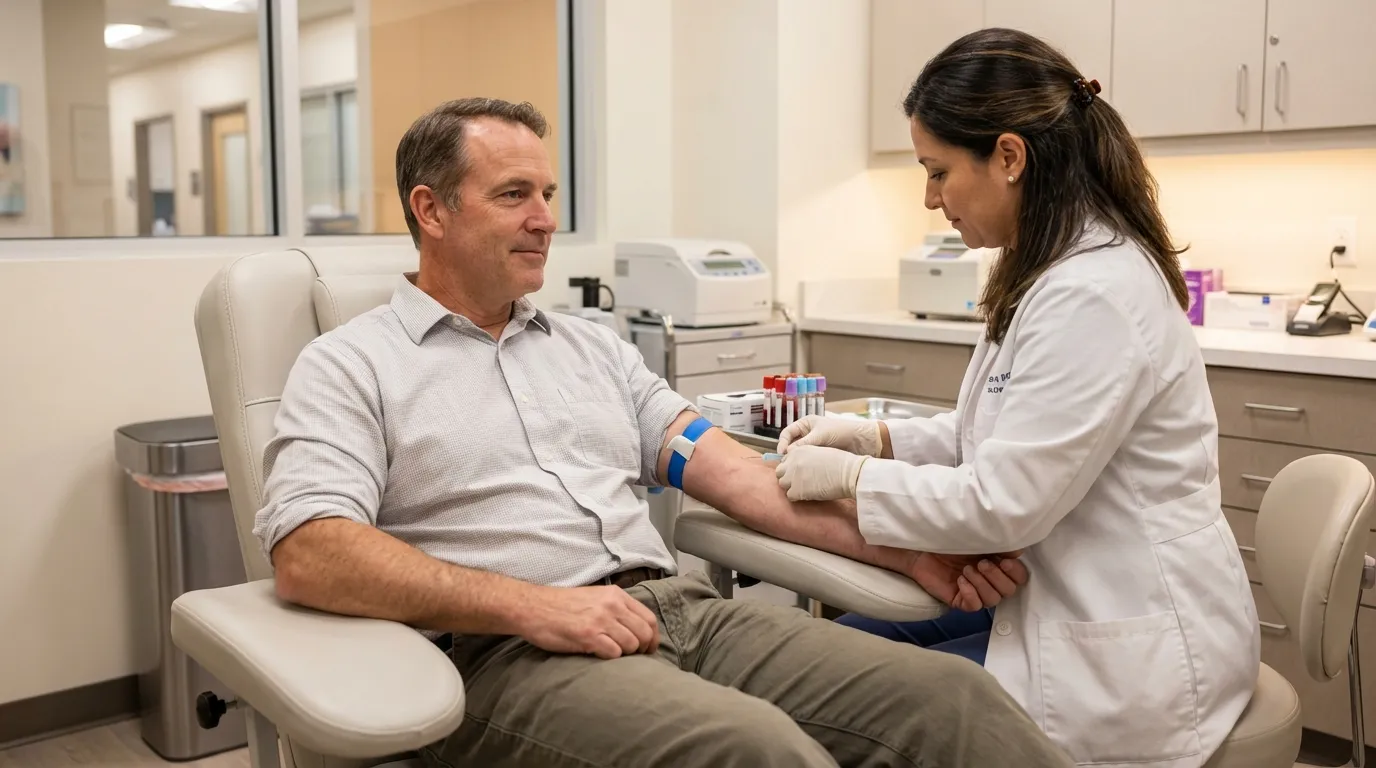
Therapeutic phlebotomy — essentially a blood donation procedure — is a straightforward and effective intervention when hematocrit remains elevated despite protocol changes. Removing 450–500 mL of blood (equivalent to one unit) rapidly reduces hematocrit and is well-tolerated by most men. Some men on TRT become regular blood donors, which serves a dual purpose: managing their hematocrit and contributing to blood supply. Read more about this practice in our article on TRT and Blood Donation: Why It's Important.
Hydration plays a supporting role. Staying well-hydrated maintains plasma volume, which dilutes the concentration of red blood cells and keeps hematocrit from creeping up unnecessarily. This is a simple, cost-free intervention every man on TRT can implement.
The Cardiovascular Context: Putting Risk in Perspective
Elevated hematocrit is most commonly discussed in the context of cardiovascular health, specifically the concern that thicker blood may increase clotting risk or strain the heart. It's important to understand this risk accurately — neither dismissing it nor overstating it.
For men who are otherwise healthy, have well-controlled blood pressure, and maintain hematocrit below 54% through proper monitoring, the cardiovascular risk attributable to TRT-related erythrocytosis is considered low by current evidence. A landmark 2023 study — the TRAVERSE trial, published in the New England Journal of Medicine — found no significant increase in major adverse cardiovascular events in men on TRT compared to placebo when properly screened and monitored.
For men with pre-existing cardiovascular conditions, the picture requires more individualized assessment. This doesn't mean TRT is off the table — it means the risk-benefit analysis is more nuanced and the monitoring protocol is more intensive. Our in-depth article on Is TRT Safe? Heart, Prostate & Long-Term Health Risks Explained covers this topic comprehensively if you want to dig deeper.
The key takeaway here is that hematocrit management and cardiovascular protection go hand in hand. When your provider monitors your CBC regularly and responds promptly to elevated readings, the cardiovascular concern largely becomes a managed variable — not an ongoing threat. This is exactly why choosing an experienced TRT provider who takes blood monitoring seriously makes such a meaningful difference. Find a TRT clinic near you that prioritizes comprehensive lab monitoring from day one.

What to Expect at Your TRT Appointments Regarding Hematocrit
If you're new to TRT or still in the research phase, it helps to know what proactive hematocrit management actually looks like in practice so you know what questions to ask and what to expect from a quality provider.
At your initial consultation, a good TRT clinic will draw a baseline CBC before prescribing anything. This establishes your starting hematocrit, hemoglobin, and red blood cell count — your personal baseline against which all future readings will be compared. They should also ask about sleep quality (to screen for OSA), smoking history, altitude, and any personal or family history of clotting or blood disorders.
At your 3-month follow-up, labs will be repeated. This is when most TRT-related hematocrit rises become apparent, and your provider will assess your trend. If you're still within a comfortable range and feeling well, the protocol continues. If you're trending toward 52–53%, they may adjust your dose or frequency proactively rather than waiting for you to hit 54%.
At 6 months, labs are repeated again, and if everything is stable, you typically move to annual monitoring with periodic check-ins. Throughout this process, your provider should be accessible to answer questions and responsive to any symptoms you report — headaches, increased blood pressure, or unusual fatigue can occasionally signal elevated hematocrit and are worth communicating promptly.
This level of structured, ongoing care is what distinguishes a quality TRT provider from a provider who simply writes a prescription and moves on. When you're searching for the right clinic, understanding the monitoring standards they uphold is one of the most important questions to ask. Our guide on How to Find a TRT Doctor (Step-by-Step Guide) offers a full checklist of what to look for, including what questions to ask about lab monitoring protocols.
Hematocrit Levels TRT and Long-Term Success: The Big Picture
Managing hematocrit levels TRT therapy generates is not a burden — it's one of the reasons TRT can be administered safely over the long term. The fact that this is a measurable, trackable, and correctable variable is actually reassuring. Unlike some health risks that are difficult to detect early, elevated hematocrit shows up clearly in a routine blood test, giving you and your provider ample time to respond before it becomes a meaningful concern.
Men who thrive on long-term TRT share a few common traits: they work with knowledgeable providers, they don't skip their lab appointments, and they communicate openly about how they're feeling. If you're experiencing symptoms that suggest your testosterone may be suboptimal — fatigue, low libido, brain fog, mood changes — the first step is getting evaluated. Start with our TRT Blood Work guide to understand what a comprehensive workup involves, and consider taking the free Low T symptom quiz to organize your thoughts before speaking with a doctor.
For a broader overview of the full range of effects and adjustments you may encounter during TRT, our article on TRT Side Effects: What to Expect and How to Manage Them is an excellent companion read. And when you're ready to take action, find a qualified TRT clinic near you that provides individualized protocols, regular blood monitoring, and responsive clinical support — because that combination is what makes TRT both effective and safe for the long haul.
Sources & References
- Testosterone Therapy in Adult Men with Androgen Deficiency Syndromes: An Endocrine Society Clinical Practice Guideline — Journal of Clinical Endocrinology & Metabolism / Endocrine Society [Link]
- Cardiovascular Safety of Testosterone-Replacement Therapy (TRAVERSE Trial) — New England Journal of Medicine [Link]
- Erythrocytosis and Testosterone Therapy — PubMed / Mayo Clinic Proceedings [Link]
- Testosterone and Erythropoiesis: A Review of the Mechanisms — PubMed / European Journal of Endocrinology [Link]
- Hematocrit and Hemoglobin Reference Ranges — Mayo Clinic [Link]
- AUA Guidelines on Testosterone Deficiency — American Urological Association [Link]
- Polycythemia (Erythrocytosis) Associated with Testosterone Use — Cleveland Clinic [Link]
Frequently Asked Questions
Ready to Take the Next Step?
Check your symptoms with our free quiz or browse 2,500+ verified TRT clinics.