
Medical Disclaimer
The information on this website is for educational purposes only and is not a substitute for professional medical advice, diagnosis, or treatment. Always consult a qualified healthcare provider before starting any hormone therapy. Individual results may vary. TRTmatch does not provide medical services or prescribe medications.
Key Takeaways
- TRT blood work is mandatory before starting therapy — reputable guidelines recommend confirming low testosterone with at least two morning blood draws on separate occasions.
- A complete baseline panel includes total and free testosterone, SHBG, LH, FSH, estradiol, CBC, PSA, and a metabolic panel to ensure safety and accuracy.
- Ongoing monitoring — typically at 6–8 weeks, 3–6 months, and every 6–12 months thereafter — allows providers to optimize dosing and catch any changes in hematocrit, PSA, or estradiol early.
- Draw blood in the morning (7–10 a.m.) for the most accurate hormone readings; timing relative to your last injection also matters for men on injectable testosterone.
- Lab results should always be interpreted alongside symptoms and clinical context — a number within the "normal" range doesn't rule out hypogonadism if significant symptoms are present.
- Working with a qualified TRT provider who orders comprehensive panels and explains your results clearly is the most important factor in safe, effective testosterone therapy.
If you've been experiencing fatigue, low libido, brain fog, or unexplained changes in body composition, you may have started researching testosterone replacement therapy. Before any responsible provider writes a prescription, though, you'll need TRT blood work — a comprehensive panel of lab tests that form the backbone of diagnosis, safety screening, and long-term monitoring. Understanding what these tests measure, why they matter, and how to interpret the results puts you in control of your own health journey.
Disclaimer: This article is for educational purposes only and does not constitute medical advice. Always consult a qualified healthcare provider before starting, adjusting, or stopping any hormone therapy.
If you're not sure whether your symptoms point to low testosterone, a great place to start is the free Low T symptom quiz — it takes just two minutes and can help you decide whether blood work is the right next step. You can also explore 10 signs of low testosterone in men for a deeper look at what to watch for.
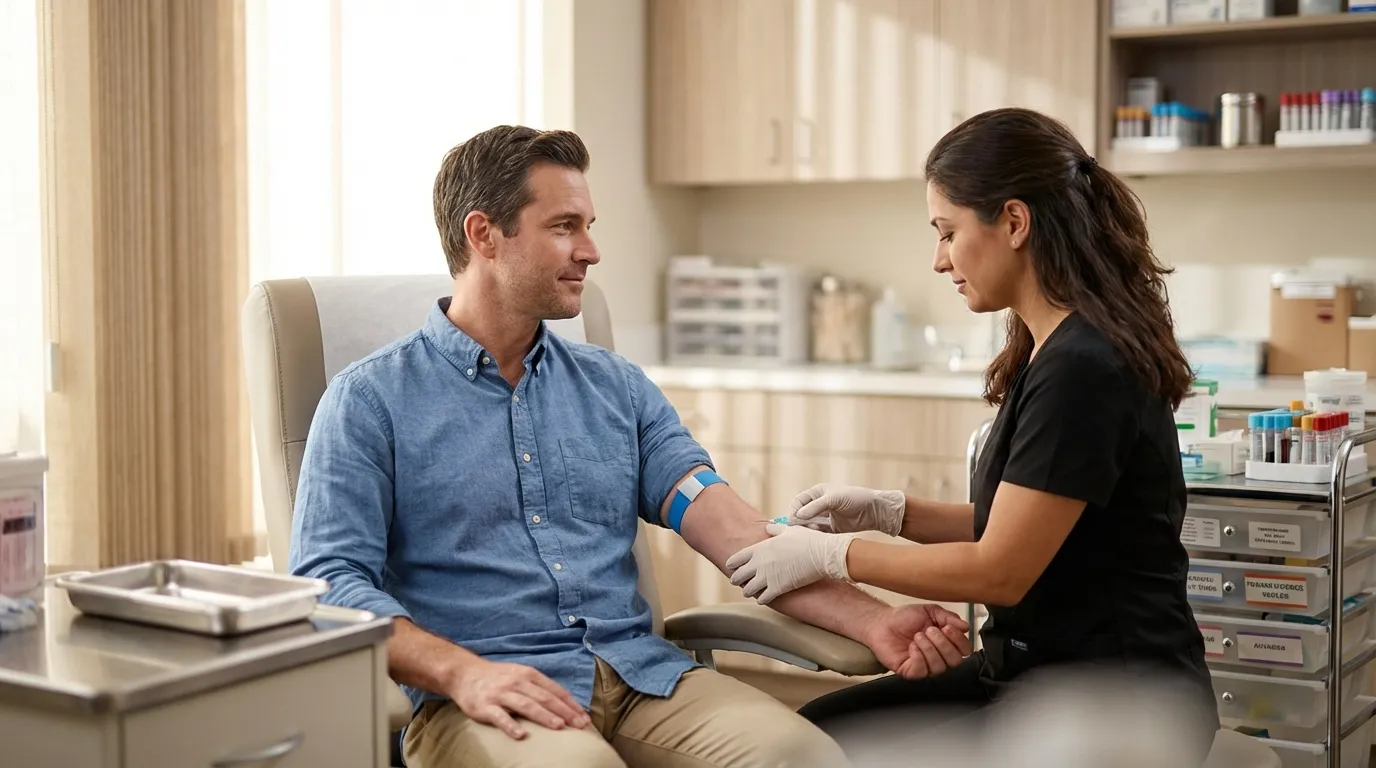
Why TRT Blood Work Is the Starting Point for Every Treatment Plan
Testosterone replacement therapy isn't prescribed on symptoms alone. The Endocrine Society and the American Urological Association both recommend confirming low testosterone through laboratory testing before initiating treatment. This protects you in two critical ways: it confirms that your symptoms genuinely stem from low testosterone rather than another condition, and it establishes a baseline so your provider can track how your body responds over time.
Blood work also reveals pre-existing conditions — such as elevated hematocrit, prostate-specific antigen (PSA) concerns, or cardiovascular markers — that may influence how your therapy is structured. A qualified TRT provider won't skip this step. In fact, the thoroughness of a clinic's baseline panel is one of the clearest indicators of how seriously they take your long-term health. When you're searching for a provider, look for one who orders a comprehensive panel upfront. You can browse vetted options at Find a TRT clinic near you to get started.
Think of your blood work as a personal roadmap. It tells your provider where you are today, identifies any detours that need to be taken, and gives both of you a clear destination. Without it, therapy would be guesswork — and nobody benefits from that.
The Essential Baseline Panel: Tests Ordered Before Starting TRT
Before your first dose of testosterone, a thorough baseline panel is ordered. Here's what a comprehensive pre-TRT workup typically includes, and why each marker matters.
Total and Free Testosterone
These are the headline numbers. Total testosterone measures all the testosterone circulating in your blood, while free testosterone measures only the fraction that isn't bound to proteins and is biologically active. Most labs define the normal range for total testosterone as roughly 300–1,000 ng/dL, though optimal levels vary by individual. Many men feel symptomatic at the lower end of the "normal" range, which is why context and symptoms always matter alongside the raw number. For a detailed breakdown of the distinction, see Free vs Total Testosterone: What Really Matters?.
Testing should be done in the morning (ideally between 7–10 a.m.) when testosterone levels peak naturally, and confirmed on at least two separate occasions before a diagnosis of hypogonadism is made.
Sex Hormone-Binding Globulin (SHBG)
SHBG is the protein that binds tightly to testosterone, rendering it unavailable for use by your cells. Two men can have identical total testosterone levels but very different free testosterone levels depending on their SHBG. High SHBG means less free testosterone is available, which may explain symptoms even when total T appears adequate. Learn more at What Is SHBG and Why It Matters for TRT.
Luteinizing Hormone (LH) and Follicle-Stimulating Hormone (FSH)
LH and FSH are pituitary hormones that regulate testosterone and sperm production. Low LH alongside low testosterone suggests a problem originating in the pituitary or hypothalamus (secondary hypogonadism), while high LH with low testosterone points to a testicular issue (primary hypogonadism). This distinction affects treatment decisions significantly — for example, men with secondary hypogonadism may respond well to alternatives like Clomid. Explore the comparison at Clomid vs TRT: Which Low Testosterone Treatment Is Right for You?
Estradiol (E2)
Testosterone converts to estradiol via an enzyme called aromatase, and estradiol plays a vital role in men's bone density, mood, libido, and cardiovascular health. Baseline estradiol helps your provider understand your starting point before exogenous testosterone potentially raises conversion. For a full overview, visit Estradiol (E2) in Men on TRT: What You Need to Know.
Complete Blood Count (CBC)
The CBC measures red blood cells, white blood cells, and platelets. Within TRT, the most closely watched value is hematocrit — the percentage of blood volume made up of red blood cells. Testosterone stimulates red blood cell production, so elevated hematocrit before starting therapy is something providers monitor carefully and manage with dose adjustments or therapeutic phlebotomy when necessary.
Comprehensive Metabolic Panel (CMP)
The CMP assesses kidney function, liver enzymes, blood glucose, and electrolytes. While TRT itself has minimal direct impact on the liver (particularly with injectable or topical forms), this baseline is important for overall health screening and to detect conditions like diabetes or metabolic syndrome that often co-occur with low testosterone.
Prostate-Specific Antigen (PSA)
PSA is a protein produced by the prostate gland. A baseline reading is essential before TRT, particularly for men over 40. Current evidence does not support the idea that TRT causes prostate cancer in healthy men, but monitoring PSA ensures that any pre-existing concern is identified before therapy begins. If PSA is elevated or rises significantly after starting TRT, a urological evaluation is the appropriate next step.
Thyroid-Stimulating Hormone (TSH)
Thyroid dysfunction can mimic many symptoms of low testosterone — fatigue, weight changes, mood shifts, and reduced libido. Including TSH in your baseline panel ensures that a thyroid condition isn't being missed or mistaken for hypogonadism. Treating both conditions simultaneously, when necessary, leads to significantly better outcomes.

Understanding Your Testosterone Lab Results
Getting your results back can feel overwhelming if you're not sure what the numbers mean. Here's a quick reference for the key markers most providers use when evaluating TRT candidacy.
| Marker | Typical Reference Range | TRT Relevance |
|---|---|---|
| Total Testosterone | 300–1,000 ng/dL | Primary diagnostic marker |
| Free Testosterone | 9–30 ng/dL (varies by lab) | Shows biologically active T |
| SHBG | 10–57 nmol/L | Affects free T availability |
| Estradiol (E2) | 10–40 pg/mL | Monitored for conversion issues |
| Hematocrit | 38.3–48.6% | Risk increases if above 52% |
| PSA | Under 4.0 ng/mL (age-dependent) | Prostate health monitoring |
| LH | 1.7–8.6 IU/L | Indicates origin of low T |
Reference ranges vary slightly between laboratories and age groups. For age-specific context, the article Testosterone Levels by Age (Full Chart + Explained) offers a detailed breakdown. Your provider will interpret your results in light of your symptoms, age, and overall health — not just against a single threshold.
It's also worth noting that a single low reading doesn't automatically mean you need TRT. Results can be affected by illness, poor sleep, stress, or the time of day the sample was collected. That's why reputable guidelines recommend confirming low testosterone on two separate morning blood draws before proceeding.
Ongoing Monitoring: TRT Blood Work During Treatment
Starting TRT is just the beginning of the lab work relationship. Responsible ongoing monitoring is what separates a well-managed therapy from one that drifts off course. Most providers follow a monitoring schedule that looks something like this:
- 6–8 weeks after starting: First follow-up panel to assess initial response, check testosterone levels in relation to dosing, and screen for early changes in hematocrit and estradiol.
- 3–6 months: Comprehensive review including PSA (especially for men over 40), CBC, metabolic markers, and a full hormone panel.
- Every 6–12 months thereafter: Ongoing routine monitoring for men who are stable on therapy.
The timing of your blood draw relative to your last dose matters enormously for injectable testosterone. If you're on weekly injections, drawing blood at the midpoint (trough or mid-cycle) gives your provider the most consistent, interpretable reading. Drawing right after an injection will give an artificially high peak, while drawing right before the next dose captures the trough. Your clinic will specify the ideal timing for your protocol.
Monitoring isn't just about keeping testosterone in range — it's about watching the entire picture. Hematocrit elevation, for example, can occur gradually and is addressed effectively when caught early through regular blood work. In men with pre-existing sleep apnea or cardiovascular risk factors, monitoring frequency may be increased to ensure safety. These are manageable considerations, not reasons to avoid therapy — they simply underscore why working with a knowledgeable provider makes all the difference. For guidance on finding one, see How to Find a TRT Doctor (Step-by-Step Guide).
What Happens to Your Blood Work After Starting TRT
Understanding what changes to expect after beginning testosterone therapy helps you interpret follow-up results with confidence rather than anxiety.
Testosterone levels will rise toward your provider's target range, typically 500–900 ng/dL for most protocols, though individual targets vary based on symptom resolution and tolerability.
Hematocrit may increase modestly, which is a normal physiological response to testosterone. Most providers become attentive when hematocrit approaches or exceeds 52%, at which point dose adjustment, hydration counseling, or therapeutic phlebotomy may be recommended. This is a well-understood, manageable aspect of TRT when monitored correctly.
Estradiol often rises as testosterone levels increase, since more substrate is available for aromatization. In some men, estradiol can climb high enough to cause symptoms such as water retention or mood changes — but this is addressed through dose adjustment or, in some cases, the use of an aromatase inhibitor. Read more at TRT Side Effects: What to Expect (And How to Manage Them).
LH and FSH will typically decline, sometimes to near zero, because exogenous testosterone signals the pituitary to reduce its own output. This is expected and reversible in most cases. Men who wish to preserve fertility while on TRT often use HCG alongside their testosterone to maintain testicular function. See HCG and TRT: Why Doctors Prescribe Them Together and TRT and Fertility: Can You Have Kids on Testosterone? for a full explanation.
PSA may rise slightly in the first few months of TRT in some men — research suggests this is generally a return to levels the prostate would have produced with normal testosterone, not a sign of malignancy. That said, any significant or rapid PSA increase warrants urological evaluation, and a good provider will track this closely.

How to Prepare for Your TRT Lab Tests
Getting accurate, reliable results from your hormone panel starts before you ever reach the lab. Here are the key preparation steps that make a real difference in result quality.
Time Your Draw Correctly
Testosterone follows a diurnal rhythm, peaking in the morning and declining through the day. Always schedule your draw between 7 a.m. and 10 a.m. for the most accurate and reproducible reading. Afternoon testosterone values can be 20–30% lower than morning levels in some men, which could lead to an incorrect diagnosis or misinterpretation of your progress on therapy.
Fast If Required
While fasting isn't strictly necessary for testosterone itself, a comprehensive metabolic panel requires an 8–12 hour fast for accurate glucose and lipid readings. Since most pre-TRT panels include these markers, it's generally best to fast overnight before your draw.
Avoid Strenuous Exercise the Night Before
Intense resistance training can transiently alter testosterone, cortisol, and other hormone levels. A rest day before your blood draw helps ensure your baseline reflects your normal resting physiology rather than a post-exercise spike or suppression.
Disclose All Medications and Supplements
Certain medications — including corticosteroids, opioids, and some antidepressants — suppress testosterone. Supplements like DHEA or pregnenolone can affect hormone levels as well. Always give your provider a complete medication and supplement list before your blood work so they can interpret results accurately.
Stay Well-Hydrated
Dehydration can concentrate blood, artificially inflating hematocrit readings. Drink adequate water the day before and morning of your blood draw, but avoid excessive intake that might dilute results.
For a step-by-step walkthrough of the full first appointment experience, including what questions to ask and what to bring, see Your First TRT Consultation: What to Expect.
Common Questions Men Have About TRT Lab Testing
After years of helping men navigate the path to hormonal health, certain questions come up again and again. Here are clear, straightforward answers to the most common ones.
Can I get TRT blood work through my regular doctor?
Yes, a primary care physician can order a hormone panel, and many do. However, not all general practitioners are experienced in interpreting testosterone results in the full clinical context of hypogonadism. A dedicated TRT clinic or endocrinologist brings specialized expertise to the analysis. If your PCP is open to it, asking for a referral to a hormone specialist or exploring a TRT clinic is a reasonable path forward.
How much does TRT blood work cost?
Cost varies depending on your insurance coverage and the provider. With insurance, standard panels may cost little to nothing out of pocket. Without insurance, a comprehensive hormone panel can range from $100 to $400 depending on the lab and which markers are included. Many TRT clinics bundle blood work into their membership or initial consultation fee. For a full cost breakdown of TRT including lab work, see TRT Cost: Full Price Breakdown (Monthly + Yearly).
Can I do my TRT blood work at home?
At-home hormone testing kits are widely available, but they typically use saliva or fingerprick samples and have less standardization than venous blood draws. For diagnostic purposes and ongoing therapy monitoring, most TRT providers require lab-based venous blood draws. At-home kits can be useful for general awareness but are not a substitute for clinical-grade testing.
What if my testosterone is low-normal but I still have symptoms?
This is one of the most nuanced areas in men's hormonal health. Some men experience significant symptoms of hypogonadism with testosterone levels that fall within the statistical normal range. In these cases, the full clinical picture — including SHBG, free testosterone, symptom severity, and quality of life — guides the treatment decision. This is why choosing a provider who listens and evaluates you holistically, not just by a single number, matters so much. If you recognize your symptoms, take the free Low T symptom quiz as a starting point and share your results with your provider.
Finding the Right Provider to Guide Your TRT Blood Work and Treatment
All the blood work knowledge in the world is most valuable when paired with a provider who knows how to use it. The quality of your TRT experience is directly tied to the quality of your clinical team. A well-structured clinic will order a comprehensive baseline panel, explain your results clearly, set individualized targets, and schedule regular follow-up testing — not just check a box and send you a prescription.
When evaluating clinics or providers, look for these signs of quality care: a thorough initial blood panel (not just a total T test), a clear monitoring schedule communicated upfront, willingness to discuss results in detail, and a protocol that is adjusted based on your response rather than applied as a one-size-fits-all approach. You can find vetted TRT clinics across the country — including TRT clinics in Texas, TRT clinics in California, and TRT clinics in Florida — through the TRTmatch clinic directory.
Whether you're just beginning to explore TRT or looking to optimize an existing protocol, getting your TRT blood work right is the single most important step you can take. It protects your health, confirms your diagnosis, and gives both you and your provider the information needed to build a therapy that actually works for your body. For broader context on what the treatment journey looks like, explore TRT Before and After: Real Results Explained and Is TRT Worth It? Pros, Cons & Real Experiences.
The path forward starts with a single blood draw. Schedule yours with a qualified provider and take control of how you feel.
Sources & References
- Testosterone Therapy in Men with Hypogonadism: An Endocrine Society Clinical Practice Guideline — Journal of Clinical Endocrinology & Metabolism [Link]
- AUA Guideline: Evaluation and Management of Testosterone Deficiency — American Urological Association [Link]
- Testosterone Therapy: Potential Benefits and Risks as You Age — Mayo Clinic [Link]
- Hematocrit and Testosterone: Clinical Considerations for TRT Monitoring — PubMed / NCBI [Link]
- Cardiovascular Safety of Testosterone-Replacement Therapy — New England Journal of Medicine [Link]
- Prostate-Specific Antigen Changes and Prostate Cancer in Hypogonadal Men Treated with Testosterone Replacement Therapy — PubMed / NCBI [Link]
- Diurnal Variation of Testosterone and Its Clinical Implications — PubMed / NCBI [Link]
Frequently Asked Questions
Ready to Take the Next Step?
Check your symptoms with our free quiz or browse 2,500+ verified TRT clinics.