Medical Disclaimer
The information on this website is for educational purposes only and is not a substitute for professional medical advice, diagnosis, or treatment. Always consult a qualified healthcare provider before starting any hormone therapy. Individual results may vary. TRTmatch does not provide medical services or prescribe medications.
Key Takeaways
- Most men pay $100–$500/month for TRT depending on delivery method, clinic type, and insurance coverage — which works out to $1,200–$6,000 per year.
- Injectable testosterone (cypionate/enanthate) is the most affordable option, with all-in costs as low as $100–$150/month through telehealth clinics.
- Insurance may cover TRT when hypogonadism is medically diagnosed, potentially reducing medication costs to $10–$60/month in co-pays.
- Initial startup costs — including blood work and consultation — typically add $100–$500 before treatment begins, but many clinics bundle these into a flat intake fee.
- Ongoing monitoring (labs every 3–6 months) is an essential and often-overlooked cost, adding approximately $400–$800/year if not included in your clinic's subscription.
- Comparing telehealth vs. in-person clinics, reviewing transparent pricing, and checking insurance benefits are the three most effective ways to reduce your total TRT spend.
So, How Much Does TRT Cost? (The Short Answer)
If you've been researching testosterone replacement therapy, one of the first questions you'll ask is: how much does TRT cost? The honest answer is that it varies — but most men pay somewhere between $100 and $500 per month out of pocket, depending on the delivery method, clinic type, and whether insurance covers any portion. Over a full year, that works out to roughly $1,200 to $6,000 annually.
Medical disclaimer: This article is for educational purposes only and does not constitute medical advice. Always consult a licensed healthcare provider before starting any hormone therapy.
That's a wide range, and the gap matters. A man using testosterone cypionate injections through a telehealth clinic might spend as little as $100–$150/month. A man visiting a premium men's health clinic and using testosterone pellets could spend $400–$600 per treatment cycle. Understanding what drives these differences helps you make an informed decision — and find a plan that fits both your health goals and your budget.
In this guide, we'll break down TRT costs by delivery method, clinic type, insurance coverage, and hidden fees so you have a complete picture. If you're still exploring whether TRT is right for you, you can also take the free Low T symptom quiz to see if your symptoms align with low testosterone.
Initial Costs: Labs, Consultations, and Diagnosis
Before a single dose of testosterone is prescribed, you'll need to go through an evaluation process. This upfront investment is a one-time cost, but it's an important part of the total picture when calculating how much does TRT cost to get started.
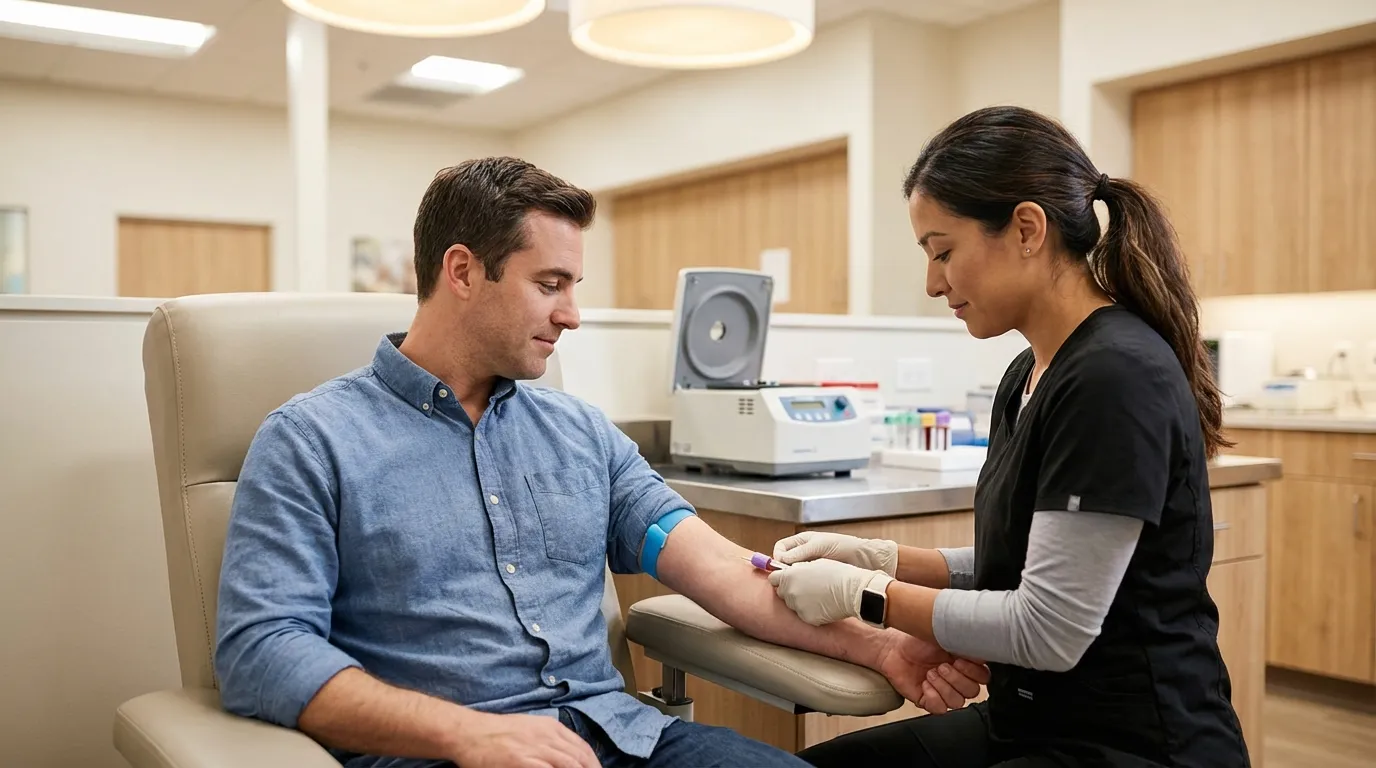
Initial Blood Work and Lab Testing
A comprehensive testosterone panel typically includes total testosterone, free testosterone, LH, FSH, estradiol, PSA, hematocrit, and a complete metabolic panel. Understanding the difference between these markers is important — you can read more in our guide on Testosterone Blood Test Explained (Total vs Free).
Lab costs vary depending on whether you go through insurance, a direct-pay lab, or a telehealth provider:
| Lab Testing Option | Estimated Cost |
|---|---|
| Through insurance (co-pay) | $0–$50 |
| Direct-pay lab (e.g., LabCorp, Quest) | $75–$200 |
| Telehealth clinic included labs | Often included in consult fee |
| Comprehensive panel (no insurance) | $150–$300 |
Initial Consultation Fees
Your first consultation with a TRT provider — whether in-person or via telehealth — typically costs between $100 and $300. Some online TRT clinics bundle the consultation and initial labs into a flat intake fee ranging from $100 to $250. In-person men's health clinics may charge separately, with consultations running $150–$300 and labs billed additionally.
To learn exactly what happens during that first visit, check out our article on Your First TRT Consultation: What to Expect. Knowing what to expect helps you ask the right questions and get the most value from that initial appointment.
All told, your diagnostic and startup costs can range from $100 to $500 before treatment even begins. Many clinics will waive or discount these fees as part of a membership or subscription package.
TRT Cost by Delivery Method (Monthly Breakdown)
The single biggest factor in your monthly TRT cost is the delivery method your provider prescribes. Each option has different medication costs, administration requirements, and monitoring needs. Here's a detailed breakdown:
Testosterone Injections (Cypionate or Enanthate)
Injectable testosterone is the most widely prescribed and cost-effective form of TRT. Testosterone cypionate and enanthate are both FDA-approved, long-acting injectables that are typically administered weekly or bi-weekly. Generic versions are widely available, which keeps costs low. To understand how injections compare to other formats, see TRT Injections vs Gel: Which Is Better?
- Medication cost: $30–$80/month (generic cypionate/enanthate)
- Supplies (needles, syringes): $10–$20/month
- Total estimated monthly cost: $40–$100 (medication only)
- With clinic/telehealth fees: $100–$200/month all-in
Testosterone Gels and Creams (Topical)
Topical testosterone — applied daily to the skin — is convenient but generally more expensive than injections. Brand-name options like AndroGel can be significantly pricier, though compounded topical creams from specialty pharmacies offer a more affordable alternative.
- Brand-name gel (e.g., AndroGel 1%): $300–$500/month without insurance
- Compounded topical cream: $50–$120/month
- With telehealth clinic fees: $100–$250/month (compounded)
Testosterone Pellets
Pellets are small implants inserted under the skin every 3–6 months. They offer a hands-off approach to dosing but come at a premium cost. Each insertion procedure typically costs $300–$600, which translates to $600–$1,200 per year for the procedure alone, plus any clinic or monitoring fees.
Testosterone Patches and Nasal Gels
Patches (like Androderm) and nasal testosterone gels (Natesto) are less commonly prescribed but available. Without insurance, patches can cost $200–$400/month. Nasal gels are similarly priced in the $300–$500/month range. These formats are typically reserved for men who cannot use injections or topical creams.
| Delivery Method | Monthly Cost (No Insurance) | Annual Estimate |
|---|---|---|
| Injections (generic) | $100–$200 | $1,200–$2,400 |
| Topical gel (compounded) | $100–$250 | $1,200–$3,000 |
| Brand-name gel | $300–$500 | $3,600–$6,000 |
| Pellets (per cycle) | $150–$200 avg/month | $1,800–$2,400+ |
| Patches/Nasal gel | $200–$500 | $2,400–$6,000 |

Clinic Type and How It Affects Your TRT Cost
Where you get your TRT matters as much as what form you take. The type of provider you work with significantly shapes your total monthly spend — and the level of care you receive. Here's how the main options compare:
Telehealth TRT Clinics (Online)
Online TRT clinics have become increasingly popular because they're convenient and competitively priced. Most operate on a subscription model that includes consultations, ongoing monitoring, and medication delivery. Popular providers in this space typically charge $100–$200/month all-in. For a detailed comparison of the top options, visit our guide on Best Online TRT Clinics (Pros, Cons & Pricing).
The trade-off with telehealth is that in-person physical exams aren't always included, which may matter depending on your health history. That said, reputable online clinics do require blood work and physician oversight — they're not a shortcut around medical supervision.
In-Person Men's Health Clinics
Dedicated men's health and low T clinics offer comprehensive, face-to-face care. These clinics often provide more personalized protocols, in-office injections or pellet insertions, and direct access to physicians or nurse practitioners. The premium service comes at a higher price: expect to pay $150–$400/month depending on your location and protocol.
If you'd prefer to find a local option, find a TRT clinic near you using our directory, or browse providers in specific states like TRT clinics in Texas, TRT clinics in California, or TRT clinics in Florida.
Primary Care Doctors and Urologists
Some men receive TRT through their primary care physician or a urologist. This route can be the most affordable if insurance covers the diagnosis and medication, but it often involves longer wait times and less specialized monitoring. Out-of-pocket costs through this route vary widely based on insurance coverage and copay structure.
Does Insurance Cover TRT?
This is one of the most common questions men ask when calculating how much does TRT cost — and the answer depends on your insurer and your diagnosis.
Insurance companies generally cover TRT when there is a documented medical diagnosis of hypogonadism, supported by lab results showing low testosterone (typically below 300 ng/dL on two separate morning tests) and clinical symptoms. In these cases, insurance may cover:
- Initial bloodwork and follow-up labs
- Physician consultations
- FDA-approved testosterone medications (with varying co-pays)
However, coverage is not guaranteed, and brand-name medications like AndroGel are frequently denied in favor of generic alternatives. Co-pays for covered medications typically range from $10 to $60/month — a significant savings compared to paying out of pocket.
Telehealth clinic memberships are generally not covered by insurance, even if the medication itself might be. This means you'll often pay the membership fee separately from any insurance reimbursement for the medication.
If you're unsure whether you qualify for a diagnosis, it helps to understand your baseline levels first. Our article on Testosterone Levels by Age (Full Chart + Explained) provides helpful context for interpreting your numbers.
Ongoing Monitoring Costs: What People Often Forget
When men research TRT pricing, they often focus on the medication itself — but ongoing monitoring is an equally important part of the total cost, and one that's easy to overlook.
TRT requires regular blood work to ensure your levels are optimized and that no side effects are developing. Responsible providers will monitor hematocrit (red blood cell volume), estradiol, PSA, and total and free testosterone at minimum. For a deeper look at why estradiol monitoring matters, see Estradiol (E2) in Men on TRT: What You Need to Know.
Typical monitoring schedule and costs:
- First follow-up labs (6–8 weeks after starting): $75–$200
- Ongoing labs every 3–6 months: $75–$150 per panel
- Annual comprehensive panel: $150–$300
- Follow-up consultations: $50–$150 each
Many telehealth clinics include quarterly monitoring in their subscription fees, which makes the all-in cost more predictable. If monitoring is billed separately, budget an additional $400–$800/year for labs and check-ins.
Some men on TRT also require adjunct medications — such as an aromatase inhibitor to manage estrogen levels, or hCG to maintain fertility and testicular function. These add $20–$80/month to the total depending on the compound and pharmacy used.
Hidden Costs and Add-Ons to Budget For
Beyond the medication and monitoring, there are several additional costs that can add up over time. Being aware of them upfront helps you avoid surprises and choose a clinic with transparent pricing.
Compounding Pharmacy Fees
Many TRT protocols use compounded testosterone — custom-formulated medications from specialty pharmacies. Compounded products are not sold at standard retail pharmacies, and the price varies between compounding pharmacies. Some telehealth clinics have exclusive pharmacy partnerships, which can mean you're locked into their pricing. Always ask your provider whether you can use an outside pharmacy to compare costs.
Ancillary Medications
Depending on your protocol, you may be prescribed:
- Anastrozole or Exemestane (aromatase inhibitors to control estrogen): $20–$50/month
- hCG or Enclomiphene (to preserve fertility): $50–$150/month
- Vitamin D, Zinc, or other supplements: $15–$40/month
Membership or Platform Fees
Some telehealth platforms charge a platform fee separate from the medication cost. Others bundle everything. Read the fine print — a clinic advertising $99/month may charge separately for labs, consultations, and prescriptions once you're enrolled.
Cancellation and Restart Fees
If you pause or stop TRT and want to restart, some clinics charge new-patient intake fees or require repeat diagnostic labs. Understanding the TRT side effects and what to expect before you start helps you make a more committed, informed decision — and avoid the cost of stopping and restarting.
Is the Cost of TRT Worth It?
For men who genuinely have low testosterone with symptoms — fatigue, low libido, reduced muscle mass, brain fog, mood changes — TRT can deliver meaningful improvements in quality of life. Research published in the New England Journal of Medicine (the Testosterone Trials) demonstrated significant benefits in sexual function, mood, and physical capacity among hypogonadal men treated with testosterone therapy.
When you consider the cost of not treating low testosterone — ongoing fatigue, reduced productivity, declining muscle and bone density, metabolic risks — the monthly investment often looks more reasonable. Many men report that the improvements in energy, body composition, and mental clarity make TRT one of the best investments they've made in their health. You can explore real outcomes in our guide on Is TRT Worth It? Pros, Cons & Real Experiences.
If you're not yet sure whether TRT is appropriate for you, it's worth understanding what causes low testosterone in men and whether lifestyle changes might address your symptoms first. Our article on how to increase testosterone naturally before TRT is a helpful starting point.
How to Get the Best Value From TRT
Now that you understand how much does TRT cost at every level, here are practical steps to get the most value for your investment:
- Start with a proper diagnosis. Don't skip the labs. A confirmed diagnosis opens the door to insurance coverage and ensures TRT is actually appropriate for you. Use our guide on How to Find a TRT Doctor (Step-by-Step Guide) to identify qualified providers.
- Compare clinic types. A reputable telehealth clinic offering injections at $100–$150/month all-in can deliver the same clinical outcomes as a premium in-person clinic at $400/month — if the medical oversight is equivalent. Check our Best TRT Clinics in the USA (2026 Guide) for vetted recommendations.
- Check your insurance benefits. Call your insurer and ask specifically about coverage for hypogonadism treatment, testosterone medication, and associated lab work. Even partial coverage significantly reduces your annual spend.
- Ask for a transparent pricing breakdown. Before signing up with any clinic, request an itemized list of all fees: consultation, labs, medication, shipping, and follow-ups. Avoid clinics that won't provide this upfront.
- Use a compounding pharmacy. If your protocol calls for testosterone cypionate or a topical cream, a compounding pharmacy will almost always be cheaper than a retail brand-name equivalent.
Ready to take the next step? Find a TRT clinic near you and connect with a qualified provider who can walk you through costs specific to your situation. You can also take the free Low T symptom quiz to better understand your symptoms before your first consultation.
Understanding how much does TRT cost is only part of the equation — the bigger question is whether the investment aligns with the results you're looking for. For most men with clinically confirmed low testosterone, the answer is a clear yes.
Sources & References
- Testosterone Therapy in Men with Hypogonadism: An Endocrine Society Clinical Practice Guideline — Journal of Clinical Endocrinology & Metabolism [Link]
- Effects of Testosterone Treatment in Older Men (The Testosterone Trials) — New England Journal of Medicine [Link]
- Testosterone Therapy: Potential Benefits and Risks as You Age — Mayo Clinic [Link]
- Low Testosterone (Male Hypogonadism) — Cleveland Clinic [Link]
- Diagnosis and Treatment of Testosterone Deficiency: Updated Recommendations from the American Urological Association — American Urological Association [Link]
- AndroGel (Testosterone Gel) Prescribing Information and Cost Data — Drugs.com [Link]
- Testosterone Cypionate: Drug Information and Pricing — GoodRx [Link]
Frequently Asked Questions
Ready to Take the Next Step?
Check your symptoms with our free quiz or browse 2,500+ verified TRT clinics.