
Medical Disclaimer
The information on this website is for educational purposes only and is not a substitute for professional medical advice, diagnosis, or treatment. Always consult a qualified healthcare provider before starting any hormone therapy. Individual results may vary. TRTmatch does not provide medical services or prescribe medications.
Key Takeaways
- Low testosterone causes range from age-related decline and medical conditions to lifestyle factors like poor sleep, obesity, and chronic stress — most of which are identifiable and manageable.
- Primary hypogonadism originates in the testes, while secondary hypogonadism involves disrupted signaling from the brain or pituitary gland — each type has different treatment approaches.
- Certain common medications, including opioids, corticosteroids, and some antidepressants, can suppress testosterone levels as a side effect — making a full medication review essential at diagnosis.
- Lifestyle modifications like improving sleep, reducing alcohol intake, managing body weight, and correcting nutritional deficiencies can meaningfully support testosterone levels before or alongside medical treatment.
- A proper diagnosis requires at least two morning blood tests plus a full symptom evaluation — testosterone numbers alone don't tell the complete story.
- TRT is an established, FDA-recognized treatment for clinically confirmed low testosterone — when managed by a qualified provider, it is safe, effective, and personalized to your needs.
If you've been feeling drained, losing muscle, struggling with your libido, or just not feeling like yourself, you may have already wondered whether your testosterone levels are to blame. Understanding low testosterone causes is the first step toward getting real answers — and potentially your life back.
Medical disclaimer: This article is for educational purposes only and does not constitute medical advice. Always consult a qualified healthcare provider before making any decisions about your health or treatment options.
Testosterone is the primary male sex hormone responsible for everything from muscle mass and bone density to mood, energy, and sexual function. When levels drop below what's healthy for your age, the effects can ripple across nearly every aspect of daily life. To learn more about how symptoms show up, check out our guide on Low Testosterone Symptoms: 10 Signs of Low Testosterone in Men.
The good news? Most causes of low testosterone are well-understood, many are treatable, and qualified providers help men address this issue every single day. Let's walk through what's actually driving low T — and what you can do about it.

What Is Low Testosterone and How Is It Diagnosed?
Before diving into low testosterone causes, it helps to understand what "low" actually means. Testosterone levels are measured through a blood test, typically in the morning when levels peak. The normal range for adult men is generally considered to be between 300 and 1,000 nanograms per deciliter (ng/dL), though this can vary slightly by lab and by age.
Hypogonadism — the clinical term for low testosterone — is diagnosed when total testosterone falls below 300 ng/dL alongside symptoms that affect quality of life. It's worth noting that symptoms matter just as much as numbers. Some men feel perfectly fine at 320 ng/dL; others feel terrible at 380 ng/dL. That's why a comprehensive evaluation by a qualified provider is essential.
Diagnosis typically involves:
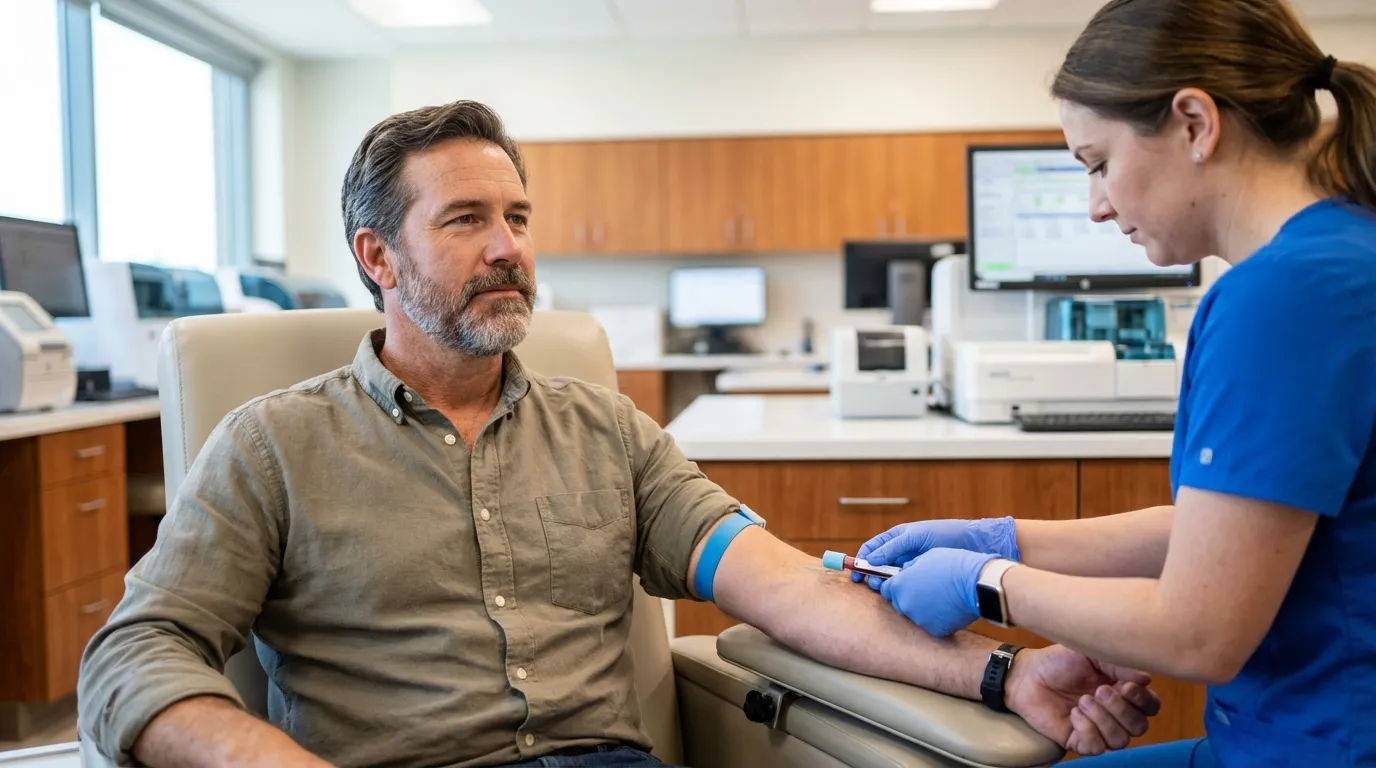
- At least two morning blood draws on separate days to confirm results
- Measurement of both total and free testosterone
- Assessment of luteinizing hormone (LH) and follicle-stimulating hormone (FSH)
- A full symptom review and medical history
Understanding your numbers in full context — including free vs total testosterone and the role of SHBG (sex hormone-binding globulin) — is key to an accurate diagnosis. If you want a quick sense of where you stand symptom-wise right now, take the free Low T symptom quiz as a starting point.
Hypogonadism affects an estimated 2–6 million men in the United States, and prevalence increases significantly with age. Yet many cases go undiagnosed for years because men attribute their symptoms to stress, aging, or poor sleep rather than a hormonal issue. Early identification of the root cause is what makes treatment most effective.
The Most Common Low Testosterone Causes in Men
Low testosterone doesn't have a single cause — it's usually the result of one or more underlying factors affecting the hormonal signaling pathway between the brain, the pituitary gland, and the testes. Here are the most frequently identified drivers.
Age-Related Testosterone Decline
The most universal low testosterone cause is simply getting older. Starting around age 30, men experience a gradual decline in testosterone production of roughly 1–2% per year. This is a natural, physiological process — not a disease in itself — but in some men the cumulative decline becomes clinically significant over time.
By the time a man reaches his 50s or 60s, total testosterone levels may have dropped by 30–40% compared to his peak in his late teens and early twenties. For some men this decline is barely noticeable; for others it translates into significant changes in energy, body composition, mood, and sexual health. Our article on Low Testosterone Symptoms After 40 explores what's normal versus what warrants attention.
Age-related testosterone decline is well-managed by qualified TRT providers who can evaluate your individual hormone profile and recommend a targeted approach.
Primary Hypogonadism (Testicular Origin)
Primary hypogonadism occurs when the testes themselves fail to produce adequate testosterone, even when the brain is sending the right signals. In these cases, LH and FSH levels will typically be elevated because the pituitary is working overtime trying to stimulate testosterone production. Common causes include:
- Klinefelter syndrome — a genetic condition where a man is born with an extra X chromosome
- Undescended testes — which can impair testicular function if untreated in childhood
- Testicular injury or trauma — physical damage that reduces testosterone-producing Leydig cells
- Chemotherapy or radiation therapy — cancer treatments that can impair testicular function
- Mumps orchitis — viral infection that can cause lasting damage to testicular tissue
Primary hypogonadism is diagnosed through bloodwork and, with a proper evaluation, can be effectively managed through testosterone replacement therapy under a qualified provider's supervision.
Secondary Hypogonadism (Brain or Pituitary Origin)
Secondary hypogonadism means the problem originates in the hypothalamus or pituitary gland rather than the testes. In these cases, LH and FSH levels are typically low or inappropriately normal, signaling that the brain isn't sending the right hormonal cues to stimulate testosterone production. Causes include:
- Pituitary tumors (prolactinomas) — benign tumors that disrupt hormone signaling
- Kallmann syndrome — a rare congenital condition affecting GnRH production
- Head trauma or brain injury — damage to the hypothalamic-pituitary axis
- Chronic use of opioids or steroids — medications that suppress the brain's hormone production signals
- Hemochromatosis — excess iron deposition that can damage the pituitary gland
Secondary hypogonadism often responds well to treatment, and in some cases — particularly when fertility is a concern — medications like clomiphene citrate can stimulate the body's own testosterone production rather than replacing it externally.
Lifestyle Factors That Lower Testosterone
Beyond medical conditions, everyday lifestyle choices can have a surprisingly significant impact on testosterone levels. The encouraging part: many of these are modifiable. Addressing lifestyle contributors can meaningfully improve your hormone profile, and in some cases may reduce how much medical intervention is needed.
Obesity and Body Fat Percentage
Excess body fat — particularly visceral fat around the abdomen — is one of the most common and correctable low testosterone causes in men today. Fat tissue contains an enzyme called aromatase, which converts testosterone into estrogen. The more body fat a man carries, the faster this conversion happens, which can drive testosterone levels down and estrogen levels up simultaneously.
Research consistently shows that men with obesity are significantly more likely to have low testosterone. A large study published in the journal Clinical Endocrinology found that obese men had testosterone levels roughly 30% lower than men of healthy weight. The relationship is bidirectional — low testosterone also promotes fat storage — creating a cycle that's difficult to break without intervention. Our guide on TRT and weight loss explains how hormone optimization can help break this cycle.
Poor Sleep and Sleep Disorders
Testosterone is primarily produced during deep sleep — specifically during REM and slow-wave sleep stages. Men who chronically sleep fewer than six hours per night show measurably lower testosterone levels compared to those sleeping seven to nine hours. One notable study from the University of Chicago found that just one week of sleep restriction (five hours per night) reduced testosterone levels in young healthy men by 10–15%.
Obstructive sleep apnea is particularly relevant here — not only does it fragment sleep and disrupt testosterone production, but it's also a condition that a responsible TRT provider will screen for before initiating therapy. Treating sleep apnea often improves testosterone levels on its own.
Chronic Stress and Elevated Cortisol
Cortisol — the body's primary stress hormone — is produced by the adrenal glands and has a direct suppressive effect on testosterone production. When cortisol is chronically elevated due to ongoing psychological or physical stress, the body essentially prioritizes survival over reproduction, downregulating the hormonal axis that drives testosterone synthesis.
Men in high-stress careers, dealing with relationship difficulties, or managing chronic illness often report symptoms consistent with low testosterone. Addressing stress management as part of a comprehensive treatment plan is something qualified TRT providers routinely incorporate.
Alcohol and Substance Use
Heavy or chronic alcohol consumption is a well-documented contributor to testosterone decline. Alcohol directly impairs the function of Leydig cells in the testes and also disrupts the liver's ability to regulate sex hormone-binding globulin (SHBG), further reducing the amount of free, biologically active testosterone available. Anabolic steroid abuse can also permanently suppress the body's own testosterone production, sometimes requiring ongoing medical management.
Medical Conditions Linked to Low Testosterone
A number of chronic health conditions are closely associated with lower testosterone levels. In many cases, treating the underlying condition improves testosterone — though sometimes both issues need to be addressed in parallel.
| Medical Condition | How It Affects Testosterone |
|---|---|
| Type 2 Diabetes | Insulin resistance is strongly correlated with lower testosterone; the relationship is bidirectional |
| Metabolic Syndrome | Cluster of factors (high blood pressure, obesity, high blood sugar) that collectively suppress hormones |
| Hypothyroidism | Low thyroid function can impair overall hormonal balance and reduce free testosterone |
| Chronic Kidney Disease | Impairs testicular function and alters hormonal feedback loops |
| HIV/AIDS | The disease process and associated medications can suppress testosterone production |
| Liver Cirrhosis | Disrupts hormone metabolism and increases estrogen relative to testosterone |
Men living with these conditions should discuss testosterone screening with their healthcare provider as part of comprehensive care. A good TRT clinic will coordinate with your existing medical team to ensure safe, effective management.
Medications That Can Suppress Testosterone
Several commonly prescribed medications are known to lower testosterone levels as a side effect. This is an important and often overlooked area — if you've recently started a new medication and noticed symptoms of low T, it's worth discussing with your prescribing physician. Key medication categories include:
- Opioid pain medications: Long-term opioid use is strongly associated with secondary hypogonadism by suppressing GnRH and LH release from the brain. This is sometimes called opioid-induced androgen deficiency (OPIAD).
- Glucocorticoids (corticosteroids): Chronic use of prednisone and similar drugs suppresses the hypothalamic-pituitary-adrenal axis, which can reduce testosterone as a downstream effect.
- Antidepressants and antipsychotics: Some SSRIs and antipsychotic medications can raise prolactin levels, which in turn suppress testosterone production.
- Ketoconazole and certain antifungals: These medications can directly inhibit testosterone synthesis in the testes.
- GnRH agonists: Used in prostate cancer treatment, these medications intentionally suppress testosterone as part of androgen deprivation therapy.
It's critical not to stop any prescribed medication without consulting your doctor. A qualified TRT provider will review your full medication list during evaluation and work collaboratively with your care team to find the best path forward.
Environmental and Nutritional Contributors
Emerging research has also identified environmental and dietary factors that may contribute to declining testosterone levels — particularly relevant given that population-level testosterone has been trending downward over the past several decades.
Endocrine-Disrupting Chemicals
Certain chemicals found in plastics, pesticides, and personal care products — called endocrine-disrupting chemicals (EDCs) — can interfere with hormonal signaling. Bisphenol A (BPA), phthalates, and parabens have all been studied for their potential to suppress androgens. While more research is needed to quantify the clinical impact in individual men, minimizing unnecessary exposure is a reasonable, low-risk strategy.
Nutritional Deficiencies
Zinc and vitamin D are two nutrients with well-established roles in testosterone synthesis. Zinc deficiency can significantly impair Leydig cell function, while vitamin D — technically a hormone precursor — is positively correlated with testosterone levels in multiple studies. Men with poor diets, limited sun exposure, or malabsorption conditions are at higher risk of these deficiencies.
Before considering more advanced interventions, it may be worth exploring how to increase testosterone naturally through targeted lifestyle and nutritional changes. Some men see meaningful improvements; others find they need medical support — and both outcomes are perfectly valid.

When Should You See a Doctor About Low T?
If you're experiencing persistent symptoms — fatigue, reduced libido, difficulty building muscle, mood changes, or brain fog — it's worth getting your levels checked. There's no benefit to waiting and suffering through symptoms that are both identifiable and treatable. Getting a blood test is a simple, low-barrier step that can provide real clarity.
A qualified TRT provider will evaluate more than just your total testosterone number. They'll look at free testosterone, SHBG, LH, FSH, estradiol, CBC, and other markers to build a complete picture. Understanding what your testosterone blood test results mean is an important part of that process.
If you're wondering what a first appointment looks like, our guide on your first TRT consultation walks you through exactly what to expect — so you can walk in prepared and confident.
Finding the right provider makes all the difference. Whether you prefer in-person care or the convenience of telemedicine, you can find a TRT clinic near you through our directory, or explore options in specific states like TRT clinics in Texas, TRT clinics in California, or TRT clinics in Florida.
Understanding Your Options: What Happens After Diagnosis?
Once the underlying low testosterone causes are identified, your provider will walk you through your treatment options. For men with clinically confirmed hypogonadism, testosterone replacement therapy (TRT) is an FDA-recognized treatment with a strong evidence base spanning decades of research.
TRT is available in several delivery methods — injections, topical gels, patches, and pellets — each with its own profile of advantages. Our comparison of TRT injections vs gel can help you understand the differences. Your provider will tailor the approach to your lifestyle, preferences, and underlying cause.
Most men who begin TRT with a qualified provider report meaningful improvements in energy, mood, body composition, and sexual function within weeks to months. Our article on how long TRT takes to work sets realistic expectations for the timeline.
The most important takeaway when it comes to low testosterone causes: they are varied, they are identifiable, and they are manageable. Whether your low T stems from aging, a medical condition, lifestyle factors, or something else entirely, working with a knowledgeable provider puts you in the driver's seat of your own health. Don't let symptoms go unaddressed when solutions are available — take the free Low T symptom quiz to get started, or use our directory to find a TRT clinic near you today.
Sources & References
- Testosterone Deficiency in Men: Systematic Review and Standard of Care Report — PubMed / Journal of Sexual Medicine [Link]
- Hypogonadism in Men — Symptoms and Causes — Mayo Clinic [Link]
- Low Testosterone (Male Hypogonadism) — Cleveland Clinic [Link]
- Testosterone and Aging: Clinical Research Directions — PubMed / JAMA [Link]
- Effect of 1 Week of Sleep Restriction on Testosterone Levels in Young Healthy Men — PubMed / JAMA [Link]
- Clinical Practice Guideline: Testosterone Therapy in Men with Hypogonadism — American Urological Association (AUA) [Link]
- Endocrine Society Clinical Practice Guideline: Testosterone Therapy in Men with Androgen Deficiency Syndromes — The Endocrine Society / Journal of Clinical Endocrinology & Metabolism [Link]
Frequently Asked Questions
Ready to Take the Next Step?
Check your symptoms with our free quiz or browse 2,500+ verified TRT clinics.