Medical Disclaimer
The information on this website is for educational purposes only and is not a substitute for professional medical advice, diagnosis, or treatment. Always consult a qualified healthcare provider before starting any hormone therapy. Individual results may vary. TRTmatch does not provide medical services or prescribe medications.
Key Takeaways
- Testosterone levels decline roughly 1–2% per year after age 30, and by the mid-40s, some men experience levels low enough to cause significant symptoms.
- Common low testosterone symptoms over 40 include persistent fatigue, low libido, reduced muscle mass, brain fog, mood changes, and increased body fat — symptoms that are often mistakenly attributed purely to aging.
- Clinical low testosterone (hypogonadism) is diagnosed based on both symptoms and blood work — a morning testosterone panel measuring total and free testosterone is the essential first step.
- Lifestyle changes including improved sleep, resistance training, and stress reduction can support testosterone levels, but men with clinical hypogonadism often need TRT to achieve meaningful improvement.
- TRT is an FDA-recognized, well-studied treatment that is safe and effective when managed by a qualified provider with proper screening and ongoing monitoring.
- Finding the right TRT provider — whether in-person or through a reputable online clinic — is the most important decision in the treatment process.
Is It Age — Or Is It Low Testosterone?
If you're over 40 and feeling like a dimmer version of yourself — less energy, lower drive, harder to build muscle, and a brain that just won't cooperate — you're not alone. Millions of men in this age group experience these changes and chalk them up to "just getting older." But many of these symptoms are directly linked to declining testosterone levels, not an unavoidable law of aging.
Understanding low testosterone symptoms over 40 is the first step toward knowing whether what you're experiencing is a normal physiological shift — or a treatable hormonal condition that responds well to medical intervention. This article breaks down what the research says, what symptoms to watch for, and what your options are.
Medical disclaimer: This article is for educational purposes only and does not constitute medical advice. Always consult a qualified healthcare provider before making any decisions about hormone therapy or other treatments.
How Testosterone Changes After 40
Testosterone levels in men begin declining gradually around age 30, dropping roughly 1–2% per year. By the time a man reaches his mid-40s, he may have testosterone levels that are 20–30% lower than they were in his prime. For many men, this gradual decline stays within the normal range and causes minimal disruption. For others, levels drop below the threshold where symptoms begin to emerge.
According to the American Urological Association (AUA), low testosterone — clinically defined as hypogonadism — is diagnosed when total testosterone falls below 300 ng/dL, accompanied by symptoms. However, some men experience significant symptoms at levels that are technically "within range" because their free testosterone (the biologically active fraction) is low even when total levels appear adequate.
This is why it's important to look at the full picture: your symptoms, your total testosterone, your free vs total testosterone, and your sex hormone-binding globulin (SHBG). You can learn more about how SHBG affects your results in our guide on what SHBG is and why it matters for TRT.
It's also worth understanding that testosterone doesn't decline in isolation. Changes in sleep quality, body composition, stress levels, and metabolic health all interact with hormonal function — which is why a comprehensive evaluation from a knowledgeable provider is so valuable. If you want to see where your levels fit across the lifespan, our testosterone levels by age chart offers a clear reference.
Low Testosterone Symptoms Over 40: The Full Picture
The classic signs of low testosterone in men over 40 are well-documented in medical literature, but they're also easy to misattribute. Here's a comprehensive look at what low T actually looks and feels like — and why these symptoms deserve more than a shrug.
Physical Symptoms of Low Testosterone Over 40
- Persistent fatigue: Not just tired after a long day — a deep, unrelenting exhaustion that doesn't resolve with rest. Men with low T often describe feeling "flat" regardless of how much they sleep.
- Reduced muscle mass and strength: Testosterone is a primary driver of muscle protein synthesis. Men in their 40s with low T frequently notice they're losing muscle despite consistent training, or that gains have stalled entirely.
- Increased body fat, especially around the midsection: Low testosterone and elevated body fat have a bidirectional relationship — each worsens the other. Belly fat in particular is associated with lower androgen levels.
- Decreased bone density: Testosterone supports bone mineral density. Over time, declining levels can contribute to increased fracture risk, particularly in men over 50.
- Hair thinning or loss: While often associated with DHT, overall hormonal shifts can affect hair growth patterns.
- Reduced exercise tolerance and slower recovery: Men notice they take longer to bounce back from workouts and feel more worn down after physical exertion.
Sexual and Reproductive Symptoms
- Low libido: One of the most commonly reported symptoms. Testosterone is the primary hormonal driver of sexual desire in men, and a drop in levels almost always affects drive and interest.
- Erectile dysfunction: While ED has multiple causes, low testosterone can reduce the frequency and firmness of erections — particularly morning erections, which are a useful informal indicator.
- Reduced ejaculatory volume: Men sometimes notice changes in ejaculate that are related to hormonal shifts.
If low libido is a primary concern, our dedicated guide on TRT for low libido explains how testosterone therapy addresses this symptom specifically.
Cognitive and Emotional Symptoms
- Brain fog and poor concentration: Difficulty staying focused, slower mental processing, and a sense of mental sluggishness are common complaints.
- Irritability and mood changes: Low testosterone is associated with increased irritability, reduced patience, and a shorter emotional fuse.
- Depression and low motivation: Testosterone has a well-established relationship with mood regulation. Men with hypogonadism have higher rates of depressive symptoms.
- Reduced competitive drive: Many men describe losing the "edge" they once had — less ambition, less assertiveness, less engagement with goals.
Want to see a structured checklist? Our article on 10 signs of low testosterone in men walks through each symptom with clinical context. You can also take the free Low T symptom quiz to get a personalized sense of how your symptoms align with known low testosterone patterns.

What's Normal Aging vs. What's a Medical Issue?
This is the question most men over 40 are really asking: is what I'm feeling just part of getting older, or is something actually wrong?
The honest answer is: it depends on degree and pattern. Experiencing slightly less energy at 45 than you had at 25 is expected. But experiencing debilitating fatigue, a near-complete loss of libido, significant muscle loss despite exercise, and persistent low mood — especially when these symptoms cluster together — is not something you simply have to accept.
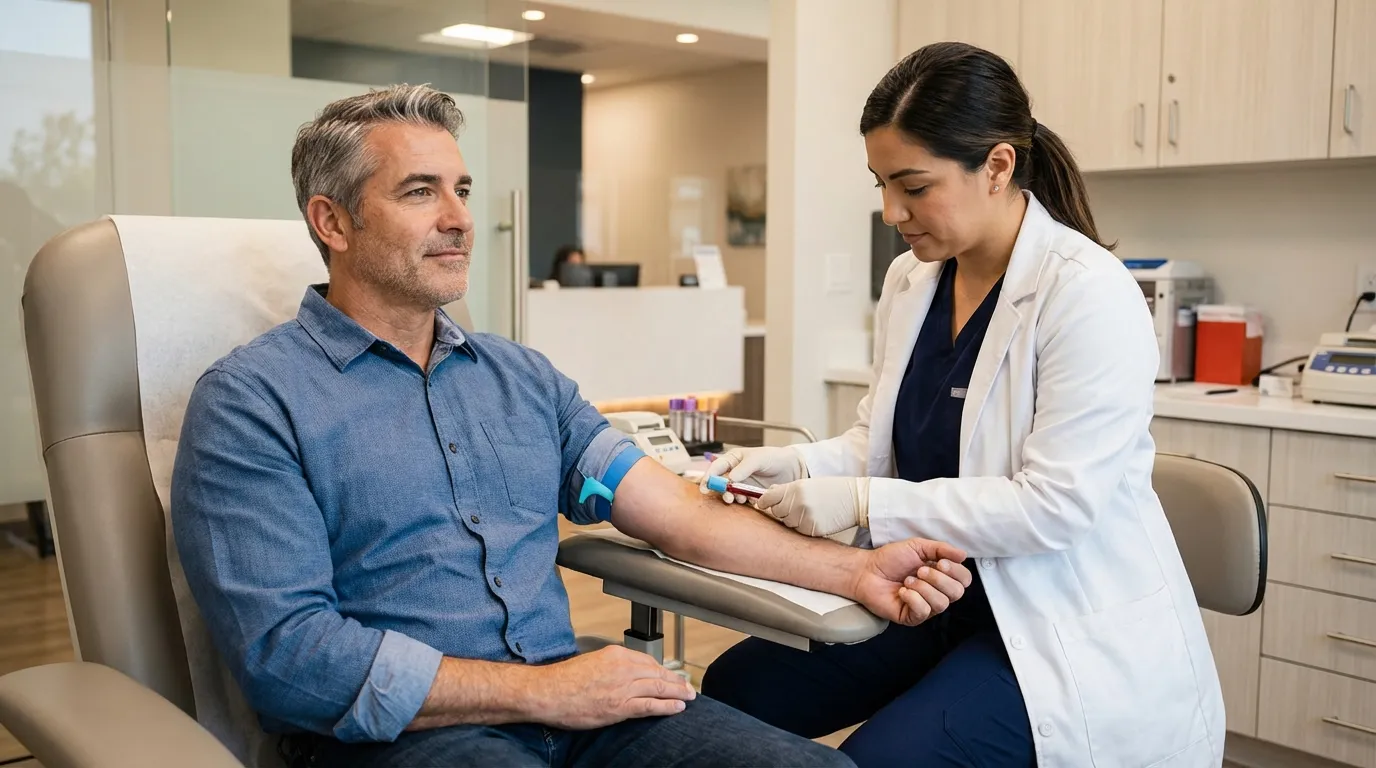
The Endocrine Society draws a clear distinction between age-related decline and clinical hypogonadism. When symptoms are significant enough to affect quality of life, and when blood work confirms low testosterone levels, treatment is medically appropriate and evidence-supported. The key diagnostic step is a testosterone blood test that measures both total and free testosterone, ideally drawn in the morning when levels are at their peak.
Here's a useful way to think about it:
| Experience | Likely Explanation | Action |
|---|---|---|
| Mild fatigue, occasional low mood | Normal aging, lifestyle factors | Sleep, diet, exercise optimization |
| Moderate fatigue, reduced libido, some brain fog | Possible low T or lifestyle overlap | Get blood work, consult a provider |
| Persistent fatigue, very low libido, mood changes, muscle loss | Clinical low T likely | Full hormone panel + TRT evaluation |
If you're recognizing yourself in the middle or bottom row of that table, it's worth getting a proper evaluation — not just for comfort, but because untreated low testosterone is associated with long-term metabolic risks including insulin resistance and cardiovascular risk factors.
Why Low Testosterone Is Underdiagnosed in Men Over 40
Despite affecting an estimated 2–4 million men in the United States, low testosterone remains significantly underdiagnosed and undertreated. There are several reasons for this gap:
Symptoms are diffuse and easy to normalize. Fatigue, low mood, and reduced libido are symptoms that primary care providers — and patients themselves — often attribute to stress, poor sleep, or aging. Without a structured symptom checklist and proactive blood testing, low T slips through the cracks.
Men are less likely to seek healthcare. Research consistently shows men delay seeking medical care longer than women and are less likely to discuss symptoms related to sexual health or mood. This cultural tendency means many men suffer in silence for years before getting answers.
Standard lab panels don't always include testosterone. A routine annual physical often doesn't include hormone testing unless specifically requested. Men with symptoms need to ask their doctor — or seek out a provider who specializes in men's hormonal health.
"Normal" lab ranges are broad. A man with total testosterone of 305 ng/dL is technically "normal" by standard reference ranges, but may feel profoundly different from a man at 700 ng/dL. Symptom context matters as much as the number on the lab report.
Understanding what causes low testosterone in men can also help you identify contributing factors — from chronic stress to sleep apnea to certain medications — that may be driving your levels down.
Natural Ways to Support Testosterone Before Considering TRT
If your symptoms are mild to moderate and your levels are borderline, lifestyle optimization is always a reasonable first step. Testosterone responds meaningfully to several modifiable lifestyle factors:
- Sleep: Testosterone is predominantly produced during deep sleep. Men who sleep fewer than six hours per night have significantly lower testosterone levels than those who sleep seven to nine hours. Prioritizing sleep quality is one of the highest-leverage interventions available.
- Resistance training: Heavy compound movements — squats, deadlifts, presses — have been shown to acutely elevate testosterone and support long-term hormonal health. Consistency matters more than intensity.
- Body composition: Reducing excess body fat, particularly visceral fat, lowers the activity of aromatase — the enzyme that converts testosterone to estrogen. Even a 10–15% reduction in body weight can meaningfully improve testosterone levels in overweight men.
- Stress management: Chronic cortisol elevation suppresses testosterone production. Mindfulness, adequate downtime, and managing workload are not luxuries — they're hormonal health strategies.
- Nutrition: Adequate dietary fat (particularly from whole food sources), zinc, vitamin D, and overall caloric sufficiency are all prerequisites for healthy testosterone production.
Our guide on how to increase testosterone naturally before TRT provides a practical, evidence-based roadmap for this phase. For many men, these changes provide meaningful relief. For others, they are an important complement to TRT — not a replacement.
When TRT Becomes the Right Conversation
If lifestyle optimization hasn't moved the needle, or if your symptoms and blood work clearly indicate clinical hypogonadism, testosterone replacement therapy deserves serious consideration. TRT is an FDA-recognized treatment with decades of clinical evidence behind it, and for men who are good candidates, the results can be genuinely transformative.
Common improvements men report on TRT include restored energy and motivation, improved body composition, enhanced libido and sexual function, better mood stability, and improved cognitive clarity. Our article on TRT before and after: real results explained provides realistic expectations based on clinical outcomes.
TRT is available in several delivery formats — injections, gels, patches, and pellets — each with different pharmacokinetic profiles and practical considerations. Our comparison of TRT injections vs gel breaks down the pros and cons of the most common options.
It's also worth understanding that TRT is a medical therapy requiring proper screening, baseline blood work, and ongoing monitoring. A qualified provider will assess your complete hormone panel — including estradiol, SHBG, hematocrit, and PSA — before initiating therapy. If you're curious about what that process looks like, our guide on your first TRT consultation walks through every step.
Side effects of TRT are real but manageable in the vast majority of cases when therapy is properly supervised. You can explore the full landscape in our article on TRT side effects: what to expect and how to manage them.

How to Find a Qualified TRT Provider
Finding the right provider is arguably the most important decision in the TRT journey. Not all providers approach testosterone therapy with the same depth of knowledge or commitment to individualized care. A good TRT provider will take a comprehensive symptom history, order a thorough baseline panel, explain your options clearly, and monitor your response with regular follow-up labs.
You have two main pathways: in-person clinics and online TRT providers. Both can offer excellent care — the key is vetting the provider's approach. Our guide on how to find a TRT doctor walks you through exactly what to look for and what questions to ask. If you prefer to explore clinic options in your area, you can find a TRT clinic near you through our directory — we list vetted providers across the country, including TRT clinics in Texas, TRT clinics in California, and TRT clinics in Florida.
Online TRT clinics have expanded access significantly, making it easier for men in underserved areas to receive quality hormonal care. Our review of the best online TRT clinics covers cost, convenience, and what to expect from a virtual provider relationship.
Cost is a common concern. TRT is more accessible and affordable than many men expect, particularly through newer telehealth-based providers. For a full breakdown, see our guide on how much TRT costs.
Taking the Next Step When You Recognize Low Testosterone Symptoms Over 40
If this article has resonated with you — if the fatigue, the low libido, the mood changes, and the muscle loss feel familiar — the most important thing you can do is take action rather than wait. Low testosterone symptoms over 40 are not a permanent sentence, and they are not something you simply have to endure as a cost of aging.
Start by getting your levels checked. A simple morning blood draw measuring total testosterone, free testosterone, SHBG, and LH gives your provider the foundation for a proper evaluation. If you're not sure whether your symptoms align with low T, take the free Low T symptom quiz to get a clearer picture before your appointment.
The men who benefit most from addressing low testosterone symptoms over 40 are those who act early — before years of low energy, diminished drive, and declining health accumulate. Whether your path leads to lifestyle changes, TRT, or a combination of both, the goal is the same: feeling like yourself again. A qualified provider can help you get there safely, effectively, and with a plan that's built around your specific biology and goals.
Ready to take the next step? Find a TRT clinic near you and connect with a provider who specializes in men's hormonal health today.
Sources & References
- Testosterone Deficiency in Men: Systematic Review and Standard of Care Report — American Urological Association [Link]
- Testosterone Therapy in Men with Hypogonadism: An Endocrine Society Clinical Practice Guideline — Journal of Clinical Endocrinology & Metabolism [Link]
- Male Hypogonadism — Mayo Clinic [Link]
- Low Testosterone (Male Hypogonadism) — Cleveland Clinic [Link]
- Age-related changes in the male reproductive system — PubMed / New England Journal of Medicine [Link]
- Testosterone and the Aging Male — PubMed / Journal of Andrology [Link]
- Association of Testosterone Therapy with Mortality, Myocardial Infarction, and Stroke in Men with Low Testosterone Levels — PubMed / JAMA [Link]
Frequently Asked Questions
Ready to Take the Next Step?
Check your symptoms with our free quiz or browse 2,500+ verified TRT clinics.