
Medical Disclaimer
The information on this website is for educational purposes only and is not a substitute for professional medical advice, diagnosis, or treatment. Always consult a qualified healthcare provider before starting any hormone therapy. Individual results may vary. TRTmatch does not provide medical services or prescribe medications.
Key Takeaways
- TRT is an FDA-recognized, guideline-supported therapy that is safe and effective for men with confirmed hypogonadism when properly monitored by a qualified provider.
- The landmark 2023 TRAVERSE trial found that TRT did not increase the risk of major cardiovascular events compared to placebo in men with elevated heart risk.
- TRT does not cause prostate cancer in men without the disease; it is contraindicated only in men with active, untreated prostate cancer.
- TRT suppresses natural sperm production, so men who want to preserve fertility should discuss options like HCG co-therapy before starting treatment.
- Manageable side effects — such as elevated hematocrit or estrogen — are tracked with routine blood work and adjusted through dosing or delivery method changes.
- Untreated low testosterone also carries health risks; the safety evaluation must weigh both the risks of treatment and the risks of leaving hypogonadism unaddressed.
Disclaimer: This article is for educational purposes only and does not constitute medical advice. Always consult a qualified healthcare provider before starting or changing any hormone therapy.
If you've been researching testosterone replacement therapy, you've almost certainly asked the question: is TRT safe? It's a reasonable thing to wonder. Any medical treatment deserves scrutiny, and your long-term health matters. The good news is that decades of research, clinical experience, and FDA-recognized use paint a clear picture — TRT is a well-established therapy that is safe and effective for the right candidates when managed by a qualified provider.
That said, like any medical treatment, TRT carries considerations that are worth understanding before you begin. This guide walks through the most commonly discussed concerns — cardiovascular health, prostate effects, fertility, and more — with honest, evidence-based explanations and practical context. If you're experiencing symptoms like fatigue, low libido, or brain fog, you can take the free Low T symptom quiz to get a clearer picture of where you stand.

What Does "Safe" Actually Mean for TRT?
Before diving into specific health areas, it's worth defining what safety means in a medical context. No intervention — including common medications like statins, blood pressure drugs, or even aspirin — is completely without risk for every person. Safety in medicine means that, for the right patient with appropriate screening and monitoring, the benefits consistently outweigh the risks.
For TRT, this framework applies directly. The Endocrine Society, the American Urological Association (AUA), and major academic medical centers all recognize testosterone therapy as a legitimate, evidence-supported treatment for men with clinically confirmed hypogonadism — that is, men with low testosterone levels confirmed by blood testing alongside clear symptoms.
The key phrase there is "right patient." A qualified TRT provider doesn't simply hand out a prescription. They conduct thorough baseline bloodwork, review your medical history, screen for conditions that require extra monitoring, and track your progress over time. When TRT is managed this way, the safety profile is well-understood and reassuring for most men. Understanding which blood tests you need before and during treatment is an important part of that process.
It's also worth noting that untreated low testosterone carries its own health risks — including increased body fat, reduced bone density, metabolic dysfunction, and diminished cardiovascular health. Safety isn't just about managing therapy; it's about weighing the full picture. If you're unsure whether your symptoms point to low T, reviewing the 10 signs of low testosterone in men is a useful starting point.
Is TRT Safe for Your Heart? Understanding Cardiovascular Considerations
The cardiovascular question is the one most men — and many physicians — ask first. Early studies, particularly one published around 2010 and another in 2013, raised concerns about a possible link between TRT and heart attack or stroke. These studies received significant media attention and understandably generated concern. However, subsequent, larger, and more rigorously designed research has substantially clarified the picture.
The landmark TRAVERSE trial, published in the New England Journal of Medicine in 2023, was specifically designed to assess cardiovascular safety of testosterone therapy in men with hypogonadism and elevated cardiovascular risk. The trial followed over 5,200 men and found that testosterone therapy was non-inferior to placebo for major adverse cardiovascular events — meaning it did not increase the risk of heart attack or stroke compared to no treatment.
What does this mean practically? For most men with low testosterone — including those with existing cardiovascular risk factors — TRT does not appear to raise the risk of serious heart events. In fact, some research suggests that optimizing testosterone levels may support healthier body composition, insulin sensitivity, and lipid profiles, all of which benefit heart health over time.
There is one cardiovascular consideration worth knowing: TRT can increase red blood cell production (a condition called erythrocytosis or polycythemia), which thickens the blood and could theoretically raise clotting risk in certain individuals. This is why hematocrit — the percentage of red blood cells in your blood — is a standard part of TRT monitoring. If levels rise too high, a provider can adjust dosing, change the delivery method, or recommend therapeutic phlebotomy. This is a manageable, well-understood variable, not a reason to avoid treatment. For a deeper look at delivery options and how they affect your body, see our comparison of TRT injections vs gel.
TRT and Prostate Health: Separating Myth from Evidence
For years, the conventional wisdom in medicine held that testosterone "feeds" prostate cancer — a theory that originated from research in the 1940s showing that castration (and the resulting testosterone deprivation) slowed prostate cancer progression. This led many physicians to avoid TRT in men with any history of prostate issues.
More recent evidence has significantly updated this view. The "saturation model," proposed by Dr. Abraham Morgentaler, suggests that prostate tissue becomes saturated with testosterone at relatively low levels, and that adding more testosterone beyond that threshold has minimal additional effect on prostate growth or cancer risk. Multiple large studies have failed to show that TRT meaningfully increases the risk of developing prostate cancer in men who do not have it.
What remains true is that TRT is currently contraindicated in men with active, untreated prostate cancer. Men with a history of prostate cancer who are interested in TRT require careful, individualized evaluation by a specialist — and in selected cases, some urologists do consider TRT for men with treated, low-risk disease, though this is not standard practice everywhere.
For men with benign prostatic hyperplasia (BPH) — the non-cancerous enlargement of the prostate that commonly affects men over 50 — TRT does not appear to significantly worsen symptoms in most cases, particularly when properly monitored. Before starting TRT, providers typically check PSA (prostate-specific antigen) levels as a baseline, and continue monitoring during treatment. This screening process is precisely why working with a knowledgeable provider matters so much. You can find a TRT clinic near you that includes thorough prostate screening as part of their standard protocol.

TRT and Fertility: What Men Need to Know
This is an area where TRT does carry a real, specific consideration — particularly for men who may want to father children in the future. When you introduce external testosterone into your body, your brain's feedback system (the hypothalamic-pituitary-gonadal axis) detects elevated hormone levels and responds by reducing its signal to the testes to produce testosterone naturally. As a result, the testes also reduce or stop sperm production.
For men who are done having children or not planning a family, this is typically not a concern. But for men who want to preserve fertility, it's an important conversation to have with your provider before starting TRT. Several strategies exist to maintain fertility while on testosterone therapy. Human chorionic gonadotropin (HCG) is commonly co-prescribed to stimulate the testes and maintain sperm production — learn more about why doctors prescribe HCG and TRT together. Clomiphene citrate (Clomid) is another option that raises natural testosterone without suppressing the pituitary signal. Compare the approaches in our article on Clomid vs TRT.
For men who have already been on TRT and wish to restore fertility, recovery of sperm production is possible for most — though it can take months and is not guaranteed for everyone. The takeaway is straightforward: if fertility is a priority, discuss it openly with your provider. There are well-established options, and a good clinic will address this proactively. Read our full overview of TRT and fertility for a comprehensive breakdown.
Sleep Apnea, Hematocrit, and Other Considerations
Beyond the cardiovascular and prostate questions, a few other health areas come up frequently in TRT safety discussions. Understanding them helps you have a more informed conversation with your provider.
Sleep Apnea
Testosterone therapy may worsen obstructive sleep apnea in men who already have the condition, because it can affect respiratory drive during sleep. This risk is specific to men with pre-existing or undiagnosed sleep apnea — it is not a general risk for all TRT patients. A thorough intake process will screen for sleep apnea symptoms, and if you have a known diagnosis, your provider will factor this into your treatment plan. For many men, properly managed TRT actually supports better sleep quality by improving body composition and reducing fatigue. Explore the relationship between TRT and sleep in more detail.
Erythrocytosis (Elevated Hematocrit)
As mentioned in the cardiovascular section, TRT stimulates red blood cell production. For most men, this stays within a healthy range and is simply tracked with routine blood work. In some cases — particularly with injectable testosterone at higher doses or less frequent intervals — hematocrit can rise above recommended thresholds. Adjusting dosing frequency, switching delivery methods, or donating blood are all effective management strategies. This is a routine part of TRT monitoring, not a crisis.
Estrogen Balance
Testosterone naturally converts to estradiol (a form of estrogen) in the body via an enzyme called aromatase. On TRT, some men experience elevated estrogen, which can contribute to water retention, mood changes, or breast tissue sensitivity. Monitoring estradiol levels and, if needed, using a low-dose aromatase inhibitor keeps this in check. Learn more about estradiol management in men on TRT.
Is TRT Safe Long-Term? What the Evidence Shows
Long-term safety is perhaps the most nuanced area, simply because testosterone therapy has only been widely used in modern clinical settings for a few decades, and truly long-term data (20+ years) is still accumulating. However, the evidence available from studies spanning 10 or more years is encouraging.
A 2016 registry study of over 800 men on long-term TRT showed sustained improvements in metabolic markers, body composition, and quality of life, without significant increases in adverse events compared to untreated controls. Bone density — a major concern in men with hypogonadism — consistently improves with TRT, reducing fracture risk over time. Cognitive function, mood, and energy also tend to be maintained or improved, particularly in men who were genuinely deficient before starting therapy.
The most intellectually honest statement about long-term TRT safety is this: for men who genuinely need it and are properly monitored, the long-term benefit-to-risk ratio is favorable. The risks that do exist are primarily in men with significant pre-existing conditions — and those risks are manageable when a qualified provider is overseeing care. If you're curious about what outcomes look like in practice, our article on TRT before and after: real results explained covers what men actually experience over time.
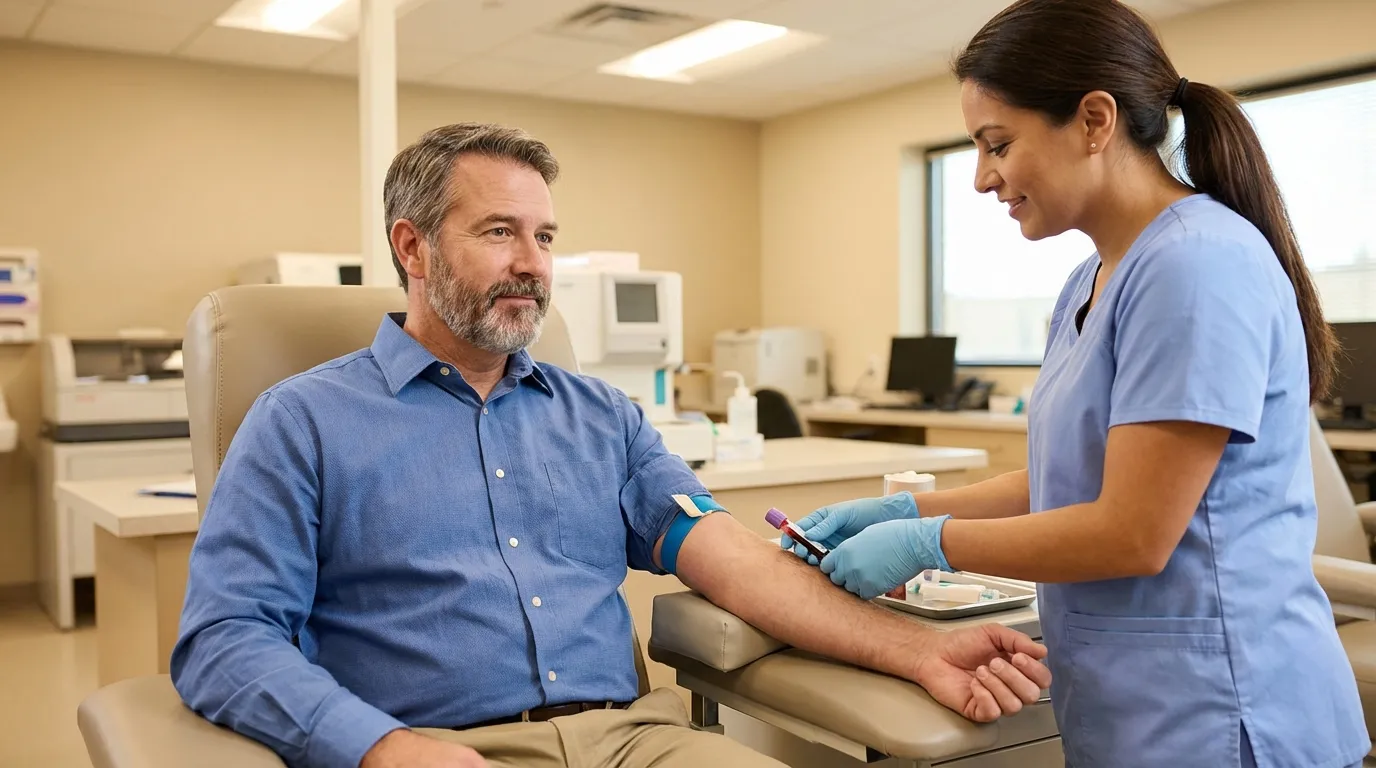
Routine monitoring — including testosterone levels, hematocrit, PSA, lipid panel, and liver enzymes — gives your provider the data to catch and address any emerging issues early. Think of it like managing blood pressure or cholesterol: ongoing oversight is what makes long-term safety achievable.
Who Is TRT Most Appropriate For — and When Is Caution Needed?
Understanding who is a strong candidate for TRT — and who requires extra evaluation — is central to the safety conversation. TRT is most clearly appropriate for men who have both confirmed low testosterone on laboratory testing (generally below 300 ng/dL on two morning measurements) and meaningful symptoms that affect quality of life.
Symptoms that commonly indicate low testosterone include persistent fatigue, reduced libido, erectile dysfunction, difficulty building or maintaining muscle, increased body fat (particularly around the abdomen), mood changes, and cognitive fog. If these sound familiar, reviewing low testosterone symptoms after 40 can help you understand what's considered typical versus what warrants evaluation.
Men who require extra evaluation before starting TRT include those with:
- Active prostate or breast cancer — TRT is contraindicated and should not be used without specialist guidance.
- Severe untreated sleep apnea — Treatment of the sleep apnea first is generally recommended.
- Hematocrit above 54% at baseline — Elevated red blood cell count before starting warrants investigation.
- Uncontrolled heart failure — Requires cardiac stabilization before considering TRT.
- Desire for near-term fertility — Requires discussion of alternative approaches before starting standard TRT.
None of these are necessarily permanent disqualifiers — they are conditions that require a more careful, individualized approach. A skilled TRT provider will work through these factors with you during your initial consultation. To understand what that process looks like, see our guide on your first TRT consultation: what to expect. Finding the right provider is often the most important step — explore TRT clinics near you or use our state-specific directories for TRT clinics in Texas, TRT clinics in California, or TRT clinics in Florida.
Is TRT Safe? The Bottom Line
After reviewing the evidence across cardiovascular health, prostate effects, fertility, sleep, and long-term outcomes, the answer to the question is TRT safe is a well-supported yes — for the right candidates, under proper medical care. TRT is not a fringe treatment or an experiment. It is an FDA-recognized, guideline-supported therapy used by hundreds of thousands of men in the United States alone.
The concerns that exist are real, but they are specific, manageable, and best addressed through the kind of individualized, ongoing medical oversight that a qualified TRT provider delivers. The risk of leaving confirmed low testosterone untreated — including effects on bone health, metabolic function, cardiovascular health, and quality of life — is equally worth taking seriously.
If you're wondering whether TRT might be right for you, the smartest next step is a conversation with a knowledgeable provider who can evaluate your specific situation. Start by using our free Low T symptom quiz to assess your symptoms, then find a qualified TRT doctor who can walk you through testing, diagnosis, and — if appropriate — a personalized treatment plan. You deserve answers based on your individual health, not generalized fear.
Sources & References
- Cardiovascular Safety of Testosterone-Replacement Therapy (TRAVERSE Trial) — New England Journal of Medicine [Link]
- Testosterone Therapy in Men with Hypogonadism: An Endocrine Society Clinical Practice Guideline — The Journal of Clinical Endocrinology & Metabolism [Link]
- Evaluation and Management of Testosterone Deficiency: AUA Guideline — American Urological Association [Link]
- Testosterone Therapy and Prostate Cancer Risk — PubMed / European Urology [Link]
- Long-term testosterone therapy improves cardiometabolic function and reduces risk of cardiovascular disease in men with hypogonadism — PubMed / The Aging Male [Link]
- Testosterone and the Heart — Mayo Clinic [Link]
- Polycythemia (Erythrocytosis) and Testosterone Therapy — PubMed / Journal of Clinical Endocrinology & Metabolism [Link]
Frequently Asked Questions
Ready to Take the Next Step?
Check your symptoms with our free quiz or browse 2,500+ verified TRT clinics.