
Medical Disclaimer
The information on this website is for educational purposes only and is not a substitute for professional medical advice, diagnosis, or treatment. Always consult a qualified healthcare provider before starting any hormone therapy. Individual results may vary. TRTmatch does not provide medical services or prescribe medications.
Key Takeaways
- A signs of low testosterone quiz based on validated clinical tools (like the ADAM questionnaire) can help you identify whether your symptom pattern warrants a blood test and medical evaluation.
- The most common low T symptoms include persistent fatigue, low libido, reduced muscle mass, increased body fat, mood changes, and brain fog — often occurring together.
- Low testosterone is diagnosed via two morning blood tests showing total testosterone below 300 ng/dL alongside consistent symptoms; a quiz alone is not a diagnosis.
- TRT is an FDA-recognized, well-established treatment available in several forms — injections, gels, pellets, and oral tablets — and is individualized to each man's needs and health profile.
- Results from TRT build progressively: energy and mood often improve within weeks, while body composition changes typically take three to six months.
- Finding a qualified TRT provider who performs thorough screening and regular monitoring is the key to safe, effective treatment outcomes.
Is Low Testosterone Behind How You're Feeling?
If you've been feeling off lately — dragging through the day, losing muscle despite working out, or noticing your drive (in every sense of the word) isn't what it used to be — you're not imagining it. These could be real, measurable signs of low testosterone. And you're far from alone: research estimates that testosterone deficiency affects somewhere between 2% and 6% of adult men broadly, though some studies suggest the figure climbs as high as 38% when looking at men over 45 with related health conditions.
Signs Of Low Testosterone Quiz is an important topic for men considering testosterone therapy.
That's why tools like a signs of low testosterone quiz can be genuinely useful — they help you organize your symptoms, understand what's worth discussing with a doctor, and take action with confidence rather than guessing. This guide walks you through the most common low T symptoms, gives you an interactive self-assessment framework, explains what blood work actually confirms the diagnosis, and lays out your real options for treatment.
Medical disclaimer: This article is for educational purposes only and does not constitute medical advice. Always consult a qualified healthcare provider before making decisions about your hormone health or starting any treatment.

Signs of Low Testosterone Quiz: Rate Your Symptoms
The most widely used clinical screening tools for testosterone deficiency — including the ADAM questionnaire (Androgen Deficiency in Aging Males) developed by researchers at St. Louis University and the AMS (Aging Males' Symptoms) scale — are essentially structured symptom quizzes. They work because low T produces a recognizable cluster of symptoms that, when scored together, strongly predict whether a man's testosterone levels are below the clinical threshold.
Use the self-assessment below. For each symptom, rate how often you experience it: 0 = Never, 1 = Rarely, 2 = Sometimes, 3 = Often, 4 = Almost Always.
Signs of Low Testosterone Quiz: Physical Symptoms
- Persistent fatigue or low energy, even after adequate sleep
- Reduced muscle mass or difficulty building muscle despite regular exercise
- Increased body fat, especially around the abdomen
- Decreased body or facial hair
- Hot flashes or unexplained sweating
- Reduced bone density or unexplained joint aches
- Decreased testicle size or fullness
Sexual Symptoms
- Low sex drive or significantly reduced libido
- Difficulty achieving or maintaining erections
- Reduced frequency of morning erections
- Decreased semen volume
Mental and Emotional Symptoms
- Persistent low mood or mild depression
- Increased irritability or difficulty managing stress
- Brain fog, poor concentration, or memory lapses
- Loss of motivation or reduced sense of purpose
- Poor sleep quality or insomnia
Scoring guide: If your total score is 20 or above, or if you scored 3–4 on any single symptom, your symptom profile is consistent with what clinicians see in men with low testosterone. A score of 10–19 suggests a moderate symptom burden worth discussing with a provider. Even a score below 10 with one or two specific, persistent symptoms warrants a conversation.
Ready to get a more personalized result? Take the free Low T symptom quiz on TRTmatch for a guided assessment built around clinically validated questions.
The Most Common Symptoms of Low Testosterone Explained
Understanding each symptom helps you connect the dots between what you're experiencing and what's actually happening hormonally. Testosterone doesn't just influence one system — it plays a role in energy metabolism, muscle protein synthesis, bone remodeling, mood regulation, and sexual function simultaneously. When levels drop, multiple systems feel it at once.
Fatigue and Low Energy
This is the number one complaint men bring to their doctors when low T is later confirmed. It's not ordinary tiredness — it's a bone-deep fatigue that sleep doesn't fix. Testosterone supports mitochondrial function and red blood cell production, so when it drops, your cells literally produce less energy. A 2019 study published in the Journal of Clinical Endocrinology and Metabolism found that men with testosterone deficiency reported significantly worse energy levels and quality of life compared to age-matched controls with normal testosterone.
Low Libido and Sexual Dysfunction
Testosterone is the primary driver of male sexual desire. When levels fall, so does interest in sex — often gradually and subtly at first. Many men also notice reduced erectile quality or fewer spontaneous erections. It's worth noting that TRT for erectile dysfunction is well-studied and effective in men whose ED is hormonally driven, though a full evaluation rules out other contributing factors like cardiovascular disease.
Loss of Muscle and Increased Body Fat
Testosterone directly stimulates muscle protein synthesis. Without adequate levels, men lose lean mass even while maintaining the same exercise and diet habits. Simultaneously, low testosterone is associated with increased fat accumulation — particularly visceral fat around the organs. This can create a frustrating cycle: more body fat leads to increased aromatase enzyme activity, which converts more testosterone to estrogen, further suppressing testosterone levels.
Mood Changes, Brain Fog, and Depression
Testosterone has well-documented effects on brain chemistry, including its influence on serotonin and dopamine pathways. Men with low T often describe a dulled sense of motivation, persistent low mood, and difficulty concentrating — sometimes called brain fog. Research published in Psychoneuroendocrinology has linked testosterone deficiency to higher rates of depressive symptoms in men. Explore more about the connection at TRT and Depression: Can Testosterone Improve Your Mood?
For a deeper dive into all the ways low testosterone shows up in daily life, see our detailed breakdown in 10 Signs of Low Testosterone in Men.

What Causes Testosterone Levels to Drop?
Low testosterone isn't inevitable, and it isn't always simply about age. While it's true that testosterone declines at roughly 1–2% per year after age 30, many men experience a more significant drop due to specific, addressable causes. Understanding the root cause matters because it shapes the treatment approach.
Primary hypogonadism originates in the testes — conditions like Klinefelter syndrome, testicular injury, or certain infections can impair testosterone production at the source. Secondary hypogonadism involves the hypothalamic-pituitary axis, where signals to the testes are disrupted. Common causes include obesity, chronic illness, sleep apnea, stress, and medications such as opioids or corticosteroids.
Lifestyle factors play a larger role than most men realize. Chronic sleep deprivation, excess alcohol consumption, sedentary behavior, and a diet low in zinc and vitamin D are all associated with lower testosterone. For a complete breakdown of the factors involved, read What Causes Low Testosterone in Men? and Low Testosterone Symptoms After 40 — What's Normal? for age-specific context.
It's also worth checking whether other hormone imbalances are contributing. Elevated prolactin, thyroid dysfunction, and abnormal LH or FSH levels can all suppress testosterone. A thorough provider will investigate these possibilities before attributing symptoms solely to primary testosterone deficiency.
How Low Testosterone Is Actually Diagnosed
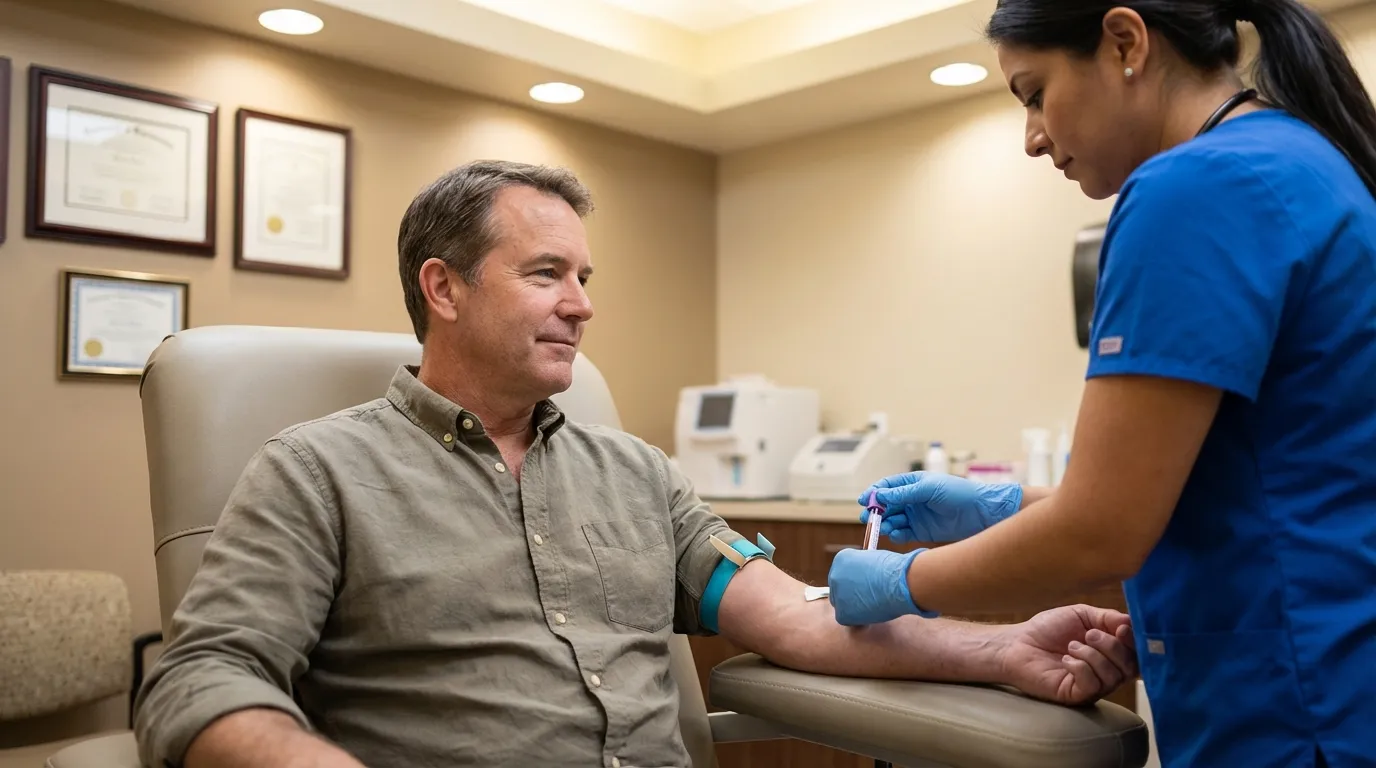
A quiz — even a clinically validated one — is a starting point, not a diagnosis. The gold standard for confirming low testosterone is a blood test measuring total and free testosterone levels, typically drawn in the morning when levels are at their daily peak. The Endocrine Society defines testosterone deficiency as a consistent total testosterone below 300 ng/dL, along with the presence of symptoms.
One test is rarely sufficient. Because testosterone fluctuates day to day and even hour to hour, most guidelines recommend two separate morning measurements before making a diagnosis. Your provider will also likely order a broader panel of blood work that includes free testosterone, SHBG (sex hormone-binding globulin), LH, FSH, estradiol, complete blood count, metabolic panel, and PSA (for men over 40).
Understanding the difference between total and free testosterone is important — free testosterone is the biologically active fraction, and some men have normal total testosterone but low free T due to elevated SHBG. Learn more in Free vs Total Testosterone: What Really Matters? and What Is SHBG and Why It Matters for TRT.
If you've taken the signs of low testosterone quiz and your score suggests a real concern, the logical next step is getting tested. You can do this through your primary care physician, an endocrinologist, a urologist, or a specialized TRT clinic. Find a TRT clinic near you using our directory to connect with providers experienced in hormone health.
Your Treatment Options If You Have Low T
If a qualified provider confirms that your testosterone is clinically low and your symptoms align, you have several well-established treatment options to consider. TRT is an FDA-recognized therapy that has helped millions of men restore their quality of life — it is not experimental, and when properly managed, it carries a well-understood and manageable risk profile.
Testosterone Injections
Testosterone cypionate and enanthate injections are among the most common and cost-effective delivery methods. They are typically administered once or twice weekly, either intramuscularly or subcutaneously. Injections allow for precise dosing and straightforward monitoring. See the comparison between Testosterone Injections vs Pellets or review TRT Injections vs Gel to understand which method may suit your lifestyle best.
Topical Gels and Creams
Testosterone gels and creams are applied daily to the skin and absorbed transdermally. They offer stable, consistent levels and are a good option for men who prefer to avoid injections. The main consideration is preventing transfer to partners or children through skin contact, which a provider will explain thoroughly.
Testosterone Pellets
Pellets are inserted subcutaneously every three to six months, providing a slow, steady hormone release. Many men find the low-maintenance schedule appealing. Dosing adjustments require a new insertion procedure, so pellets work best once an optimal dose has been established.
Oral Testosterone
Newer oral formulations like Jatenzo and Kyzatrex are FDA-approved and offer an injection-free option. They must be taken with food and are typically taken twice daily. Learn more about Oral Testosterone options here.
For men who want to preserve fertility or prefer a non-suppressive approach, alternatives like clomiphene (Clomid) or enclomiphene stimulate the body's own testosterone production. Compare your options in Clomid vs TRT and Enclomiphene vs TRT.
What to Expect When You Start TRT
One of the most common questions men ask after diagnosis is: how quickly will I feel better? The honest answer is that TRT works on a timeline, and results build progressively. Most men notice improvements in energy and mood within the first two to four weeks. Libido and sexual function often improve within three to six weeks. Changes in body composition — more muscle, less fat — typically become noticeable after three to six months of consistent treatment.
For a detailed week-by-week breakdown, read TRT First 30 Days: What to Expect Week by Week and TRT at 3 Months: Results, Changes and What's Normal. For longer-term results, TRT After 1 Year: Long-Term Results and Transformations provides realistic expectations.
Regular monitoring is a core part of responsible TRT. Your provider will check bloodwork every few months to ensure your testosterone is in the optimal therapeutic range, your hematocrit remains safe, and estrogen is balanced. This is what distinguishes medically supervised TRT from anything else — the individualization and ongoing adjustment that keeps treatment working well and safely for you specifically.
Side effects do occur in some men and are generally manageable with proper oversight. For a balanced overview, TRT Side Effects: What to Expect and How to Manage Them covers the most common concerns and solutions. The overall safety profile of TRT in appropriately screened men is well-supported; for a thorough evidence review, see Is TRT Safe? Heart, Prostate and Long-Term Health Risks Explained.
How to Find a Qualified TRT Provider
Getting a proper diagnosis and a well-managed protocol starts with finding the right provider. Not all doctors are equally experienced with hormone optimization, so seeking out a specialist matters. TRT clinics, men's health practices, urologists, and endocrinologists who specialize in hormone therapy are your best options. Telemedicine has also made high-quality TRT care far more accessible — many top providers now offer consultations, lab orders, and prescription delivery entirely online.
When evaluating a provider, look for someone who orders comprehensive bloodwork before prescribing, discusses your full symptom picture, explains monitoring protocols, and personalizes your dosing rather than applying a one-size-fits-all approach. Read our guide on How to Find a TRT Doctor and Your First TRT Consultation: What to Expect to go in prepared.
Cost and insurance coverage are practical considerations. Many TRT clinics offer straightforward monthly pricing, and some insurance plans do cover treatment when low testosterone is medically confirmed. See Does Insurance Cover TRT? and TRT Cost: Full Price Breakdown for a clear picture of what to expect financially.
Taking the Next Step After Your Signs of Low Testosterone Quiz
If you've worked through the signs of low testosterone quiz in this article and recognized yourself in multiple symptoms, that awareness is genuinely valuable. Low testosterone is common, diagnosable, and highly treatable. The symptoms you're experiencing — fatigue, low libido, mood changes, lost muscle — are not things you simply have to accept as the price of getting older. They're signals worth taking seriously.
The right path forward is straightforward: use a validated self-assessment, get your levels tested by a qualified provider, and if low T is confirmed, explore your treatment options with professional guidance. Men who get properly diagnosed and treated consistently report significant improvements in energy, sexual function, body composition, mood, and overall quality of life.
Start right now: Take the free Low T symptom quiz to get a structured read on your symptoms, then find a TRT clinic near you to take that information to a provider who can order the blood work and give you real answers. You don't have to keep guessing — and you don't have to keep feeling this way.
Sources & References
- Testosterone Deficiency in Adult Men: American Urological Association Guideline — American Urological Association [Link]
- Diagnosis and Treatment of Hypogonadism in Men: An Endocrine Society Clinical Practice Guideline — Journal of Clinical Endocrinology and Metabolism [Link]
- Testosterone Therapy in Men with Hypogonadism: An Endocrine Society Clinical Practice Guideline (2018 Update) — PubMed / Endocrine Society [Link]
- Cardiovascular Safety of Testosterone-Replacement Therapy (TRAVERSE Trial) — New England Journal of Medicine [Link]
- Low Testosterone (Male Hypogonadism) — Overview — Mayo Clinic [Link]
- Testosterone and Depression: Systematic Review and Meta-Analysis — PubMed / Psychoneuroendocrinology [Link]
- Androgen Deficiency in the Aging Male (ADAM) Questionnaire Validation — PubMed / Metabolism [Link]
Frequently Asked Questions
Ready to Take the Next Step?
Check your symptoms with our free quiz or browse 2,500+ verified TRT clinics.