
Medical Disclaimer
The information on this website is for educational purposes only and is not a substitute for professional medical advice, diagnosis, or treatment. Always consult a qualified healthcare provider before starting any hormone therapy. Individual results may vary. TRTmatch does not provide medical services or prescribe medications.
Key Takeaways
- By 3 months on TRT, most men experience measurable improvements in energy, libido, mood, and early body composition changes.
- A 3-month blood panel is essential to confirm therapeutic testosterone levels and monitor markers like estradiol, hematocrit, and PSA.
- Some benefits — including bone density and full body recomposition — continue developing for 6–12+ months; patience and consistency are key.
- Lifestyle factors like resistance training, adequate protein, quality sleep, and protocol adherence significantly amplify TRT outcomes.
- If results feel incomplete at 3 months, dose adjustments or evaluation of contributing factors (estradiol, sleep quality, thyroid) may be needed.
- Working with a qualified TRT provider ensures your protocol is individualized, monitored, and optimized over time.
Disclaimer: This article is for educational purposes only and does not constitute medical advice. Always consult a qualified healthcare provider before starting or adjusting testosterone replacement therapy.
If you're approaching the three-month mark on testosterone replacement therapy, you're probably wondering whether you're on track. Understanding trt 3 months results can help you set realistic expectations, recognize what's working, and know when to flag something with your provider. The reality is that month three is often a turning point — it's when many of the early benefits consolidate and new ones begin to emerge. But it's also when some men feel frustrated because they expected more by now. This guide will walk you through exactly what the research and clinical experience tell us about this critical milestone.
Whether you're tracking your energy, body composition, libido, or mood, the 90-day window is meaningful — but it's not the finish line. TRT is a long-term therapy, and understanding the timeline helps you stay the course with confidence. If you haven't started yet and are weighing your options, take the free Low T symptom quiz to see whether therapy might be right for you.

Why the 3-Month Mark Matters on TRT
Three months — roughly 12 weeks — is the point at which most TRT protocols have had enough time to stabilize testosterone levels in the bloodstream. During the first few weeks, your body is adjusting to exogenous testosterone. Your hypothalamic-pituitary-gonadal (HPG) axis suppresses its own signaling, your red blood cell production begins to shift, and your tissues are starting to respond to elevated androgen levels. By week 12, much of this initial adaptation is complete.
Clinically, many providers schedule a follow-up lab panel at 6–12 weeks to assess how well a patient is responding. This includes total testosterone, free testosterone, estradiol, hematocrit, and sometimes PSA (prostate-specific antigen). These numbers inform whether the dosage needs to be adjusted and whether any side effects require management. You can learn more about what panels to request in our guide to TRT blood work: which tests you need before and during treatment.
Research published in the Journal of Clinical Endocrinology and Metabolism confirms that many of testosterone's physiological effects — including changes in lean mass, fat distribution, and bone density — follow a timeline that spans weeks to months, with some benefits continuing to accrue for 12–24 months. So while three months is significant, it's part of a longer arc of improvement. Understanding this helps men stay motivated rather than discouraged if not every benefit has arrived yet.
The bottom line: the 90-day mark is an excellent checkpoint — both for celebrating early wins and for having an informed conversation with your provider about what comes next. If you're still looking for the right provider, find a TRT clinic near you through our directory.
Energy and Mental Clarity at 3 Months
For most men, energy improvement is one of the earliest and most noticeable benefits of TRT. By the three-month mark, the majority of men report a sustained improvement in daily energy levels — not the jittery boost you might get from caffeine, but a steadier, more durable sense of vitality throughout the day.
Fatigue is one of the most common symptoms of low testosterone. A 2013 meta-analysis published in PLOS ONE found that testosterone therapy significantly improved energy and reduced fatigue scores compared to placebo in hypogonadal men. By month three, most men are well past the initial adjustment period and experiencing these gains more consistently.
Mental clarity — sometimes called "brain fog" when it's absent — also tends to improve meaningfully by this point. Testosterone receptors are present throughout the brain, and adequate testosterone levels support cognitive functions including working memory, verbal fluency, and processing speed. Many men describe feeling sharper, more decisive, and better able to focus at work or in conversations.
That said, energy improvements can vary depending on sleep quality, thyroid function, adrenal health, and lifestyle factors. If you're still feeling persistently fatigued at the three-month mark, it's worth discussing with your provider. There may be an underlying issue worth investigating, or your dose may need adjustment. Our article on why you might still be tired on TRT covers this in detail. The key point: fatigue on TRT is solvable, not something you have to accept.
Libido and Sexual Function: TRT 3 Months Results
Libido is often the first thing men notice improving on TRT — and by month three, most men with low testosterone-related libido issues are reporting meaningful recovery. Testosterone is the primary driver of sexual desire in men, and restoring it to healthy physiological levels typically has a direct and noticeable effect on interest in sex.
Clinical data supports this. A landmark study published in the New England Journal of Medicine (the Testosterone Trials, 2016) found that men on TRT reported significantly improved sexual activity, desire, and erectile function compared to placebo. These improvements were apparent within the first few months of treatment.
Erectile function is somewhat more nuanced. Testosterone contributes to erection quality, but ED is multifactorial — it also involves cardiovascular health, nerve function, and psychological factors. For men whose ED is primarily hormonal, TRT can be highly effective. For others, additional treatments may be beneficial alongside TRT. Our article on TRT for erectile dysfunction provides a thorough breakdown.
One thing to watch at this stage: estradiol levels. As testosterone rises, some converts to estrogen via the aromatase enzyme. High estrogen can actually dampen libido and cause mood changes in some men. If your libido has improved and then plateaued or dipped, this could be a factor. Your provider can check your estradiol and adjust accordingly — learn more in our guide to high estrogen on TRT: symptoms and how to fix it.

Muscle Mass and Body Composition Changes
Body composition changes are among the most exciting — and most misunderstood — aspects of TRT. At three months, men who are exercising regularly typically begin to notice meaningful changes: increased muscle fullness, improved strength, and a gradual reduction in body fat, particularly around the abdomen.
Testosterone promotes muscle protein synthesis by binding to androgen receptors in muscle tissue. It also inhibits fat storage and promotes lipolysis (fat breakdown). The result, over time, is a shift in body composition toward more muscle and less fat — even without dramatic changes in diet or exercise, though both significantly amplify TRT's effects.
A meta-analysis published in the Journal of Cachexia, Sarcopenia and Muscle found that testosterone therapy in hypogonadal men produced an average increase of 1.6 kg in lean mass and a reduction of 1.5 kg in fat mass over 3–6 months. These are meaningful changes — but they're not dramatic overnight transformations. Realistic expectations matter here.
If you're not seeing muscle gains at the three-month mark, training and nutrition are usually the missing variables. TRT optimizes your hormonal environment, but it doesn't replace progressive resistance training and adequate protein intake. Our article on no muscle gain on TRT: what you're doing wrong identifies the most common reasons men stall and how to fix them. You may also notice some initial water retention — this is common early on and usually resolves. See our guide to TRT water retention: why it happens and how to fix it for more context.
For a deeper look at the full body composition journey, including what to realistically expect at six months and beyond, check out our piece on TRT and muscle growth: what to expect.
Mood, Motivation, and Emotional Wellbeing
Many men are surprised by how significantly TRT affects their emotional life. Testosterone plays an important role in mood regulation, and low levels are associated with irritability, depression, anxiety, and a general sense of emotional flatness. By the three-month mark, many men describe feeling more like themselves — more motivated, more resilient, and more emotionally even-keeled.
Research supports this connection. A study published in Biological Psychiatry found that testosterone therapy significantly reduced depressive symptoms in men with hypogonadism. The effect was particularly strong in men who had both low testosterone and clinically significant depressive symptoms. For more on this relationship, see our article on TRT and depression: can testosterone improve your mood?
Motivation and drive — often described as feeling more ambitious or willing to take on challenges — also tend to improve by this point. Testosterone influences dopaminergic pathways in the brain, which regulate reward, motivation, and goal-directed behavior. Men often describe a renewed interest in hobbies, career goals, and physical activity that they had lost during their low-T period.
It's worth noting that mood improvements can fluctuate at first, especially if testosterone or estradiol levels are still being fine-tuned. Some men experience mild mood variability in the early weeks — this is normal and typically resolves as levels stabilize. If anxiety or mood concerns persist, discuss them openly with your provider. These are manageable with appropriate adjustments to your protocol.
What Your Blood Work Should Show at 3 Months
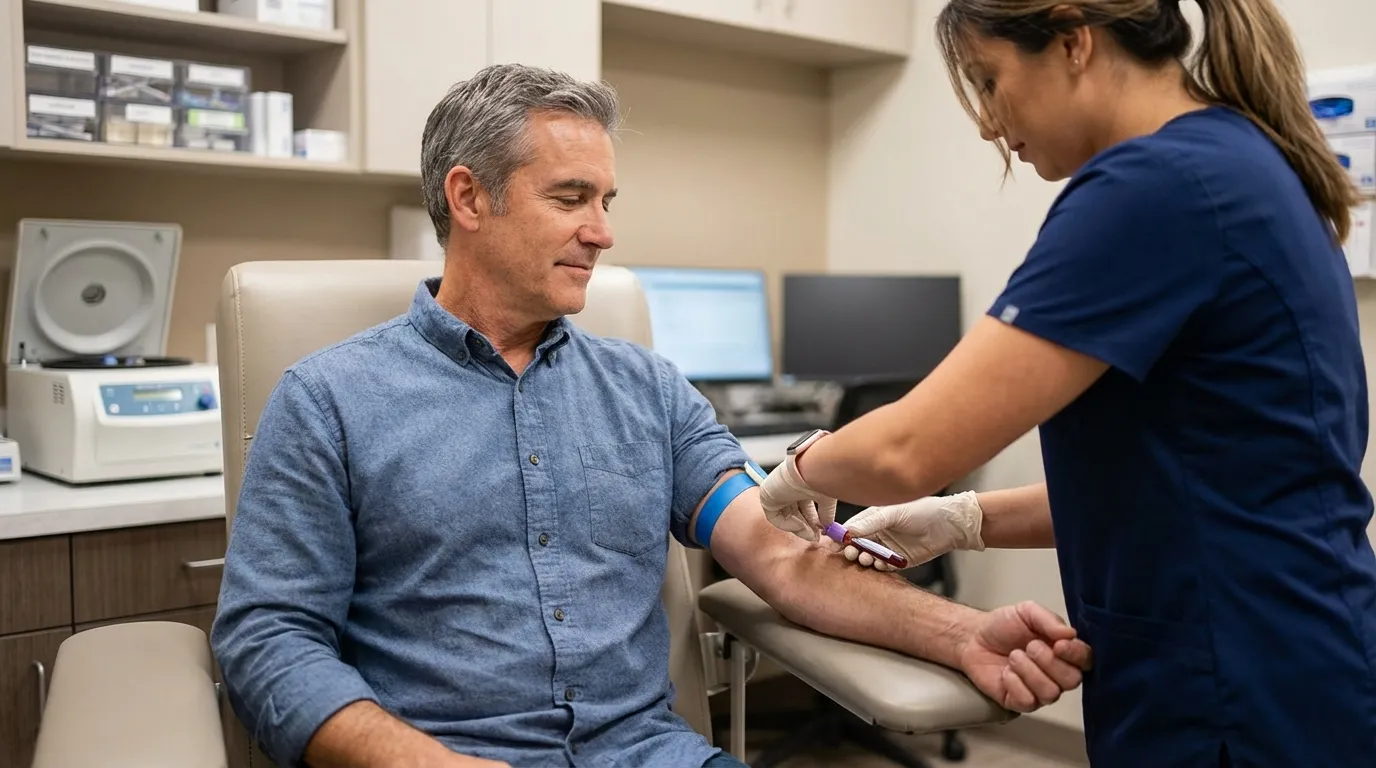
The three-month blood panel is a critical checkpoint for any well-managed TRT protocol. Your provider will use this data to assess whether your current dose is achieving therapeutic testosterone levels and whether any markers need attention.
Here's what a typical 3-month panel should include:
| Lab Marker | What It Measures | Typical TRT Target |
|---|---|---|
| Total Testosterone | Overall testosterone in bloodstream | 500–1000 ng/dL |
| Free Testosterone | Bioavailable testosterone | Upper quartile of normal range |
| Estradiol (E2) | Estrogen conversion from testosterone | 20–40 pg/mL |
| Hematocrit | Red blood cell concentration | Below 54% |
| PSA | Prostate-specific antigen | Baseline-dependent |
| SHBG | Sex hormone binding globulin | Context-dependent |
Hematocrit is particularly important to monitor. TRT stimulates red blood cell production, and in some men — particularly those with sleep apnea or dehydration tendencies — hematocrit can rise above desirable levels. This is well-understood and manageable: your provider may recommend dose adjustments, increased hydration, or therapeutic phlebotomy if needed. Read more in our guide to hematocrit and TRT: why your levels matter.
Estradiol deserves attention too. An optimal E2 level supports mood, bone health, and libido — but if it climbs too high, it can counteract some of TRT's benefits. Understanding your E2 trajectory at three months helps your provider make smart adjustments. For a deep dive, see our article on estradiol in men on TRT: what you need to know.
What's Still Normal to Be Waiting For at 3 Months
Not every benefit of TRT arrives in the first three months, and understanding this timeline prevents unnecessary discouragement. Here are changes that are still in progress at the 90-day mark for most men:
- Bone density improvements — These take 6–12 months to show meaningfully on a DEXA scan. Testosterone is anabolic for bone, but bone remodeling is a slow process by nature.
- Full body composition transformation — While muscle gains begin early, more dramatic recomposition typically takes 6–12 months of consistent training and nutrition alongside TRT.
- Hair changes — Some men notice scalp hair changes earlier, but DHT-related effects can take months to become apparent. See our article on TRT and hair loss for what's actually supported by research.
- Complete sleep normalization — Sleep quality often improves with TRT, but for men with underlying sleep disorders, this process may take longer and require additional treatment. Our article on TRT and sleep covers this in depth.
- Mood stability — If dose adjustments are still ongoing, emotional benefits may not be fully stable yet. This is normal and resolves as the protocol is dialed in.
If you're curious about what the full year of TRT looks like, our guide to TRT after 1 year: long-term results and transformations covers the bigger picture beautifully. For those who are newer to the process and still getting oriented, our TRT first 30 days guide is a helpful reference for what the early weeks look like before you reach this point.
How to Maximize Your TRT 3 Months Results Going Forward
Getting the most from TRT at three months — and beyond — comes down to a handful of well-supported strategies that work synergistically with your therapy:
Prioritize resistance training. Testosterone amplifies the muscle-building response to exercise. Men who lift weights consistently on TRT see significantly greater body composition benefits than those who are sedentary. Aim for at least three strength training sessions per week, focusing on compound movements like squats, deadlifts, rows, and presses.
Optimize your diet. Adequate protein intake (0.7–1.0 grams per pound of body weight) supports muscle protein synthesis. Managing overall caloric intake can accelerate fat loss. Reducing alcohol — which impairs testosterone metabolism — also matters more than many men realize.
Protect your sleep. Sleep is when testosterone and growth hormone are produced in the largest pulses. Poor sleep blunts the benefits of TRT. Aim for 7–9 hours per night and address any sleep disorder with your provider.
Stay consistent with your protocol. Missing injections, applying gel inconsistently, or changing dosing without provider guidance can create peaks and troughs that undermine stability. Follow your prescribed schedule and communicate changes with your care team.
Keep your follow-up appointments. Blood work, symptom check-ins, and dose adjustments are what separate good TRT outcomes from great ones. A skilled provider will use your three-month data to fine-tune your protocol for the months ahead. If you're looking for expert care, find a TRT clinic near you through our directory, or check out our guide to how to find a TRT doctor step by step.
The three-month mark is a genuine milestone worth acknowledging. Most men experience meaningful improvements in energy, libido, mood, and early body composition changes by this point. Reviewing your trt 3 months results with a qualified provider — including blood work, symptom tracking, and lifestyle factors — gives you the best foundation for continued progress. TRT is a long-term commitment to your health, and month three is proof that it's working. Stay consistent, stay informed, and trust the process with the right medical team behind you.
Sources & References
- Testosterone Therapy in Men with Hypogonadism: An Endocrine Society Clinical Practice Guideline — Journal of Clinical Endocrinology & Metabolism [Link]
- Effects of Testosterone Treatment in Older Men (The Testosterone Trials) — New England Journal of Medicine [Link]
- Testosterone and the Aging Male: To Treat or Not to Treat? — PubMed / Maturitas [Link]
- Effect of Testosterone Supplementation on Functional Mobility, Cognition, and Other Parameters in Older Men — PubMed / JAMA [Link]
- Testosterone Therapy and Body Composition: A Systematic Review — PubMed / Journal of Cachexia, Sarcopenia and Muscle [Link]
- Association of Testosterone Therapy with Mortality, Myocardial Infarction, and Stroke in Men with Low Testosterone Levels — PubMed / JAMA [Link]
- Testosterone Deficiency: A Review and Comparison of Current Guidelines — American Urological Association [Link]
Frequently Asked Questions
Ready to Take the Next Step?
Check your symptoms with our free quiz or browse 2,500+ verified TRT clinics.