
Medical Disclaimer
The information on this website is for educational purposes only and is not a substitute for professional medical advice, diagnosis, or treatment. Always consult a qualified healthcare provider before starting any hormone therapy. Individual results may vary. TRTmatch does not provide medical services or prescribe medications.
Key Takeaways
- Testosterone levels decline naturally by about 1–2% per year starting around age 30, and many men cross into clinically low territory during their 40s.
- Low testosterone symptoms — including fatigue, low libido, mood changes, and weight gain — overlap with other conditions, making proper blood testing essential before diagnosis.
- TRT for men in their 40s is an FDA-recognized medical treatment available in multiple formats (injections, gels, pellets, oral) that should be matched to individual lifestyle and preference.
- Most men with confirmed hypogonadism who start TRT report meaningful improvements in energy, mood, libido, and body composition within weeks to months.
- Side effects of TRT are well-understood and manageable under proper medical supervision with regular blood work monitoring.
- Choosing a qualified, thorough provider — one who orders comprehensive labs and monitors regularly — is the single most important factor in a safe and effective TRT experience.
Disclaimer: This article is for educational purposes only and does not constitute medical advice. Always consult a qualified healthcare provider before starting any hormone therapy.
TRT For Men In Their 40s is an important topic for men considering testosterone therapy.
You're eating reasonably well, you're not totally sedentary, but somewhere in your early-to-mid 40s something shifted. The energy you used to take for granted isn't there. The gym sessions that once produced results now feel like they produce nothing. Your mood is flatter than it used to be, your sleep is worse, and your sex drive has quietly taken a back seat. If any of this sounds familiar, you're not alone — and there may be a specific, measurable reason behind it. This is exactly why trt for men in their 40s has become one of the most-searched health topics among men in this age group. Understanding your options starts with understanding what's actually happening inside your body.

Why Testosterone Drops in Your 40s
Testosterone decline is a natural biological process, not a personal failure. Starting around age 30, most men experience a gradual drop in total testosterone of roughly 1–2% per year, according to research published in the Journal of Clinical Endocrinology and Metabolism. By the time a man reaches his mid-40s, cumulative decline can be significant — and for some men, it crosses into clinically low territory.
This process, sometimes called andropause or late-onset hypogonadism, differs from the dramatic hormonal crash women experience during menopause, but the impact on quality of life can be just as real. Several factors accelerate the natural decline:
- Increased body fat: Adipose tissue converts testosterone into estrogen via aromatization, which can further suppress testosterone production.
- Chronic stress: Elevated cortisol from long-term stress suppresses the hypothalamic-pituitary-gonadal (HPG) axis, reducing testosterone output.
- Poor sleep: Most testosterone is produced during deep sleep. Chronic sleep deprivation measurably lowers morning testosterone levels.
- Sedentary lifestyle: Physical inactivity is consistently associated with lower testosterone levels in middle-aged men.
- Metabolic conditions: Type 2 diabetes, obesity, and insulin resistance are all linked to lower testosterone levels.
Understanding these contributing factors matters because it shapes your treatment approach. If lifestyle factors are driving your low T, a qualified provider will want to address those alongside — or sometimes before — starting therapy. To learn more about the root causes, see our guide on what causes low testosterone in men.
Recognizing the Symptoms of Low Testosterone After 40
One of the trickiest aspects of low testosterone is that its symptoms overlap with many other conditions — depression, thyroid disorders, sleep apnea, and simple aging. This makes self-diagnosis unreliable and professional evaluation essential. That said, there are recognizable patterns that consistently appear in men with clinically low testosterone.
The Most Common Low T Symptoms in Men Over 40
Men dealing with low testosterone in their 40s frequently report a cluster of symptoms that, taken together, point toward hormonal decline:
- Persistent fatigue that isn't fixed by sleep or rest
- Reduced libido — a noticeable, sustained drop in sexual interest
- Erectile difficulties, including weaker or less frequent erections
- Loss of muscle mass and strength despite consistent exercise
- Increased body fat, particularly around the abdomen
- Brain fog — difficulty concentrating, poor memory, mental sluggishness
- Low mood or depression without a clear situational cause
- Reduced motivation and drive across work and personal life
- Irritability or mood instability
- Decreased bone density (often only detected via testing)
If several of these resonate with you, the next logical step is to get your levels tested — not to assume. Our article on low testosterone symptoms after 40 breaks down which symptoms are typical aging and which genuinely warrant investigation. You can also take the free Low T symptom quiz to get a clearer picture of whether your symptoms align with hormonal decline.
Getting Diagnosed: What Blood Tests You Actually Need
Diagnosis requires more than a single testosterone reading. Many men are surprised to learn that total testosterone alone doesn't tell the full story. A comprehensive hormonal panel is the standard starting point, and any reputable TRT provider will insist on it before recommending treatment.
The core tests to request include:
| Test | Why It Matters |
|---|---|
| Total Testosterone | Overall testosterone in the bloodstream; should be measured in the morning (7–10 AM) |
| Free Testosterone | The biologically active portion; often low even when total T appears normal |
| SHBG (Sex Hormone Binding Globulin) | High SHBG binds testosterone, reducing free T availability |
| LH and FSH | Identify whether low T originates in the testes or pituitary gland |
| Estradiol (E2) | Monitors estrogen balance, which can affect symptoms and treatment response |
| Complete Blood Count (CBC) | Baseline hematocrit levels before therapy begins |
| PSA | Prostate-specific antigen baseline, important for men over 40 |
The Endocrine Society recommends confirming low testosterone with two separate morning blood draws on different days before making a diagnosis. Understanding the difference between free and total testosterone is particularly important — see our article on free vs total testosterone for a detailed breakdown. For a complete guide to pre-treatment testing, read our resource on TRT blood work: which tests you need.
Understanding TRT for Men in Their 40s: Your Treatment Options
Once low testosterone is confirmed and other causes have been ruled out, a qualified provider will discuss treatment options with you. Testosterone replacement therapy is an FDA-recognized medical treatment available in several delivery formats. The right choice depends on your lifestyle, preferences, and how your body responds. There is no single universally superior method — each has meaningful advantages.
The Main TRT Delivery Methods for Men in Their 40s
Testosterone injections (cypionate or enanthate) are the most commonly prescribed form. They're injected either weekly or twice weekly, either intramuscularly or subcutaneously. Injections tend to produce stable, measurable levels and are cost-effective. Many men self-administer at home after a brief training session. See our comparison of testosterone cypionate vs enanthate for more detail.
Testosterone gels and creams are applied daily to the skin and absorbed transdermally. They're convenient and needle-free, making them a preferred option for men who are uncomfortable with injections. The main consideration is ensuring the product doesn't transfer to partners or children through skin contact.
Testosterone pellets are small implants inserted under the skin every 3–6 months. They release testosterone steadily over time without daily or weekly administration. Many men appreciate the simplicity. Our article on testosterone injections vs pellets provides a thorough head-to-head comparison.
Oral testosterone (such as Jatenzo or Kyzatrex) represents a newer option that avoids needles and skin application entirely. These are taken twice daily with food and have been well-tolerated in clinical studies.
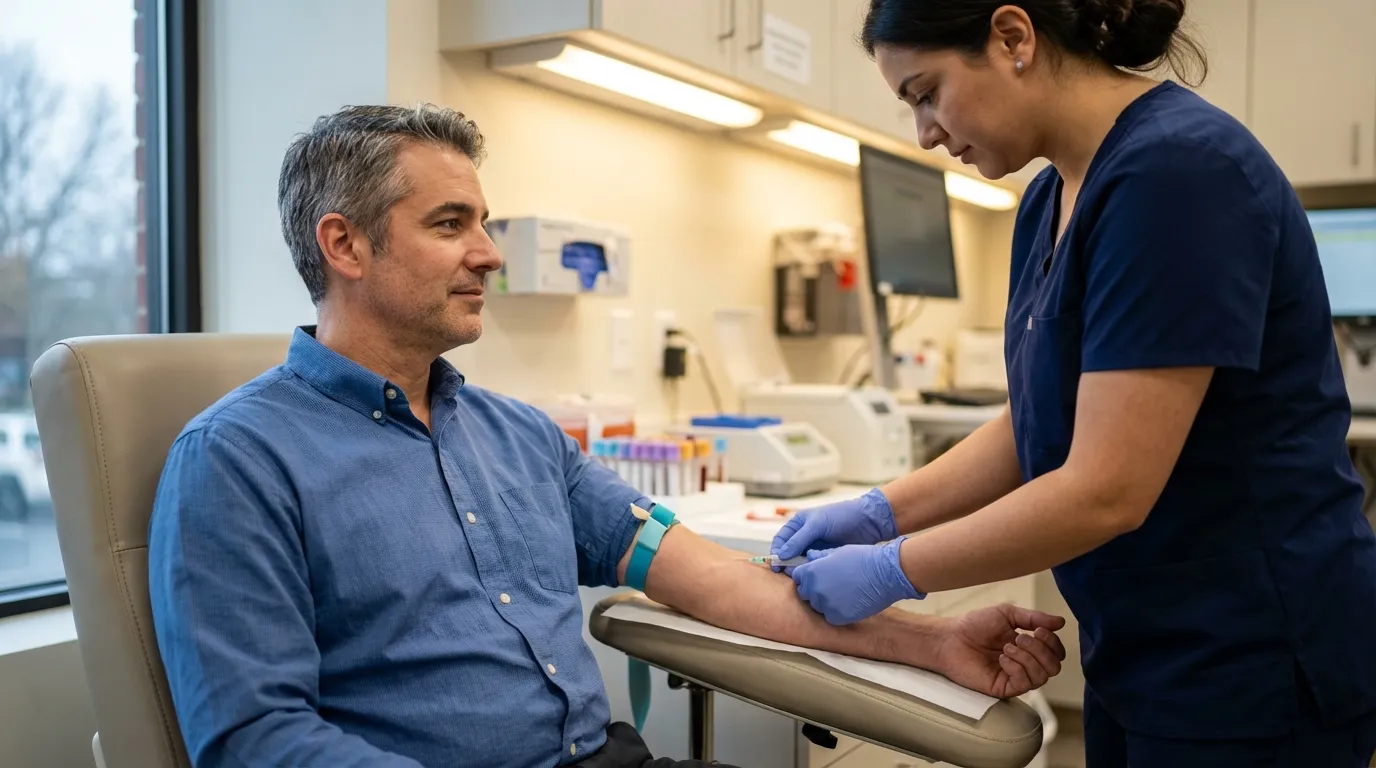
A qualified provider will also discuss monitoring protocols. Regular blood work every 3–6 months is standard practice on TRT, checking testosterone levels, hematocrit, estradiol, and PSA. This monitoring is what makes TRT a safe, controlled medical treatment rather than a guessing game.
What Results Can Men in Their 40s Realistically Expect from TRT?
One of the most common questions men ask before starting therapy is straightforward: will this actually work? The honest answer is yes — for men with confirmed low testosterone, the evidence for symptom improvement is substantial. But expectations should be realistic and timeline-aware.
Research consistently shows that testosterone therapy in hypogonadal men produces improvements across several domains:
- Energy and fatigue: Most men notice improvements in energy within 3–6 weeks of starting therapy, with further gains over the following months.
- Libido and sexual function: Sexual interest often begins improving within 3–4 weeks. For erectile function specifically, improvements may take longer and sometimes require additional support. See our article on TRT for erectile dysfunction.
- Body composition: Studies show that TRT combined with resistance training produces meaningful reductions in fat mass and increases in lean muscle mass over 3–12 months. Read more in our guide to TRT and weight loss.
- Mood and cognition: Men with low T often report improvements in mood, motivation, and mental clarity. Our article on TRT and depression reviews the mood-related research in detail.
- Bone density: Long-term TRT has been shown to improve bone mineral density, which is particularly relevant for men in their 40s as a preventive measure.
Results vary based on individual physiology, the severity of deficiency, lifestyle habits, and treatment protocol. Men who combine TRT with regular exercise, quality sleep, and a balanced diet tend to see the most significant improvements. To set realistic expectations, see our article on how long TRT takes to work.
Managing Potential Side Effects Safely
Like all medical treatments, TRT can involve side effects — but these are well-understood and manageable under proper medical supervision. The key is working with a provider who monitors your labs regularly and adjusts your protocol as needed. Here's a grounded overview of what to be aware of:
Elevated hematocrit (red blood cell count) is one of the most common lab changes on TRT. In some men, testosterone stimulates red blood cell production, raising hematocrit levels. This is monitored at every follow-up appointment and managed through dose adjustments or therapeutic blood donation when necessary. Learn more in our guide to hematocrit and TRT.
Estrogen elevation can occur as some testosterone converts to estradiol via aromatase. In certain men, this causes water retention, mood changes, or breast tissue sensitivity. A knowledgeable provider monitors estradiol and may prescribe an aromatase inhibitor when indicated.
Testicular atrophy and fertility effects are relevant for men who haven't completed their families. TRT suppresses the body's natural testosterone production, which can reduce sperm count. For men concerned about fertility, options like HCG co-therapy can preserve testicular function. See our article on TRT and fertility for the full picture.
Sleep apnea may be worsened in some men with pre-existing undiagnosed sleep-disordered breathing. This is a well-recognized consideration — which is why responsible providers screen for sleep apnea before starting therapy and monitor sleep quality throughout treatment.
The reality is that the side effect profile of properly monitored TRT is well within the acceptable range for a therapeutic medication. For a comprehensive look at what to expect, read our article on TRT side effects and how to manage them.
TRT vs. Lifestyle Changes: Do You Need Both?
A question many men in their 40s ask is whether they should try to fix their testosterone naturally before considering therapy. It's a fair and intelligent question. The honest answer is: it depends on how low your levels are and how significantly your symptoms are affecting your life.
Lifestyle optimization — resistance training, improved sleep hygiene, stress management, reducing alcohol intake, and maintaining a healthy weight — can meaningfully support testosterone levels in men with borderline-low readings. For men whose total testosterone sits between 350–400 ng/dL with mild symptoms, a provider may reasonably recommend a structured lifestyle intervention first and retest in 3–6 months.
However, for men with confirmed hypogonadism (typically below 300 ng/dL by Endocrine Society guidelines) and significant symptoms, lifestyle changes alone are unlikely to restore testosterone to an optimal functional range. At that point, therapy becomes not just reasonable but clinically appropriate. The good news is that TRT and lifestyle optimization are not mutually exclusive — they work best together. Read our detailed breakdown of TRT vs lifestyle changes to help frame this decision for your specific situation.
Some men with borderline levels are also candidates for alternatives to direct testosterone replacement, such as clomiphene (Clomid) or enclomiphene, which stimulate the body's own testosterone production. A good provider will walk you through all options. See our comparison of Clomid vs TRT for more context.

How to Find the Right TRT Provider in Your 40s
The quality of your TRT experience is heavily influenced by the quality of your provider. Men who are properly screened, thoroughly monitored, and treated by a physician who specializes in men's hormonal health consistently report better outcomes and fewer complications than men who cut corners with unvetted providers.
Here's what to look for when evaluating a TRT clinic or physician:
- Comprehensive blood work before prescribing — any provider who suggests treatment without lab results is a red flag.
- Regular follow-up testing — quarterly labs for the first year, then semi-annual once stable, is the standard of care.
- Individualized dosing — protocols should be adjusted based on your lab results and how you feel, not a one-size-fits-all template.
- Transparent pricing and clear communication — you should understand exactly what you're paying for and why.
- Availability for questions between appointments — hormone therapy requires ongoing communication.
Both in-person clinics and telemedicine providers can deliver excellent care. Online TRT has expanded access significantly and is a legitimate option for men who can't easily access local specialists. To explore your options, use our directory to find a TRT clinic near you, or browse options in your state. Our step-by-step guide on how to find a TRT doctor walks you through the entire process, including what questions to ask at your first appointment. You can also read our guide on what to expect at your first TRT consultation.
Taking the Next Step with TRT for Men in Their 40s
Your 40s don't have to mean a steady decline in energy, drive, and physical capability. For men with confirmed low testosterone, trt for men in their 40s offers a clinically established, well-monitored path to reclaiming the vitality that low T has been quietly eroding. Thousands of men in this age group have gone through the process — proper testing, an informed conversation with a qualified provider, and a personalized treatment protocol — and report meaningful improvements across energy, mood, body composition, and sexual health.
The most important first step is simply getting tested. A morning blood draw and a conversation with a hormone specialist will tell you far more than any symptom checklist. If your levels confirm hypogonadism and your symptoms align, trt for men in their 40s is an evidence-backed, FDA-recognized treatment worth taking seriously.
Start by taking the free Low T symptom quiz to assess whether your symptoms align with hormonal decline, then find a TRT clinic near you to get properly tested and evaluated. Your 40s can absolutely be some of your best years — and the right treatment, under the right supervision, can help make that a reality.
Sources & References
- Testosterone Therapy in Men with Hypogonadism: An Endocrine Society Clinical Practice Guideline — Journal of Clinical Endocrinology and Metabolism [Link]
- Cardiovascular Safety of Testosterone-Replacement Therapy (TRAVERSE Trial) — New England Journal of Medicine [Link]
- Testosterone Therapy in Men with Androgen Deficiency Syndromes — Journal of Clinical Endocrinology and Metabolism [Link]
- Hypogonadism in the Aging Male: Diagnosis and Management — Mayo Clinic [Link]
- Low Testosterone (Male Hypogonadism) — Cleveland Clinic [Link]
- Age-Related Changes in Testosterone and the Role of Testosterone Replacement Therapy — PubMed / National Institutes of Health [Link]
- Testosterone Deficiency: A Systematic Review and Standard Operating Procedures for Diagnosis and Treatment — Journal of Sexual Medicine [Link]
Frequently Asked Questions
Ready to Take the Next Step?
Check your symptoms with our free quiz or browse 2,500+ verified TRT clinics.