Medical Disclaimer
The information on this website is for educational purposes only and is not a substitute for professional medical advice, diagnosis, or treatment. Always consult a qualified healthcare provider before starting any hormone therapy. Individual results may vary. TRTmatch does not provide medical services or prescribe medications.
Key Takeaways
- Low testosterone in your 20s is a real and increasingly common condition — not just an older man's problem — and it deserves proper medical evaluation.
- Common causes in young men include obesity, chronic stress, poor sleep, sedentary lifestyle, nutritional deficiencies, and in some cases pituitary or testicular disorders.
- Symptoms go beyond just low libido: fatigue, difficulty building muscle, brain fog, low mood, and reduced motivation are all recognized signs of testosterone deficiency.
- Diagnosis requires comprehensive blood work including total testosterone, free testosterone, LH, FSH, prolactin, and SHBG — ideally drawn in the morning on two separate occasions.
- Treatment options range from lifestyle optimization and SERMs like Clomid or enclomiphene (which preserve fertility) to full testosterone replacement therapy, depending on root cause and goals.
- TRT is safe and effective for young men when prescribed and monitored by a qualified provider — the key is individualized care, thorough screening, and regular follow-up.
Can You Really Have Low Testosterone in Your 20s?
Most men assume low testosterone is something their dad or grandfather deals with. But low testosterone in your 20s is a real, increasingly recognized medical condition — and it's more common than most young men realize. Research suggests that rates of testosterone deficiency in younger men have been rising over the past few decades, with some studies pointing to lifestyle, environmental, and metabolic factors as key drivers.
If you've been feeling persistently tired, struggling to build muscle despite consistent training, noticing a dip in your sex drive, or dealing with unexpected mood changes, low T could be a contributing factor — and it deserves a real medical evaluation, not just a shrug from your doctor.
Disclaimer: This article is for educational purposes only and does not constitute medical advice. Always consult a qualified healthcare provider before making any decisions about your health or treatment options.
The good news? When low testosterone in your 20s is identified and properly treated, outcomes are generally excellent. This guide will walk you through everything you need to know — from why it happens in young men, to how it's diagnosed, and what your options are. You can also take the free Low T symptom quiz to get a clearer picture of whether your symptoms align with testosterone deficiency.

What Is a Normal Testosterone Level for Men in Their 20s?
Testosterone levels in men typically peak in the late teens and early 20s, generally reaching their highest point around age 19 to 25. According to the American Urological Association, the normal total testosterone range for adult men is approximately 300 to 1,000 nanograms per deciliter (ng/dL), though optimal levels for younger men tend to sit in the higher portion of that range — often between 600 and 900 ng/dL.
It's important to understand that "normal" isn't one-size-fits-all. Two numbers matter when evaluating your hormone status: free testosterone and total testosterone. Total testosterone includes both the hormone bound to proteins (like SHBG and albumin) and the free, biologically active portion. Free testosterone is what your body can actually use — and in some men, total levels may appear borderline while free testosterone is genuinely low.
Additionally, lab reference ranges vary by testing facility and are often based on population averages that include older men with naturally lower levels. This can make a 28-year-old with a total testosterone of 310 ng/dL look "technically normal" when his levels are far below what's optimal for his age group. This is why symptoms always matter alongside numbers — a comprehensive evaluation by a knowledgeable provider is essential.
If you want a deeper look at how levels change across different decades, the testosterone levels by age full chart is a helpful resource to review before your first appointment.
Common Causes of Low Testosterone in Your 20s
Understanding why young men develop low T is the first step toward solving it. The causes of low testosterone in young men generally fall into two categories: primary hypogonadism (a problem with the testes themselves) and secondary hypogonadism (a problem with the brain's signaling to the testes). Secondary hypogonadism is far more common in younger men and is often driven by lifestyle or medical factors.
Here are the most frequently identified causes:
- Obesity and metabolic syndrome: Excess body fat, particularly visceral fat around the abdomen, increases aromatase activity — an enzyme that converts testosterone into estrogen. Men with obesity consistently show lower testosterone levels across all age groups.
- Chronic stress and elevated cortisol: The stress hormone cortisol directly suppresses testosterone production. In a generation dealing with high academic, financial, and social pressures, chronically elevated cortisol is a significant contributor to low T in young men.
- Poor sleep quality: The majority of testosterone is produced during deep sleep. Sleeping fewer than 6 hours per night has been shown to reduce testosterone levels by 10–15% in healthy young men within just one week.
- Sedentary lifestyle: Physical inactivity reduces natural testosterone output. Resistance training, in particular, is a well-documented stimulus for testosterone production.
- Opioid or anabolic steroid use: Both recreational and prescription opioids suppress the hypothalamic-pituitary axis, reducing LH and FSH signals to the testes. Prior anabolic steroid use can also suppress natural production, sometimes for an extended period.
- Pituitary or hypothalamic disorders: Conditions like hyperprolactinemia (elevated prolactin), Kallmann syndrome, or pituitary tumors can impair the hormonal cascade that triggers testosterone production. These are less common but important to rule out.
- Nutritional deficiencies: Low zinc, vitamin D, and adequate dietary fat have all been associated with reduced testosterone synthesis. Extreme caloric restriction or very low-fat diets can negatively impact hormone levels.
For a more detailed breakdown, our guide on what causes low testosterone in men covers both the physiological and lifestyle-related triggers in depth.
Recognizing the Signs of Low T in Young Men
Physical and Sexual Symptoms of Low Testosterone in Your 20s
The symptoms of low testosterone in younger men can be subtle at first, or they may be dismissed as stress, poor diet, or overtraining. But when multiple symptoms cluster together and persist over weeks or months, they deserve a proper evaluation. Physical and sexual symptoms often appear first and are the most concrete indicators:
- Low sex drive or complete loss of libido
- Difficulty achieving or maintaining erections
- Reduced morning erections
- Decreased muscle mass or difficulty gaining muscle despite regular training
- Increased body fat, especially around the abdomen and chest
- Reduced body and facial hair growth
- Smaller testicular volume
- Fatigue that isn't resolved by sleep or rest
If you're experiencing several of these alongside mood-related symptoms, it's a strong signal to get tested. Our article on 10 signs of low testosterone in men provides a comprehensive overview of what to watch for.
Cognitive and Emotional Symptoms
Low testosterone in your 20s doesn't just affect your body — it significantly impacts mental and emotional well-being. Young men with low T often report a constellation of psychological symptoms that can be mistaken for depression, anxiety, or burnout:
- Persistent low mood or sadness
- Increased irritability or anger
- Difficulty concentrating or mental fog
- Loss of motivation and drive
- Reduced confidence and self-esteem
- Increased anxiety
These symptoms are not imagined — testosterone plays a direct role in neurotransmitter function, including dopamine and serotonin pathways. If you suspect your mood may be connected to your hormone levels, our article on TRT and depression explores the research on this connection in detail.

How Low Testosterone Is Diagnosed in Young Men
Getting a proper diagnosis requires more than a single blood test. A thorough evaluation includes comprehensive blood work, a symptom review, and in many cases, additional hormone testing to identify the root cause. Here's what a well-structured diagnostic workup typically looks like for a man in his 20s:
| Test | What It Measures | Why It Matters |
|---|---|---|
| Total Testosterone | All testosterone in the blood | Baseline measure of hormone status |
| Free Testosterone | Bioavailable, unbound testosterone | Shows how much T your body can actually use |
| LH and FSH | Pituitary signaling hormones | Determines if the problem is in the testes or the brain |
| Prolactin | Hormone produced by pituitary gland | Elevated levels can suppress testosterone production |
| SHBG | Sex hormone-binding globulin | High SHBG lowers free testosterone availability |
| Estradiol (E2) | Primary estrogen in men | Imbalance can cause symptoms and affect treatment |
| Complete Metabolic Panel | Liver, kidney, glucose function | Screens for underlying health conditions |
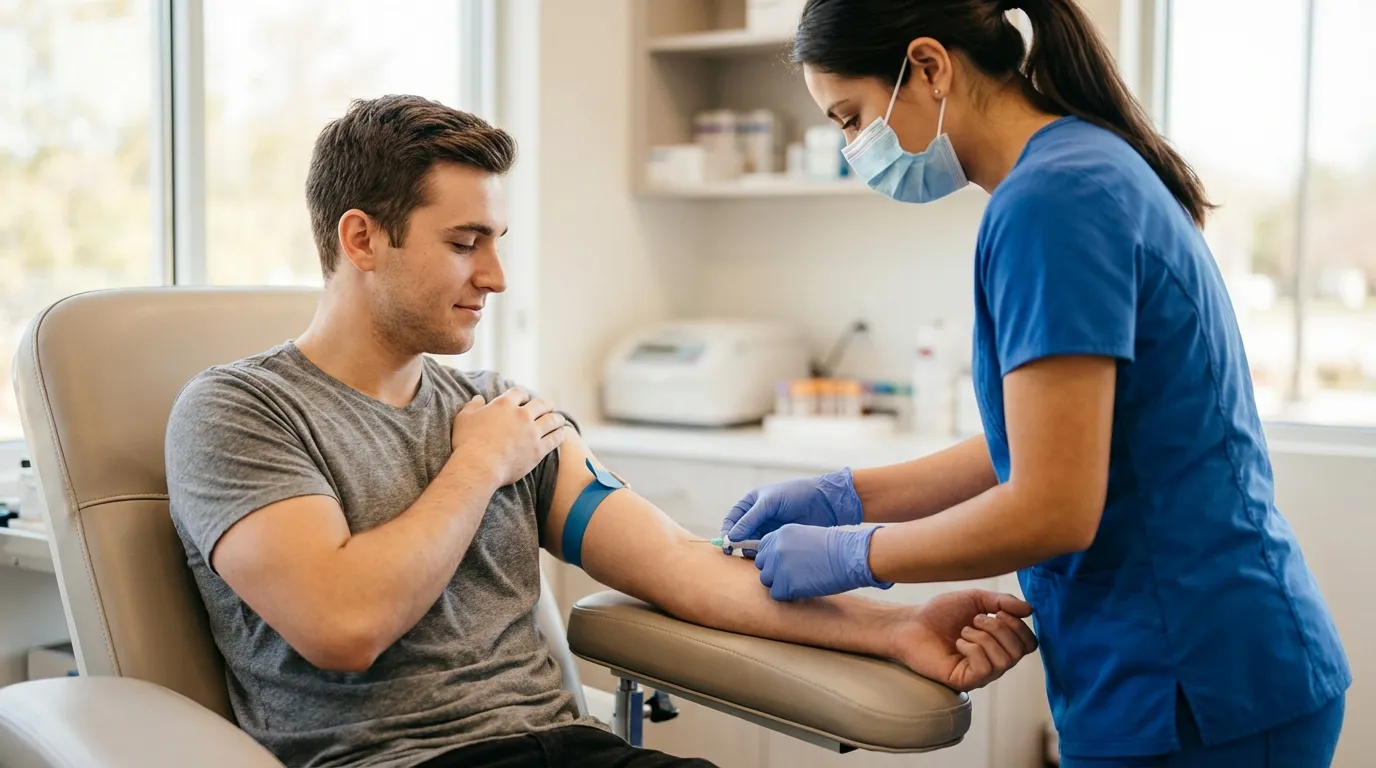
Blood draws should ideally be taken in the morning (between 7–10 AM) when testosterone levels are at their daily peak, and on two separate occasions to confirm consistently low results. Our detailed guide on TRT blood work outlines exactly which tests to request and what to do with the results. Understanding LH and FSH is particularly important for young men, as these values help identify whether the issue originates in the testes or the pituitary.
Treatment Options for Young Men With Low T
The right treatment for low testosterone in a man in his 20s depends heavily on the underlying cause, his symptoms, and his goals — particularly whether he plans to have children in the future. This is where working with a knowledgeable provider makes all the difference.
Lifestyle Optimization First
For men with mild-to-moderate low T driven by lifestyle factors, targeted changes can meaningfully raise levels without medication. These include optimizing sleep to 7–9 hours per night, engaging in regular resistance training (3–5 sessions per week), reducing body fat through nutrition, managing chronic stress through evidence-based strategies, and correcting nutritional deficiencies (especially vitamin D and zinc). Our guide on how to increase testosterone naturally before TRT is a useful starting point. Many men find that disciplined lifestyle changes raise their levels by 100–200 ng/dL — enough to resolve symptoms without medical intervention.
Clomid, Enclomiphene, or HCG Therapy
For young men with secondary hypogonadism who want to preserve their fertility or natural testosterone production, selective estrogen receptor modulators (SERMs) like Clomid (clomiphene citrate) or the newer enclomiphene are often a first-line option. These medications stimulate the pituitary to produce more LH and FSH, which in turn signals the testes to increase testosterone output — without directly suppressing sperm production. HCG (human chorionic gonadotropin) works similarly by mimicking LH. These are particularly important considerations for young men who may want to father children.
To understand how these compare to TRT, our articles on Clomid vs TRT and enclomiphene vs TRT provide a thorough side-by-side comparison.
Testosterone Replacement Therapy (TRT)
When lifestyle changes and SERMs don't adequately restore levels or resolve symptoms, testosterone replacement therapy is a well-established, FDA-recognized treatment option. TRT is available in several delivery formats — including injections, topical gels, creams, and pellets — each with distinct advantages depending on a man's lifestyle and preferences. For young men considering TRT, a critical conversation with your provider involves fertility: exogenous testosterone suppresses the body's own production and reduces sperm count. This is manageable — options like HCG alongside TRT can help preserve fertility during treatment. Our article on TRT and fertility covers this topic comprehensively.
If you're ready to explore your options, find a TRT clinic near you through our directory of qualified providers.

Is TRT Safe for Men in Their 20s?
This is one of the most common questions young men ask, and the answer is reassuring: TRT is safe and effective when properly prescribed, monitored, and managed by a qualified provider. The key is individualized care — a good TRT clinic will perform thorough screening before starting therapy, monitor your blood markers regularly, and adjust your protocol based on how you respond.
For young men specifically, providers typically take a careful approach: confirming diagnosis with multiple blood tests, evaluating for underlying causes (like pituitary issues), discussing fertility implications, and often trialing lifestyle changes or SERMs before proceeding to TRT. Common manageable considerations with TRT include effects on red blood cell count (monitored via hematocrit levels), estrogen balance, and natural testosterone suppression — all of which are well understood and routinely managed by experienced clinicians. You can read more about safety considerations in our article Is TRT Safe? Heart, Prostate & Long-Term Health Risks Explained.
The takeaway: being in your 20s doesn't make TRT off-limits. It means you deserve a provider who takes your age and long-term goals into account and designs a protocol accordingly. Our guide on TRT in your 30s covers similar ground for slightly older men and addresses the "is it too early" question in depth.
How to Find the Right Provider and Take the Next Step
If you suspect you may have low testosterone in your 20s, the single most important action you can take is to get tested by a qualified provider who understands male hormone health. Not all doctors are equally knowledgeable about testosterone optimization — a general practitioner may glance at a lab result that falls within the broad "normal" range and dismiss your concerns, while a specialist will evaluate your full hormonal picture alongside your symptoms.
Here's a practical roadmap:
- Start with the symptom quiz: Take the free Low T symptom quiz to assess whether your symptoms align with testosterone deficiency.
- Get baseline blood work: Request a comprehensive hormone panel including total testosterone, free testosterone, LH, FSH, prolactin, SHBG, and estradiol. Timing matters — draw blood in the morning.
- Find a specialist: Look for urologists, endocrinologists, or men's health clinics with specific expertise in testosterone management. Our guide on how to find a TRT doctor walks you through the process step by step.
- Prepare for your consultation: Know your symptoms, their duration, and any relevant history (medications, prior steroid use, sleep issues). Our article on your first TRT consultation helps you know exactly what to expect.
- Explore your options: Work with your provider to evaluate all treatment pathways — from lifestyle changes to SERMs to TRT — based on your individual situation and goals.
Low testosterone in your 20s is not something you have to accept or push through. With the right evaluation and the right provider, most young men see meaningful, sometimes life-changing improvements in energy, mood, physique, and overall quality of life. Find a TRT clinic near you and take the first step toward feeling the way you should at this stage of your life.
Sources & References
- Testosterone Therapy in Men with Hypogonadism: An Endocrine Society Clinical Practice Guideline — Journal of Clinical Endocrinology & Metabolism [Link]
- Declining Male Testosterone Levels: A Study of Aging, Lifestyle, and Other Factors — PubMed / Journal of Clinical Endocrinology & Metabolism [Link]
- Testosterone Deficiency in Young Men — American Urological Association [Link]
- Effect of 1 Week of Sleep Restriction on Testosterone Levels in Young Healthy Men — PubMed / JAMA [Link]
- Hypogonadism in the Adult Male — Mayo Clinic [Link]
- Testosterone and the Brain — PubMed / Aging Male [Link]
- Obesity and Male Reproductive Health — PubMed / Current Opinion in Urology [Link]
Frequently Asked Questions
Ready to Take the Next Step?
Check your symptoms with our free quiz or browse 2,500+ verified TRT clinics.