
Medical Disclaimer
The information on this website is for educational purposes only and is not a substitute for professional medical advice, diagnosis, or treatment. Always consult a qualified healthcare provider before starting any hormone therapy. Individual results may vary. TRTmatch does not provide medical services or prescribe medications.
Key Takeaways
- LH and FSH are pituitary hormones that control testosterone production and sperm production in the testes — measuring them reveals where in the hormonal system a problem exists.
- High LH and FSH with low testosterone indicates primary hypogonadism (a testicular problem), while low LH and FSH with low testosterone points to secondary hypogonadism (a signaling problem from the brain).
- TRT suppresses LH and FSH as a predictable physiological response to exogenous testosterone — this is expected, but has implications for fertility and testicular function that should be discussed with a provider.
- Men who want to preserve fertility while on TRT may benefit from co-prescribing HCG, which mimics LH and keeps the testes active even when natural LH is suppressed.
- A full male hormone panel — including LH, FSH, total and free testosterone, SHBG, estradiol, and prolactin — gives a far more complete clinical picture than a single testosterone number alone.
- Working with a TRT specialist who interprets your LH and FSH results in context is essential for choosing the right treatment — whether that's TRT, HCG monotherapy, clomiphene, or a combination approach.
Why LH and FSH Matter More Than Most Men Realize
If you've been researching low testosterone or considering testosterone replacement therapy, you've probably seen a lot of focus on total testosterone and free testosterone levels. But two hormones that often get overlooked — LH (luteinizing hormone) and FSH (follicle-stimulating hormone) — are just as important for understanding why your testosterone is low and what the right treatment path looks like for you.
Consider this your complete guide to having lh and fsh explained in plain, practical language. No medical degree required. And as always, this article is educational in nature — it is not a substitute for personalized medical advice from a qualified provider. If you're experiencing symptoms of low testosterone, the right next step is a proper evaluation by a licensed clinician.
Understanding these two hormones gives you a clearer picture of how the male hormonal system works, what your blood test results actually mean, and how that information shapes decisions around TRT. Let's start from the top.
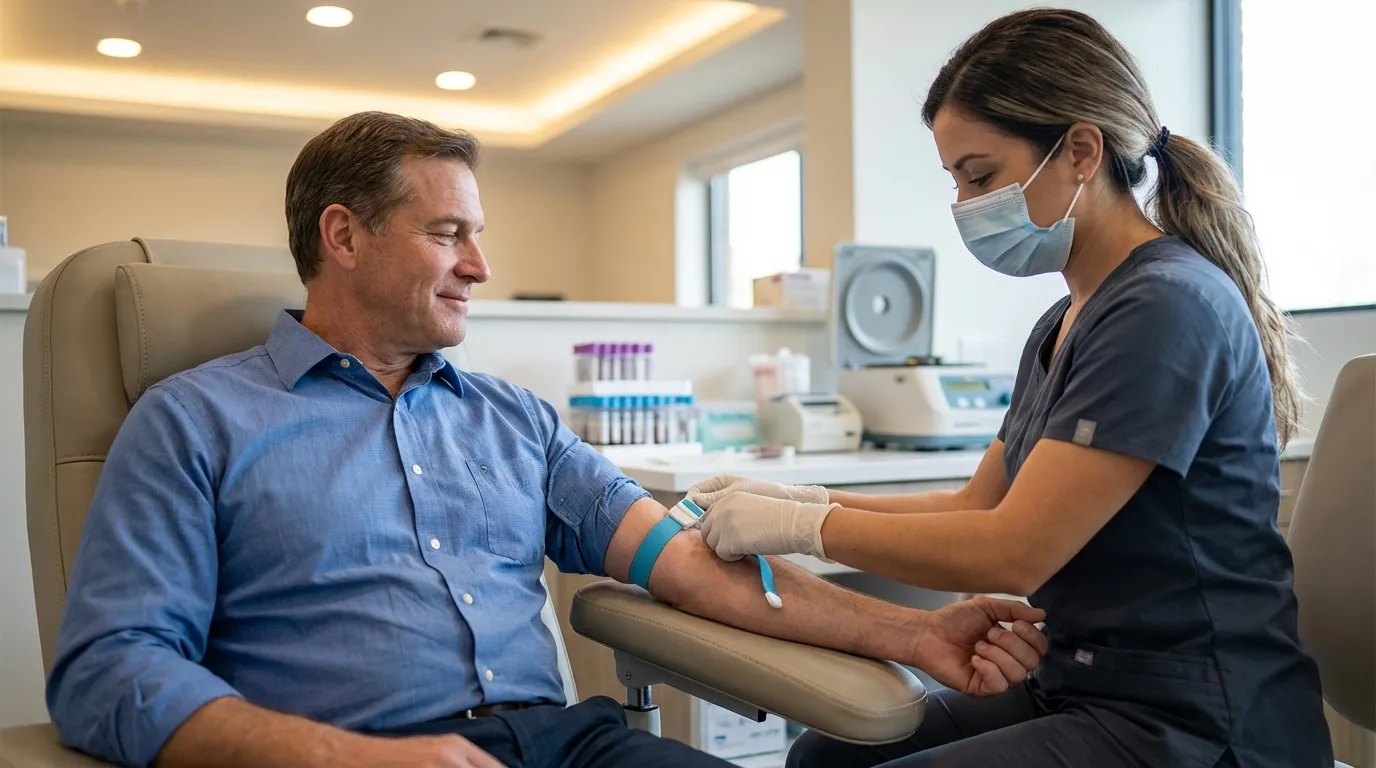
LH and FSH Explained: The Hormonal Control System
LH and FSH are gonadotropins — signaling hormones produced by the pituitary gland, a pea-sized gland at the base of your brain. They act as chemical messengers, traveling through the bloodstream to the testes, where they trigger the production of testosterone and sperm.
Here's how the system works in a healthy male:
- The hypothalamus (another brain region) releases a hormone called GnRH (gonadotropin-releasing hormone).
- GnRH signals the pituitary gland to release LH and FSH.
- LH travels to the Leydig cells in the testes and stimulates testosterone production.
- FSH acts on the Sertoli cells in the testes and supports sperm production (spermatogenesis).
- As testosterone levels rise, the hypothalamus and pituitary detect it and dial back GnRH, LH, and FSH — a classic negative feedback loop.
This entire system is called the hypothalamic-pituitary-gonadal (HPG) axis. It's a tightly regulated circuit that keeps testosterone within a healthy range. When any part of it malfunctions, testosterone levels can drop — and the pattern of LH and FSH in your bloodwork tells your doctor exactly where the breakdown is occurring. For a deeper look at the hormones involved in your panel, see our guide on TRT Blood Work: Which Tests You Need (Before & During Treatment).
The Difference Between LH and FSH
While LH and FSH work together, they have distinct jobs. LH is primarily responsible for triggering testosterone synthesis. FSH, on the other hand, is more focused on sperm production and the health of the seminiferous tubules inside the testes. Men who are concerned about fertility alongside testosterone levels should pay particularly close attention to FSH, since it plays a direct role in sperm count and quality. We cover the fertility implications of TRT in more depth in TRT and Fertility: Can You Have Kids on Testosterone?
Primary vs. Secondary Hypogonadism: Why the Distinction Matters
One of the most clinically important reasons to measure LH and FSH is to determine the type of hypogonadism (low testosterone) a man has. There are two main categories, and your LH and FSH levels are the key to telling them apart.
Primary Hypogonadism (Hypergonadotropic)
In primary hypogonadism, the problem originates in the testes themselves. The pituitary is working fine — it's sending strong LH and FSH signals — but the testes aren't responding adequately and aren't producing enough testosterone. As a result, LH and FSH levels are high (the pituitary keeps shouting because it's not getting a response), while testosterone is low. Causes include Klinefelter syndrome, testicular injury or infection, chemotherapy, and age-related testicular decline.
Secondary Hypogonadism (Hypogonadotropic)
In secondary hypogonadism, the problem lies higher up — in the hypothalamus or pituitary. The testes are potentially capable of producing testosterone, but they're not receiving adequate signals. LH and FSH are low or inappropriately normal, and testosterone is also low. This pattern is commonly seen in men with obesity, chronic stress, sleep apnea, opioid use, pituitary tumors (prolactinomas), or age-related decline in hypothalamic function. To understand another hormone that influences this pattern, read about Prolactin and Testosterone: The Hidden Connection.
| Type | LH & FSH | Testosterone | Location of Problem |
|---|---|---|---|
| Primary Hypogonadism | High | Low | Testes |
| Secondary Hypogonadism | Low or Normal | Low | Hypothalamus or Pituitary |
Why does this distinction matter so much? Because it directly affects treatment options. Men with secondary hypogonadism caused by a pituitary or hypothalamic issue may respond well to treatments that stimulate the HPG axis — like clomiphene citrate or HCG — rather than going straight to TRT. Understanding this opens the door to a more targeted, individualized approach. For a full comparison of those options, see Clomid vs TRT: Which Low Testosterone Treatment Is Right for You?

What Happens to LH and FSH When You Start TRT
This is one of the most important things to understand if you're already on TRT or about to start: exogenous testosterone (testosterone from an outside source, like injections, gels, or pellets) suppresses your body's own LH and FSH production. Here's why.
When you introduce testosterone from an external source, your hypothalamus and pituitary detect rising testosterone levels in the bloodstream. Following the natural negative feedback loop described earlier, they respond by reducing GnRH output, which in turn reduces LH and FSH secretion. With less LH signaling the testes, natural testosterone production drops — and with less FSH, sperm production slows significantly.
In practical terms: if a doctor tests your LH and FSH while you're on TRT, they will almost certainly be suppressed (low). This is expected and not a sign that something is wrong — it is a predictable physiological response to exogenous testosterone. However, it does have important implications for fertility, testicular size, and what happens if you stop TRT. Learn more in What Happens When You Stop TRT? (Risks, Recovery & Timeline).
Managing LH and FSH Suppression on TRT
For men who want to preserve fertility or testicular function while on TRT, their provider may co-prescribe HCG (human chorionic gonadotropin), which mimics LH and keeps the testes stimulated even while natural LH is suppressed. This is a well-established protocol and one reason why having an informed, experienced TRT provider matters enormously. Read more about this approach in HCG and TRT: Why Doctors Prescribe Them Together. If you're exploring alternatives to TRT that preserve the HPG axis entirely, Enclomiphene vs TRT: Which Treatment Is Better? is worth reading.
Normal LH and FSH Reference Ranges for Men
Reference ranges can vary slightly between labs, but here are the generally accepted normal values for adult men:
| Hormone | Normal Range (Adult Men) | Units |
|---|---|---|
| LH | 1.7 – 8.6 | IU/L |
| FSH | 1.5 – 12.4 | IU/L |
These numbers need context. A man with low testosterone, low LH, and low FSH clearly has a signaling problem (secondary hypogonadism). A man with low testosterone but high LH and FSH has a testicular problem (primary hypogonadism). A man whose LH and FSH are in the middle of the normal range but whose testosterone is still low may have a more subtle dysfunction at the pituitary or hypothalamic level — sometimes called relative hypogonadotropic hypogonadism.
Context is everything. That's why working with a knowledgeable provider who interprets your full panel — including Free vs Total Testosterone, SHBG, estradiol, prolactin, and LH/FSH together — is far more valuable than fixating on any single number. You can also read more about What Is SHBG and Why It Matters for TRT to understand how these hormones interact.
Symptoms That May Prompt an LH and FSH Test
If you're experiencing symptoms that suggest low testosterone, your doctor should order a comprehensive hormone panel — and LH and FSH should be part of it. Common symptoms that warrant a workup include:
- Persistent fatigue and low energy that doesn't improve with rest
- Reduced sex drive or libido
- Difficulty building or maintaining muscle mass
- Unexplained weight gain, especially around the midsection
- Brain fog or difficulty concentrating
- Mood changes, irritability, or low motivation
- Erectile dysfunction or reduced morning erections
- Reduced facial or body hair growth
- Infertility or low sperm count
If several of these sound familiar, that's a meaningful signal worth investigating. Take the free Low T symptom quiz to get a clearer picture of what you may be experiencing, and use it as a starting point for a conversation with a provider. You can also read 10 Signs of Low Testosterone in Men for a detailed breakdown of the most common presentations.
Because LH and FSH testing is often underutilized in standard primary care settings, many men get a testosterone number and not much else. Seeking care from a TRT specialist or men's health clinic significantly increases the likelihood that you'll receive a complete, properly interpreted workup. Find a TRT clinic near you to connect with providers who routinely perform this kind of thorough hormonal evaluation.

LH, FSH, and Fertility: What Every Man Should Know
For men who want to have children — now or in the future — the LH and FSH picture takes on additional weight. FSH in particular is a reliable marker of spermatogenic function. Elevated FSH in a man with low sperm count often indicates significant testicular damage and reduced fertility reserve. Very low FSH in a man with secondary hypogonadism may mean sperm production is suppressed but potentially recoverable with the right treatment.
TRT, as discussed above, suppresses both LH and FSH and significantly reduces sperm production in most men. Studies have shown that sperm counts can drop to near zero in some men on testosterone therapy. For most men, this reverses after stopping TRT, but recovery is not guaranteed and can take anywhere from several months to over a year. This is not a reason to avoid TRT — it is a reason to have an honest conversation with your provider about your fertility goals before starting. Providers experienced in men's hormonal health can design protocols — such as TRT plus HCG, or alternatives like clomiphene — that better preserve fertility. See TRT vs HCG Monotherapy: Which Should You Choose? for more on that decision.
How to Get LH and FSH Tested and What to Do Next
Having lh and fsh explained is one thing — acting on that knowledge is another. Here's a practical roadmap:
- Request a full male hormone panel. When you speak to a provider, ask specifically for LH, FSH, total testosterone, free testosterone, SHBG, estradiol, prolactin, and a complete metabolic panel. Don't settle for just a total testosterone number.
- Get tested in the morning. Testosterone and related hormones follow a diurnal (daily) rhythm, with levels peaking in the early morning hours. Testing between 7–10 a.m. gives the most accurate snapshot.
- Interpret results in context. A single number without clinical context is rarely sufficient. Your symptoms, age, body composition, medications, and lifestyle all factor into interpretation.
- Seek a specialist if needed. If your primary care doctor isn't familiar with interpreting a full hormone panel, a TRT specialist, urologist, or endocrinologist will be better equipped. Read How to Find a TRT Doctor (Step-by-Step Guide) for guidance on choosing the right type of provider.
- Consider your fertility goals. Before starting any hormonal treatment, be explicit about whether you want children in the future. This significantly affects which treatment is most appropriate for you.
If you're ready to find a qualified provider who will order the right tests and build a treatment plan around your full clinical picture, Find a TRT clinic near you through our directory of vetted, specialized men's health providers across the country.
Putting It All Together: LH and FSH in Your TRT Journey
Having lh and fsh explained properly is one of the most clarifying things a man can do when he's trying to understand his hormonal health. These two hormones are the control signals at the heart of the male reproductive system. They tell your doctor whether low testosterone is a problem in the testes, the brain, or somewhere in between. They influence what treatment options make the most sense — TRT, HCG, clomiphene, or a combination. And they play a critical role in managing fertility for men who want to preserve that option.
The key message is this: low testosterone is rarely a simple one-number problem. It exists within a hormonal system, and understanding that system — including the roles of LH and FSH — leads to better decisions, better treatment outcomes, and greater confidence in your path forward. A provider who tests and interprets LH and FSH alongside the rest of your panel is a provider who is treating you, not just a number.
If you're experiencing symptoms and haven't yet had a full workup, now is a great time to start. Take the free Low T symptom quiz to assess where you stand, then connect with a qualified provider who can give you the full picture. Understanding your hormones is the first step — taking action is the next.
Sources & References
- Evaluation and Management of Testosterone Deficiency: AUA Guideline — American Urological Association [Link]
- Testosterone Therapy in Men With Hypogonadism: An Endocrine Society Clinical Practice Guideline — Journal of Clinical Endocrinology & Metabolism / Endocrine Society [Link]
- Male Hypogonadism: Diagnosis and Treatment — Mayo Clinic [Link]
- Luteinizing Hormone and Follicle-Stimulating Hormone in the Male — PubMed / National Institutes of Health [Link]
- Effects of Testosterone Therapy on Spermatogenesis and Male Fertility — PubMed / National Institutes of Health [Link]
- Hypothalamic-Pituitary-Gonadal Axis in Men — StatPearls / National Center for Biotechnology Information [Link]
- Secondary Hypogonadism in Men: Clinical Features and Management — Cleveland Clinic [Link]
Frequently Asked Questions
Ready to Take the Next Step?
Check your symptoms with our free quiz or browse 2,500+ verified TRT clinics.