Medical Disclaimer
The information on this website is for educational purposes only and is not a substitute for professional medical advice, diagnosis, or treatment. Always consult a qualified healthcare provider before starting any hormone therapy. Individual results may vary. TRTmatch does not provide medical services or prescribe medications.
Key Takeaways
- The best TRT clinics in Austin require comprehensive pre-treatment blood work including total testosterone, free testosterone, estradiol, PSA, and CBC before starting therapy.
- Individualized treatment protocols — not one-size-fits-all prescriptions — are the hallmark of quality testosterone clinics. Look for providers who tailor dosing and delivery method to your specific labs, symptoms, and lifestyle.
- Ongoing monitoring (at 6–8 weeks and at least every 6 months thereafter) is non-negotiable for safe TRT management. Clinics that skip follow-up blood work are a red flag.
- TRT costs in Austin typically range from $100–$400 per month depending on delivery method and clinic model, with initial consultation and labs adding $200–$700 upfront.
- Austin offers multiple clinic types — dedicated men's health clinics, urology practices, primary care physicians, and telemedicine providers — so you can find a format that fits your schedule and health needs.
- Most men on a well-managed TRT protocol notice improvements in energy and mood within 3–6 weeks, with further gains in libido, body composition, and mental clarity developing over 3–6 months.
Finding the Best TRT Clinics in Austin: What You Need to Know
If you've been feeling persistently fatigued, struggling with low libido, losing muscle despite regular workouts, or dealing with brain fog that just won't lift, low testosterone could be a contributing factor. You're not alone — research published in the Journal of Clinical Endocrinology & Metabolism estimates that roughly 2.1% of men have clinically low testosterone, with prevalence rising sharply after age 45. For men in Central Texas, the good news is that Austin has a growing ecosystem of qualified testosterone clinics staffed by experienced providers. This guide is designed to help you identify the best TRT clinics in Austin, understand what separates excellent care from mediocre care, and take confident, informed action.
Disclaimer: This article is for educational purposes only and does not constitute medical advice. Always consult a licensed healthcare provider before beginning any hormone therapy.
Whether you're exploring testosterone replacement therapy for the first time or looking to switch providers, knowing what to look for matters. Not all clinics are created equal — some prioritize thorough diagnostics and ongoing monitoring, while others may skip critical steps. This guide gives you the framework to evaluate your options and find a provider who genuinely has your health as the priority. You can also take the free Low T symptom quiz right now to get a clearer picture of whether your symptoms align with low testosterone.

Why Austin Men Are Seeking TRT in Record Numbers
Austin is one of the fastest-growing cities in the United States, and with that growth comes a health-conscious, performance-oriented population of men who want to feel their best. The city's tech sector, entrepreneurial culture, and active outdoor lifestyle mean that men here are increasingly attuned to the connection between hormonal health and day-to-day performance. It's no surprise that demand for testosterone replacement therapy has surged throughout Travis County and the surrounding areas.
Low testosterone — clinically defined as total testosterone below 300 ng/dL, per the American Urological Association — can affect men starting in their 30s. Testosterone declines naturally at roughly 1–2% per year after age 30, meaning a man in his late 40s could have levels 15–30% lower than he did in his prime. That's not a trivial difference. Symptoms can include:
- Persistent fatigue and low energy even after adequate sleep
- Reduced sex drive and erectile difficulties
- Loss of lean muscle mass and increased body fat, especially around the midsection
- Mood changes, including irritability or mild depression
- Difficulty concentrating or experiencing mental clarity
- Reduced bone density over time
If you recognize several of these symptoms, it's worth getting tested. You can learn more about what to watch for in our guide to 10 Signs of Low Testosterone in Men. The encouraging reality is that when low testosterone is properly diagnosed and treated by a qualified provider, most men experience meaningful improvements across all of these areas — often within the first few months of therapy.
Austin's growing network of hormone clinics, men's health practices, and telemedicine providers means you have more access than ever to quality TRT care. The challenge is knowing which providers meet the highest standards — and that's exactly what the rest of this guide addresses.
What Separates Good TRT Clinics from Great Ones
Not every clinic offering testosterone therapy in Austin delivers the same level of care. The difference between an average clinic and an exceptional one can significantly impact both your results and your long-term health outcomes. When evaluating your options, there are several non-negotiable criteria that the best testosterone clinics in Austin should consistently meet.
Comprehensive Pre-Treatment Blood Work
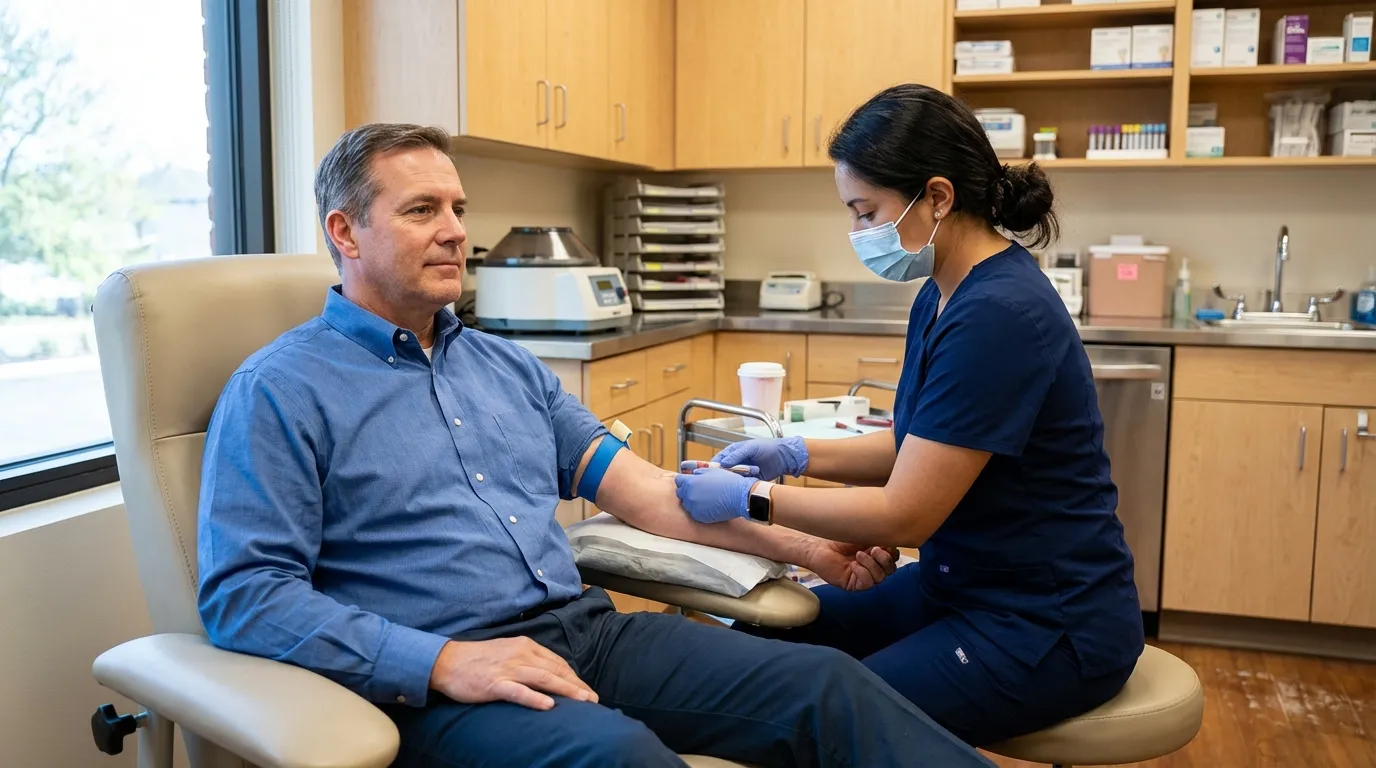
A reputable TRT provider will never start you on therapy without a thorough baseline blood panel. This typically includes total and free testosterone, sex hormone-binding globulin (SHBG), estradiol (E2), luteinizing hormone (LH), follicle-stimulating hormone (FSH), complete blood count (CBC), comprehensive metabolic panel (CMP), PSA (prostate-specific antigen), and thyroid function. Each of these markers plays a role in understanding your hormonal status and ruling out underlying conditions. Our in-depth guide on TRT Blood Work: Which Tests You Need explains exactly what to expect at your first appointment and why each test matters.
Individualized Treatment Protocols
The best clinics don't hand every patient the same dosing template. They consider your baseline labs, symptoms, lifestyle, and goals to craft a protocol tailored to you. Some men do well on weekly intramuscular injections, while others prefer the convenience of daily subcutaneous injections, topical gels, or long-acting pellets. Each delivery method has trade-offs, and a skilled provider will walk you through the options. For a deeper comparison, see our guide on TRT Injections vs Gel: Which Is Better?
Ongoing Monitoring and Follow-Up
Starting TRT is just the beginning. The best Austin TRT clinics schedule follow-up blood work at 6–8 weeks after initiating therapy, then at least every 6 months once stable. They track hematocrit levels (to monitor red blood cell concentration), estradiol, PSA, and testosterone levels to ensure your protocol is working safely and effectively. A provider who doesn't schedule regular follow-up is a red flag.
Transparent Pricing and Communication
Top-rated clinics are upfront about costs, what's included in your membership or consultation fee, and what ongoing lab work will cost. For a full breakdown of what to budget for, check out our TRT Cost: Full Price Breakdown.
Types of TRT Clinics Available in Austin
Austin's TRT landscape includes several distinct types of providers, each with different strengths. Understanding these categories will help you choose the format that fits your schedule, preferences, and health needs.
Dedicated Men's Health and Hormone Clinics
These are specialty practices focused specifically on men's hormonal health. They typically have streamlined intake processes, staff with deep TRT experience, and protocols designed specifically around testosterone therapy. Because this is their core service, they often offer faster appointments, more competitive pricing, and more nuanced monitoring than a general practice.
Urology and Endocrinology Practices
Board-certified urologists and endocrinologists bring deep medical expertise to testosterone management. If you have complex health history — such as a prostate condition, diabetes, or cardiovascular concerns — seeing a specialist in one of these fields offers an added layer of medical oversight. Appointments may take longer to secure, but the clinical depth is hard to match.
Primary Care Physicians with Hormone Expertise
Some primary care providers in Austin have developed expertise in hormone optimization. The advantage here is continuity of care — your TRT provider also knows your broader health history. The limitation is that not all PCPs are equally knowledgeable about TRT protocols, so it's worth asking about their experience with testosterone management specifically.
Telemedicine TRT Providers Serving Austin
Several high-quality online TRT clinics serve Texas residents, allowing you to complete consultations, receive prescriptions, and get lab orders entirely from home. This is a legitimate and convenient option for many men, particularly those with demanding work schedules. For a full comparison of virtual options, see our guide to Best Online TRT Clinics or explore Online TRT vs Local Clinic: Which Is Better?
Each of these models can deliver excellent care. The right choice depends on your health complexity, lifestyle, and personal preferences. You can browse all verified options through our TRT clinics in Texas directory to compare providers serving the Austin area.

TRT Delivery Methods: What Austin Clinics Typically Offer
One of the most common questions men have when evaluating testosterone clinics is which delivery method is right for them. The best TRT clinics in Austin will offer multiple options and explain the clinical reasoning behind each recommendation. Here's a practical overview of the most common methods you'll encounter.
| Method | Frequency | Pros | Cons |
|---|---|---|---|
| Intramuscular Injections | Weekly or biweekly | Cost-effective, highly effective, well-studied | Requires self-injection, hormone peaks and troughs |
| Subcutaneous Injections | 2–3x per week | Smaller needle, steadier hormone levels | More frequent dosing schedule |
| Topical Gels/Creams | Daily | No injections, easy to use | Transfer risk to partners/children, absorption varies |
| Testosterone Pellets | Every 3–6 months | Set-and-forget convenience, very stable levels | Minor in-office procedure, difficult to adjust mid-cycle |
| Buccal/Nasal | 2–3x daily | No skin transfer risk | Less common, frequent dosing required |
Injections remain the most commonly prescribed method due to their flexibility and cost-effectiveness. However, pellets have grown in popularity among Austin men who travel frequently or simply prefer not to manage a weekly injection schedule. Your provider should walk you through the trade-offs in the context of your specific lifestyle and health profile. For a detailed breakdown, see our guide on Testosterone Injections vs Pellets: Full Comparison.
Regardless of the method you choose, the key is that your clinic monitors your response and adjusts your protocol over time. Hormone therapy is not a one-size-fits-all prescription — it's an ongoing, evolving treatment plan. Men who work with attentive providers and stick to their follow-up schedule consistently report the best outcomes.
Understanding TRT Costs in Austin
Cost is a practical consideration for most men, and it's worth having realistic expectations before your first appointment. TRT pricing in Austin varies depending on the type of provider, the delivery method, and what's included in your care package. Here's a general overview of what men in the Austin area typically spend.
Initial consultations at Austin TRT clinics commonly range from $100 to $300, though some providers offer free introductory consultations. Baseline lab work — if not covered by insurance — typically adds another $100 to $400 depending on the breadth of the panel ordered. Monthly ongoing therapy costs can range from around $100 to $400 per month depending on the medication type, frequency of lab monitoring, and whether you're using a membership-based clinic or a traditional fee-for-service model.
Testosterone pellets tend to be priced higher per session (often $400–$800 per implant procedure) but are only required every 3–6 months, which can make the annualized cost comparable to monthly injection protocols. Injectable testosterone cypionate, the most commonly prescribed form, is among the most affordable options — the medication itself can cost as little as $30–$80 per month at compounding pharmacies.
Insurance coverage for TRT varies significantly. Some plans cover testosterone therapy when it's medically documented as a deficiency, but many do not cover the monitoring labs or the medication itself. Our article on Does Insurance Cover TRT? walks through how to navigate this. For men on tighter budgets, our guide to Affordable TRT Online outlines several cost-effective options that still deliver excellent clinical care.
How to Evaluate and Choose Your Austin TRT Provider
With so many clinics now advertising testosterone therapy in Austin, knowing how to evaluate them critically is essential. Here are the most important questions to ask and green flags to look for during your search.
Questions to Ask Before Committing
- What does your initial evaluation include? A thorough clinic will describe a comprehensive blood panel, a full symptom review, and a physical or medical history assessment.
- How often do you monitor patients on TRT? Look for providers who schedule lab follow-ups at 6–8 weeks and at least twice yearly thereafter.
- Do you manage estrogen and other hormones, or just testosterone? Great clinics manage the full hormonal picture — including estradiol, hematocrit, and SHBG — not just total testosterone.
- What delivery methods do you offer? Providers who only offer one option may not be tailoring treatment to individual needs.
- Are you transparent about pricing? Ask for a written breakdown before committing.
Green Flags in an Austin TRT Clinic
Strong clinics will have board-certified physicians or nurse practitioners with documented hormone therapy experience, clear protocols for managing side effects, and a willingness to discuss all your options including non-TRT approaches like Clomid or enclomiphene if they're more appropriate for your situation. Clinics that make you feel rushed, downplay the importance of lab work, or push upsells aggressively are worth approaching with caution.
If you're unsure where to begin your search, our comprehensive guide on How to Find a TRT Doctor walks through the entire process step by step. You can also read about Your First TRT Consultation: What to Expect so you walk into that first appointment fully prepared.

What Results Can Austin Men Realistically Expect from TRT?
One of the most common questions men ask before starting testosterone therapy is: what will I actually feel? The answer depends on your baseline levels, how significantly your symptoms are driven by low testosterone, your overall health, and the quality of your protocol. That said, research and clinical experience consistently show meaningful improvements across a range of outcomes for men who are appropriate candidates.
Most men on well-managed TRT report noticing initial improvements in energy and mood within the first 3–6 weeks. Sexual function improvements, including libido and erectile quality, often follow at the 4–8 week mark for many men. Improvements in body composition — reduced fat mass, increased lean muscle — typically become more apparent after 3–6 months, especially when combined with resistance training and good nutrition. Cognitive improvements such as better focus and mental clarity are frequently reported as well, often appearing in the first few months of therapy.
For a detailed look at the timeline of changes, see our article on How Long Does TRT Take to Work? and our TRT Before and After: Real Results Explained overview. It's also worth understanding that TRT works best as part of a broader health strategy — sleep quality, exercise, stress management, and nutrition all amplify the benefits of therapy. Providers at the best Austin TRT clinics will typically address these lifestyle factors alongside your hormone protocol.
Men who are concerned about specific outcomes — like muscle building, fat loss, mood, or libido — can find targeted information in our articles on TRT and Weight Loss, TRT for Low Libido, and TRT and Depression.
Taking the Next Step: Finding the Best TRT Clinics in Austin
If you've read this far, you're taking your health seriously — and that's the most important first step. The best TRT clinics in Austin share a common set of qualities: thorough diagnostics, individualized protocols, consistent monitoring, transparent pricing, and providers who communicate openly with their patients. The city has no shortage of qualified options, whether you prefer an in-person men's health clinic, a urology practice, or a telemedicine provider serving the Austin metro.
The most important thing is not to wait. Untreated low testosterone doesn't resolve on its own, and the longer symptoms go unaddressed, the more they can impact your quality of life, your relationships, and your long-term health. Take the free Low T symptom quiz to assess your symptom profile, then use our TRT clinics in Texas directory to find a vetted provider near you.
If you're comparing Austin to other major Texas cities, you might also find our guides to the Best TRT Clinics in Dallas and Best TRT Clinics in Houston helpful for context. And if you're considering whether a virtual provider might work for your situation, our Best Telemedicine TRT Providers guide covers the top-rated options serving Texas residents. Whatever path you choose, working with a qualified provider is what makes testosterone therapy safe, effective, and sustainable — and the best TRT clinics in Austin are well-equipped to guide you every step of the way.
Sources & References
- Testosterone Therapy in Men with Hypogonadism: An Endocrine Society Clinical Practice Guideline — Journal of Clinical Endocrinology & Metabolism [Link]
- Evaluation and Management of Testosterone Deficiency: AUA Guideline — American Urological Association [Link]
- Testosterone Therapy: Potential Benefits and Risks as You Age — Mayo Clinic [Link]
- Male Hypogonadism: Clinical Practice Guideline — PubMed / Journal of Clinical Endocrinology & Metabolism [Link]
- Testosterone and the Heart — Cleveland Clinic [Link]
- Prevalence and Incidence of Androgen Deficiency in Middle-Aged and Older Men — PubMed / Journal of Clinical Endocrinology & Metabolism [Link]
- Benefits and Risks of Testosterone Treatment for Hypogonadism in Elderly Men — PubMed / Drug Safety [Link]
Frequently Asked Questions
Ready to Take the Next Step?
Check your symptoms with our free quiz or browse 2,500+ verified TRT clinics.