Medical Disclaimer
The information on this website is for educational purposes only and is not a substitute for professional medical advice, diagnosis, or treatment. Always consult a qualified healthcare provider before starting any hormone therapy. Individual results may vary. TRTmatch does not provide medical services or prescribe medications.
Key Takeaways
- Testosterone plays a direct role in bone remodeling by stimulating bone-building cells and suppressing bone breakdown — chronically low levels lead to measurable bone density loss over time.
- Men with hypogonadism or clinically low testosterone are at significantly elevated risk for osteopenia, osteoporosis, and fractures, particularly in the spine and hip.
- Multiple clinical trials, including the NIH-funded Testosterone Trials, confirm that TRT meaningfully improves bone mineral density in men with low testosterone.
- A comprehensive evaluation for low T should include free and total testosterone, estradiol, vitamin D, and a DEXA scan — especially for men over 50.
- TRT works best for bone health when combined with resistance training, adequate calcium and vitamin D intake, and regular monitoring through follow-up blood work.
- Early intervention is key — addressing low testosterone and bone density loss before osteoporosis develops produces significantly better outcomes than treating advanced bone disease.
Disclaimer: This article is for educational purposes only and does not constitute medical advice. Always consult a qualified healthcare provider before starting or changing any treatment.
When most men think about low testosterone, they picture fatigue, reduced libido, or difficulty building muscle. But there's a quieter consequence that often goes unnoticed until it causes real harm: bone loss. The relationship between low testosterone bone density is well-established in medical research, yet it rarely gets the attention it deserves. Chronically low testosterone levels can quietly reduce bone mineral density over months and years, increasing your risk of fractures, spinal compression, and osteoporosis — a condition most men assume only affects older women.
The good news is that this is a well-understood, manageable issue. With proper diagnosis and the right treatment plan — including testosterone replacement therapy (TRT) when appropriate — men can protect and even rebuild bone density at any age. If you're experiencing signs of low testosterone, bone health is one more compelling reason to get your levels checked. Let's break down everything you need to know.

How Testosterone Supports Bone Health in Men
Testosterone plays a direct and critical role in maintaining bone mineral density throughout a man's life. Bones are living tissue — they're constantly being broken down and rebuilt through a process called bone remodeling. Two types of cells manage this process: osteoblasts, which build new bone, and osteoclasts, which break down old bone. Testosterone helps regulate this balance by stimulating osteoblast activity and suppressing excessive bone resorption.
During puberty and early adulthood, rising testosterone levels drive peak bone mass accumulation. Most men reach peak bone density in their late 20s to early 30s. After that, maintaining those levels depends heavily on adequate testosterone production. When testosterone declines — whether due to aging, a medical condition, or another cause — osteoclast activity can outpace bone formation, leading to a gradual but significant reduction in bone mineral density.
There's also an important secondary mechanism: testosterone is partially converted to estradiol (a form of estrogen) in men via the aromatase enzyme. Estrogen also plays a key role in bone maintenance in men. This means that when total testosterone drops, estradiol levels often fall too, compounding the negative effect on bone. Research published in the Journal of Bone and Mineral Research has confirmed that both androgens and estrogens contribute independently to bone density in men, making testosterone's role in skeletal health doubly important.
Men who have underlying causes of low testosterone — such as hypogonadism, pituitary disorders, or long-term corticosteroid use — face the greatest risk of bone density loss, especially if the condition goes undiagnosed for years. Understanding this mechanism is the first step toward protecting your long-term skeletal health.
Low Testosterone Bone Density: Understanding the Real Risk
The medical community has increasingly recognized that male osteoporosis is a significant and underdiagnosed problem. According to the National Osteoporosis Foundation, approximately 2 million men in the United States have osteoporosis, and another 12 million are estimated to be at risk. Men account for roughly 30% of all hip fractures, and those fractures carry a higher mortality rate in men than in women — making prevention and early treatment especially important.
Studies consistently show that men with clinically low testosterone have measurably lower bone mineral density compared to men with normal levels. A large population-based study found that men in the lowest quartile of testosterone levels had significantly higher rates of vertebral fractures and lower lumbar spine density. The impact becomes more pronounced with age, as the natural testosterone decline that begins in a man's 30s accelerates bone remodeling imbalance.
It's worth noting that low testosterone bone density loss doesn't happen overnight — it's a gradual process. Many men are unaware of their bone health status until a fracture occurs or a DEXA scan (dual-energy X-ray absorptiometry) reveals osteopenia or osteoporosis. Osteopenia is the precursor to osteoporosis, representing below-normal bone density that hasn't yet reached the fracture-risk threshold of full osteoporosis.
Men over 50, those with a history of hypogonadism, and men who have used certain medications like glucocorticoids or proton pump inhibitors long-term are at higher risk. If you fall into any of these categories and haven't had your testosterone or bone density checked, now is an ideal time to consult with a provider. You can also take the free Low T symptom quiz to assess whether your symptoms align with low testosterone and whether further evaluation makes sense.
Symptoms and Warning Signs of Bone Loss in Men with Low T
One of the challenges with bone density loss is that it is largely asymptomatic in its early stages. You won't feel your bones thinning the way you feel fatigue or muscle loss. However, there are indirect warning signs and risk factors that, when combined with known low testosterone symptoms, should prompt a conversation with your doctor about bone health screening.
Physical signs that may indicate low testosterone bone density concerns
- Loss of height over time — even half an inch over a few years can indicate vertebral compression
- Back pain without a clear injury — may point to microscopic vertebral fractures
- A stooped or forward-bent posture — a classic sign of progressive spinal bone loss
- Fractures from minor impacts — such as breaking a wrist or rib from a fall that would normally cause no injury
- Grip strength decline — research links reduced grip strength with lower bone mineral density in men
Beyond physical signs, men with low testosterone symptoms after 40 — including fatigue, brain fog, reduced muscle mass, and low libido — should consider bone health as part of a comprehensive evaluation. These symptoms often coexist because they share the same root cause: insufficient testosterone to support multiple biological systems simultaneously.
It's also worth tracking lifestyle factors that compound bone loss in the presence of low testosterone: low vitamin D intake, sedentary behavior, smoking, excessive alcohol consumption, and low dietary calcium. None of these alone causes osteoporosis, but in combination with hormonal deficiency, they can significantly accelerate the timeline of bone density decline.
Diagnosing Bone Loss: Tests Every Man with Low T Should Know About
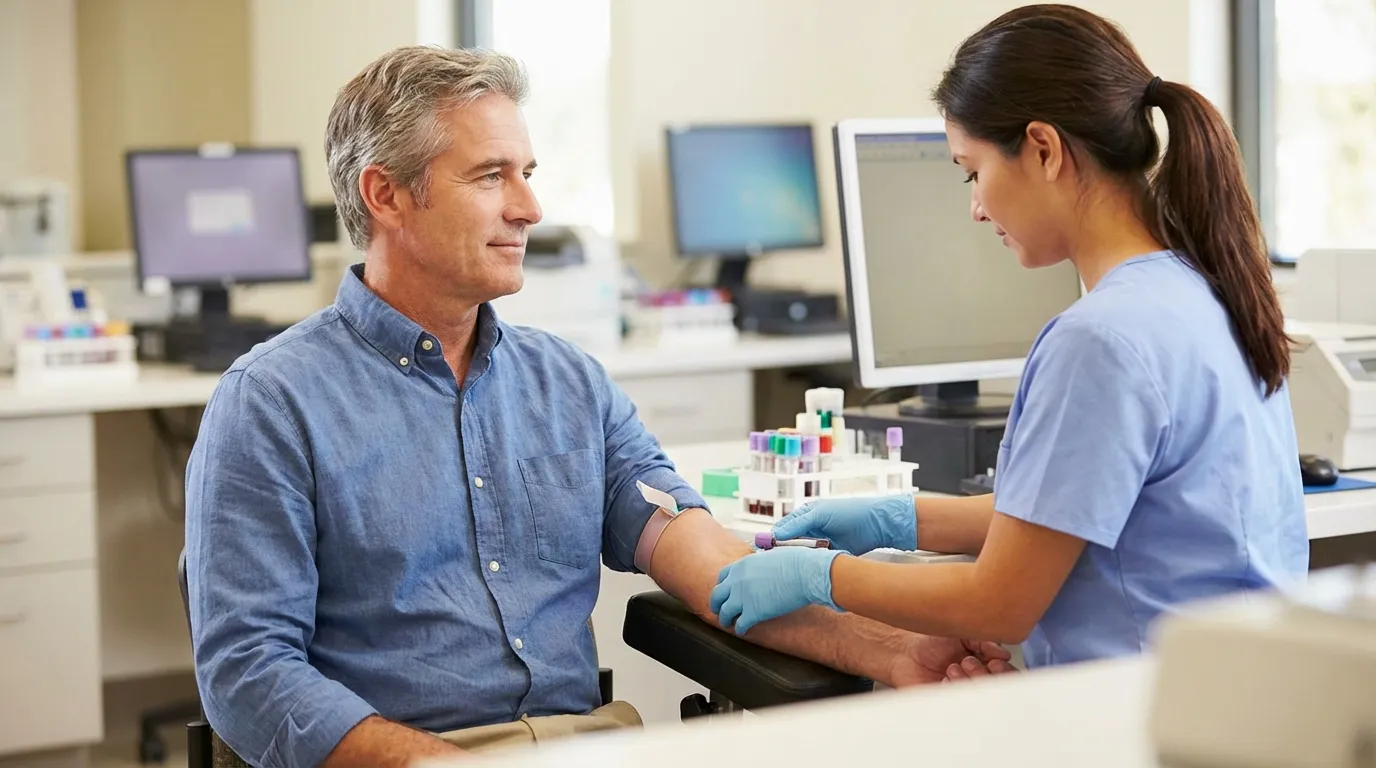
Diagnosis starts with blood work and a bone density scan. If you're being evaluated for low testosterone, ask your provider to also assess markers relevant to bone health. A comprehensive diagnostic workup typically includes:
Key diagnostic tests for bone health and testosterone
| Test | What It Measures | Why It Matters |
|---|---|---|
| Total and Free Testosterone | Circulating testosterone levels | Identifies hormonal deficiency directly linked to bone loss |
| Estradiol (E2) | Estrogen levels in men | Low estradiol compounds bone density loss |
| DEXA Scan | Bone mineral density | Gold standard for diagnosing osteopenia/osteoporosis |
| Vitamin D (25-OH) | Vitamin D status | Deficiency accelerates bone resorption |
| Calcium (serum) | Calcium levels | Essential mineral for bone matrix maintenance |
| PTH (Parathyroid Hormone) | Parathyroid function | Elevated PTH accelerates bone breakdown |
Your provider may also order a full panel of TRT blood work to get a complete hormonal picture before recommending treatment. Understanding your free vs total testosterone levels is especially important, as bioavailable testosterone — not just total levels — is what actually reaches bone tissue and drives the protective effect.
Current guidelines from the Endocrine Society recommend DEXA scanning for all men over 70, and for men over 50 who have risk factors for osteoporosis — including documented hypogonadism. If your provider hasn't suggested a DEXA scan during your low T evaluation, it's entirely reasonable to bring it up yourself.
Can TRT Improve Bone Density? What the Research Shows
This is the question most men want answered: if low testosterone is causing bone loss, does testosterone replacement therapy reverse it? The short answer is yes — and the clinical evidence is substantial.
Multiple peer-reviewed studies have demonstrated that TRT improves bone mineral density in men with hypogonadism. The landmark Testosterone Trials (TTrials), a large-scale NIH-funded study published in JAMA Internal Medicine, found that testosterone treatment significantly increased volumetric bone mineral density and estimated bone strength in older men with low testosterone. Bone density improvements were observed in both the spine and the hip — the two sites most associated with fracture risk.
Other research has shown that the improvements in bone density from TRT are dose-dependent and time-dependent — meaning higher baseline hormone restoration and longer treatment duration produce greater gains. Men who begin TRT with the most severely reduced bone density often show the most notable improvement, though benefits have been observed across the spectrum of low testosterone bone density presentations.
The mechanism is straightforward: restoring testosterone to normal physiological levels re-establishes the anabolic signaling that osteoblasts need to build new bone. At the same time, restored estradiol levels (a natural byproduct of testosterone aromatization) further suppress osteoclast activity. The combined effect is a meaningful improvement in bone remodeling balance.
It's also worth highlighting that TRT supports muscle mass gains, which indirectly benefits bones. Greater muscle mass places more mechanical load on bones, which is a well-established driver of bone density. This is why resistance training and TRT together produce better skeletal outcomes than either intervention alone.
For men who are weighing their options, exploring whether TRT is worth it — with bone health factored in — often changes the calculus significantly. Preventing a hip fracture or spinal compression at 60 has enormous implications for quality of life and longevity.
Maximizing Bone Health on TRT: What Else You Can Do
TRT is a powerful tool for bone protection, but it works best as part of a broader approach to skeletal health. Men on TRT who also optimize their nutrition, exercise habits, and supplementation can expect meaningfully better outcomes than those who rely on hormone therapy alone.
Resistance and weight-bearing exercise are the most evidence-backed non-pharmacological interventions for bone density. Activities like squats, deadlifts, walking, and stair climbing all create the mechanical stress that triggers osteoblast activity. Aim for at least two to three strength training sessions per week, and don't neglect balance training to reduce fall risk as you age.
Vitamin D and calcium optimization are also essential. The National Institutes of Health recommends 1,000–1,200 mg of calcium daily for men over 50, and most adults benefit from 1,500–2,000 IU of vitamin D3 daily, though your ideal dose should be confirmed by blood test. Deficiencies in either nutrient dramatically undermine whatever bone-building work your hormones are trying to accomplish.
Lifestyle modifications — quitting smoking, moderating alcohol intake, and maintaining a healthy body weight — all contribute to better bone outcomes. Smoking, in particular, is an independent risk factor for osteoporosis that directly impairs osteoblast function.
Finally, staying consistent with follow-up care on TRT matters. Regular monitoring through TRT blood work, including estradiol and testosterone levels, ensures your protocol keeps hormones in the optimal range for bone maintenance. A repeat DEXA scan 1–2 years into TRT is a reasonable way to objectively confirm that your bone density is improving.
Finding the Right TRT Provider for Bone Health Management
Not all TRT providers take the same comprehensive approach to care. When it comes to bone health, you want a provider who treats the whole picture — not just your testosterone number. A qualified TRT clinic will assess your bone density risk as part of your initial evaluation, order appropriate lab work including estradiol and vitamin D, and adjust your protocol over time based on your full clinical picture.
When searching for a provider, look for one who offers comprehensive initial bloodwork, individualized dosing protocols, and regular follow-up monitoring. The first TRT consultation is your opportunity to ask specific questions about how bone health will be tracked during your treatment. A good provider will welcome those questions.
If you're not sure where to start, find a TRT clinic near you through our directory to connect with vetted providers in your area. Whether you're in Florida, California, or anywhere else in the country, there are qualified clinics ready to help you address both hormonal and skeletal health comprehensively. You might also want to review how to find a TRT doctor step by step to ensure you ask the right questions and choose a provider with the right expertise.

Taking Action: Your Next Steps for Bone and Hormonal Health
The connection between low testosterone bone density loss and long-term fracture risk is clear, well-documented, and — critically — highly actionable. You don't have to wait for a fracture or a diagnosis of osteoporosis to take your bone health seriously. Early evaluation, accurate diagnosis, and appropriate treatment can preserve and restore bone mineral density in a meaningful way.
Here's a practical summary of next steps for men concerned about testosterone and bone health:
- Get your testosterone tested — both total and free levels, along with estradiol. Understanding your testosterone levels by age gives you important context for your results.
- Request a DEXA scan — especially if you're over 50 or have known risk factors for low testosterone.
- Optimize your nutrition — ensure adequate calcium and vitamin D intake through diet and supplementation.
- Start or maintain resistance training — bone responds to mechanical load, and even modest strength training has measurable skeletal benefits.
- Consult a qualified TRT provider — if your testosterone is clinically low, TRT is an evidence-based intervention that can halt and reverse bone density decline.
If you're experiencing symptoms that might point to hormonal imbalance, take the free Low T symptom quiz to help clarify your situation before your appointment. And remember: addressing low testosterone bone density concerns early — before significant bone loss occurs — is always easier and more effective than trying to reverse advanced osteoporosis. The right provider, the right protocol, and the right lifestyle habits put you firmly in control of your long-term health.
Sources & References
- Testosterone Therapy in Men with Hypogonadism: An Endocrine Society Clinical Practice Guideline — Journal of Clinical Endocrinology & Metabolism [Link]
- Effect of Testosterone Treatment on Volumetric Bone Density and Strength in Older Men with Low Testosterone — JAMA Internal Medicine (Testosterone Trials) [Link]
- Androgens and Bone — The Role of Testosterone and Its Metabolites — PubMed / Bone [Link]
- Osteoporosis in Men: Epidemiology, Diagnosis, Prevention and Treatment — PubMed / Current Opinion in Rheumatology [Link]
- Male Osteoporosis: A Review — Mayo Clinic [Link]
- Testosterone and Bone Health in Men: A Systematic Review and Meta-Analysis — PubMed / Journal of Sexual Medicine [Link]
- Bone Health and Osteoporosis: A Report of the Surgeon General — National Institutes of Health / Office of the Surgeon General [Link]
Frequently Asked Questions
Ready to Take the Next Step?
Check your symptoms with our free quiz or browse 2,500+ verified TRT clinics.