Medical Disclaimer
The information on this website is for educational purposes only and is not a substitute for professional medical advice, diagnosis, or treatment. Always consult a qualified healthcare provider before starting any hormone therapy. Individual results may vary. TRTmatch does not provide medical services or prescribe medications.
Key Takeaways
- TRT is an FDA-recognized treatment for hypogonadism — getting prescribed requires confirmed low testosterone via blood work, not just symptoms alone.
- The first step is recognizing your symptoms and getting a morning total and free testosterone test; most providers consider levels below 300 ng/dL to be low.
- Multiple types of doctors can prescribe TRT, including urologists, endocrinologists, men's health clinics, and telemedicine providers — options are more accessible than ever.
- TRT comes in several delivery forms (injections, gels, creams, pellets, oral) — the right choice depends on your lifestyle, preferences, and clinical profile.
- Ongoing monitoring every 6–12 weeks initially is essential for safety and results; key markers include testosterone levels, hematocrit, estradiol, and PSA.
- Most men begin noticing improvements in energy and mood within weeks, with full benefits in body composition and vitality developing over 6–12 months of consistent therapy.
If you've been feeling chronically fatigued, struggling with low libido, gaining weight without explanation, or just not feeling like yourself, low testosterone could be the underlying cause. Understanding how to get prescribed TRT is the first step toward reclaiming your energy, mood, and quality of life. This guide breaks the entire process down into clear, actionable steps so you know exactly what to expect.
Medical disclaimer: This article is for educational purposes only and does not constitute medical advice. Always consult a qualified healthcare provider before starting any hormone therapy.
Testosterone replacement therapy (TRT) is an FDA-recognized medical treatment for hypogonadism — clinically low testosterone. It's not experimental, and it's not reserved for bodybuilders. Millions of men across the United States are currently on TRT under physician supervision, with excellent outcomes when managed correctly. If you suspect low T, the path forward is straightforward, and this guide will show you every step of it.

Step 1: Recognize the Symptoms of Low Testosterone
Before you can get a TRT prescription, you need to have a clear picture of what's driving you to seek help. Low testosterone doesn't always look the way men expect. It's rarely just about sex drive. Symptoms are often subtle, overlapping, and easy to attribute to stress, aging, or lifestyle — which is exactly why so many men go years without getting tested.
Common signs of low testosterone include:
- Persistent fatigue and low energy, even after adequate sleep
- Reduced sex drive or libido
- Difficulty building or maintaining muscle mass
- Increased body fat, especially around the midsection
- Brain fog, poor concentration, or memory issues
- Depressed mood, irritability, or low motivation
- Erectile dysfunction or reduced morning erections
- Decreased bone density
- Hair thinning or loss
The more symptoms you recognize, the more important it becomes to get tested. Testosterone naturally declines about 1–2% per year after age 30, which means men in their 40s and 50s are particularly likely to notice a meaningful impact. That said, low testosterone can also affect men in their 20s — age alone doesn't determine your hormone levels.
A useful first step is to take the free Low T symptom quiz to get a clearer picture of whether your symptoms align with hypogonadism. It takes less than two minutes and gives you a starting point for your conversation with a doctor.
If you want a deeper dive into what these symptoms look like in practice, check out our guide on 10 Signs of Low Testosterone in Men. Understanding your symptom profile will also make your first appointment far more productive.
Step 2: Get the Right Blood Tests
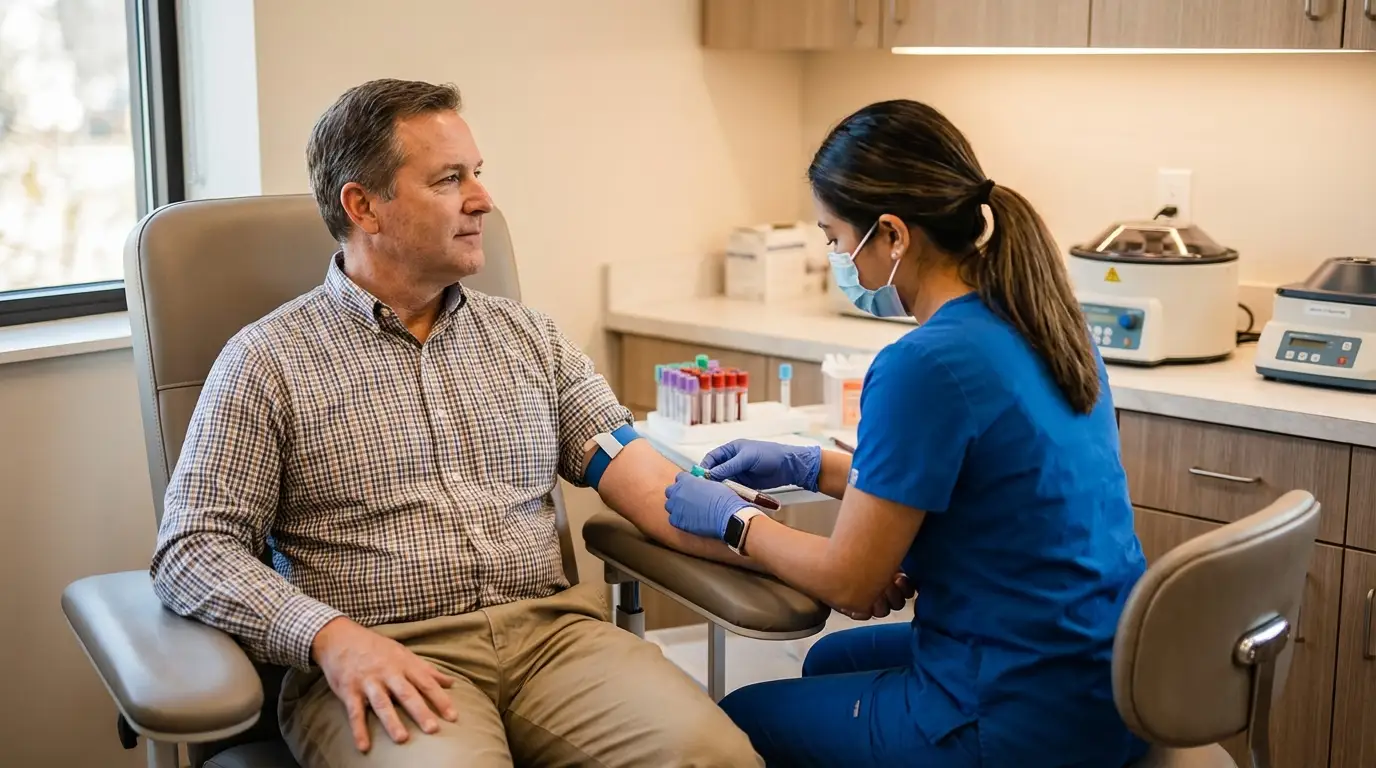
Symptoms alone are not enough to get a TRT prescription — and that's actually a good thing. A responsible TRT provider will always require lab work before prescribing anything. Blood tests confirm that your testosterone levels are genuinely low and rule out other conditions that could be causing your symptoms.
The key tests you'll need include:
| Test | Why It Matters |
|---|---|
| Total Testosterone | Measures overall testosterone in the bloodstream |
| Free Testosterone | The biologically active portion your body can actually use |
| LH and FSH | Identifies whether the issue is in the testes or pituitary |
| SHBG | Affects how much free testosterone is available |
| Estradiol (E2) | Tracks estrogen balance, important during TRT |
| Hematocrit / CBC | Baseline for red blood cell monitoring |
| PSA | Prostate screening, required before TRT |
| Metabolic Panel | Liver, kidney, and cholesterol baselines |
Most guidelines, including those from the Endocrine Society, recommend testing total testosterone in the morning when levels are naturally highest. A reading below 300 ng/dL is generally considered low, though many providers also factor in free testosterone and symptoms together. To understand the nuance between these two measurements, read our article on Free vs Total Testosterone: What Really Matters.
For a complete breakdown of what labs you'll need before and during TRT, see our guide on TRT Blood Work: Which Tests You Need Before and During Treatment. Going into your appointment already knowing what labs to request puts you in a much stronger position.
How to Get Prescribed TRT: Finding the Right Provider
This is where many men get stuck. Not every doctor is equally well-versed in testosterone therapy, and getting a dismissive response from a general practitioner can be discouraging. The good news is that the landscape for TRT care has expanded enormously over the last decade, giving you more options than ever.
Which types of doctors prescribe TRT?
Several types of physicians are qualified to prescribe testosterone replacement therapy:
- Urologists — frequently treat hypogonadism as part of men's sexual health
- Endocrinologists — hormone specialists with deep expertise in testosterone physiology
- Men's health clinics / TRT clinics — specialized practices focused exclusively on hormone optimization
- Primary care physicians — some GPs are knowledgeable about TRT, though experience varies widely
- Telemedicine TRT providers — online platforms that offer full TRT services remotely
If your primary care doctor isn't comfortable prescribing TRT, that's not a dead end — it's simply a signal to seek a specialist. Men's health clinics and TRT-focused practices are often the most efficient path because the entire clinical workflow is built around hormone therapy.
When evaluating a provider, look for one who orders comprehensive labs before prescribing, offers individualized dosing rather than a one-size-fits-all protocol, provides ongoing monitoring, and is transparent about cost and treatment options. Our detailed guide on How to Find a TRT Doctor walks through this process in depth.
You can also find a TRT clinic near you using our directory, which lists vetted providers across the country. Whether you prefer in-person or telemedicine care, there are qualified options available in virtually every state.
Step 3: Your First TRT Consultation
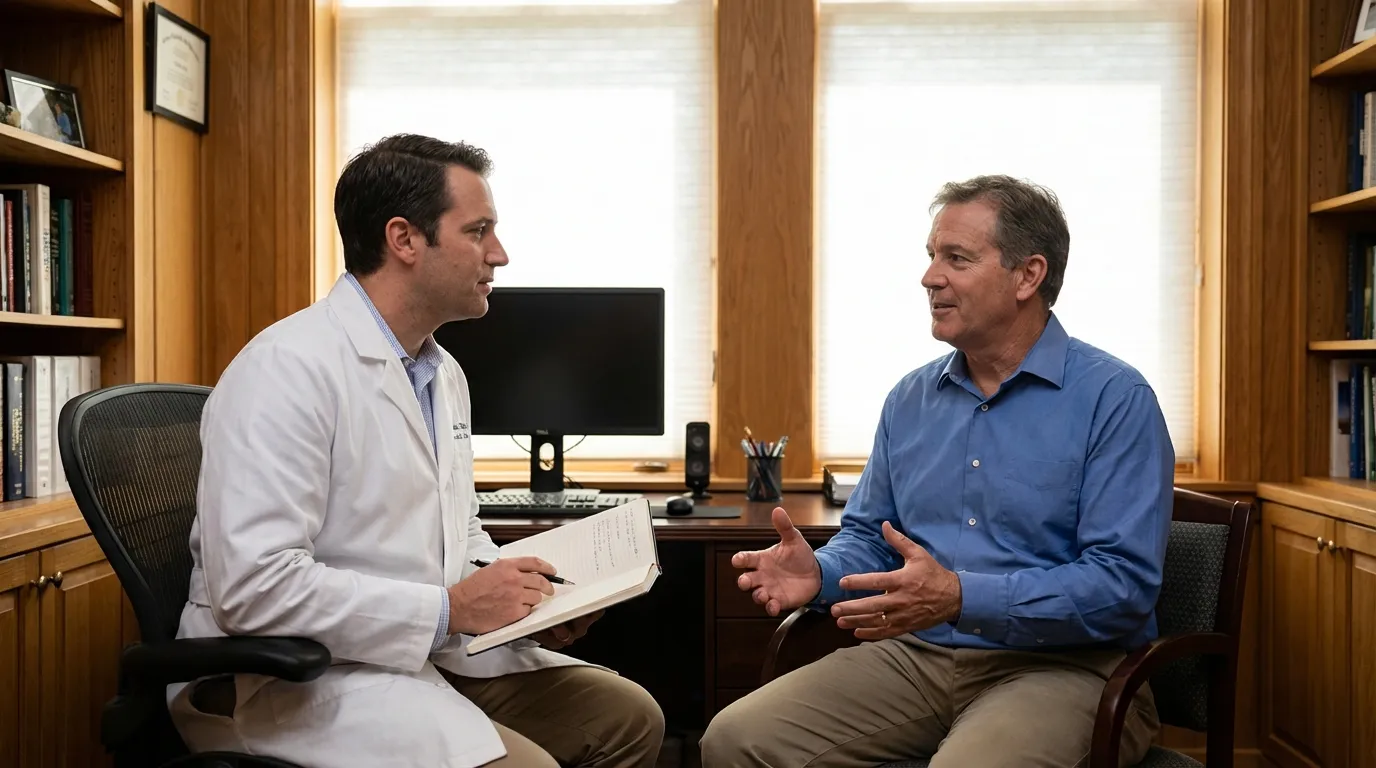
Once you've chosen a provider, your first consultation is where everything comes together. Knowing what to expect removes the anxiety and helps you get the most out of the appointment. Most initial TRT consultations last 30–60 minutes and cover your medical history, symptom review, existing lab results, and a discussion of treatment options.
Come prepared with the following:
- A written list of your symptoms and how long you've experienced them
- Any lab results you already have
- A list of current medications and supplements
- Questions about your treatment options, delivery methods, and monitoring schedule
Your provider will use your lab results and symptom history to determine whether TRT is appropriate. If your labs come back within the normal range but your symptoms are significant, a good provider will dig deeper — checking free testosterone, SHBG, and other markers rather than dismissing your concerns based on a single number.
The consultation is also your opportunity to discuss delivery methods. TRT is available as injections, topical gels, creams, pellets, and oral capsules — each with different advantages depending on your lifestyle, preferences, and clinical profile. For a side-by-side comparison of the most popular options, see our guide on TRT Injections vs Gel: Which Is Better.
For a full preview of what the consultation process looks like, read Your First TRT Consultation: What to Expect before your appointment.
Step 4: Understanding Your Treatment Options
Once a provider determines that TRT is appropriate for you, the next step is selecting the right delivery method. This is a collaborative decision between you and your doctor based on your lab values, lifestyle, and personal preferences. There is no universally best method — each has its place.
Testosterone injections (typically cypionate or enanthate) are the most common form of TRT in the United States. They're cost-effective, flexible in dosing, and can be self-administered at home after a brief training session. Most men inject weekly or twice weekly to maintain stable hormone levels. Learn about the differences between formulations in our Testosterone Cypionate vs Enanthate comparison.
Topical gels and creams are applied daily to the skin and absorbed transdermally. They're convenient and needle-free, making them popular with men who prefer not to inject. The main consideration is avoiding skin-to-skin contact with partners or children after application until the product dries.
Testosterone pellets are implanted subcutaneously every 3–6 months and release testosterone steadily over time. They require a minor in-office procedure but eliminate the need for weekly dosing. See our Testosterone Injections vs Pellets: Full Comparison for a detailed breakdown.
Oral testosterone (such as Jatenzo or Kyzatrex) is a newer option that offers the convenience of a pill without the liver concerns associated with older oral androgens. Our guide on Oral Testosterone: Is It Right for You covers who these medications suit best.
Your provider will help match the right delivery method to your lifestyle. The goal is a protocol you can sustain consistently, because consistency is what drives results with TRT.
Step 5: Monitoring Your TRT Protocol
Getting a prescription is not the end of the process — ongoing monitoring is what separates safe, effective TRT from a guessing game. A responsible provider will schedule follow-up blood work at regular intervals to ensure your levels are optimized and that key health markers remain in range.
Typical monitoring schedule:
- 6–8 weeks after starting: First follow-up labs to check testosterone levels, hematocrit, and estradiol
- 3–6 months: Comprehensive panel including PSA, metabolic markers, and full hormone profile
- Every 6–12 months ongoing: Continued monitoring for long-term safety and protocol adjustments
One marker your provider will track closely is hematocrit — the percentage of red blood cells in your blood. TRT can increase red blood cell production in some men, which requires monitoring and occasionally management. Our article on Hematocrit and TRT: Why Your Levels Matter explains this in detail.
Estrogen balance is another important consideration. As testosterone levels rise, some converts to estradiol via the aromatase enzyme. In most men this is a normal and healthy process, but in some cases estrogen can trend higher than optimal, causing symptoms like water retention or mood changes. A knowledgeable provider monitors this and adjusts your protocol as needed. For more on managing estrogen, see our guide on High Estrogen on TRT: Symptoms and How to Fix It.
Regular monitoring also gives you the data to have informed conversations with your provider about dose adjustments. If your results aren't where you want them at three months, there's a clear path forward — it's not a dead end.

Understanding TRT Costs and Insurance Coverage
One of the most common questions men have when learning how to get prescribed TRT is: how much will this cost? The answer depends on several factors, including your delivery method, your provider type, and whether you have insurance coverage.
Out-of-pocket costs for TRT vary widely. Injectable testosterone cypionate is among the most affordable options, often costing $30–$80 per month for the medication itself. When you factor in provider fees and lab work, total monthly costs typically range from $100–$300 at a TRT clinic, with telemedicine providers sometimes offering more competitive pricing. Our TRT Cost Per Month USA (2026 Price Guide) provides a current, detailed breakdown.
Insurance coverage for TRT depends on your plan and whether you meet their criteria for hypogonadism. Many insurance plans do cover testosterone medications when prescribed for a documented diagnosis, though coverage for clinic fees and some lab panels can vary. Read our full guide on Does Insurance Cover TRT? What You Need to Know for a thorough overview.
If cost is a concern, telemedicine TRT platforms have made treatment significantly more accessible. Many offer subscription-style pricing that bundles consultations, medications, and lab work into a predictable monthly fee. See our Affordable TRT Online: Best Budget-Friendly Options for providers worth considering.
Don't let cost uncertainty delay getting evaluated. Many providers offer free or low-cost initial consultations, and knowing your testosterone levels costs very little compared to continuing to feel suboptimal for years.
What to Expect After Starting TRT
Once you have your prescription and begin treatment, the natural next question is: when will I feel a difference? TRT is not an overnight fix, but most men notice meaningful changes within the first few weeks to months, with the full benefit becoming apparent over six to twelve months of consistent therapy.
A general timeline based on clinical research:
- Weeks 1–3: Some men notice improved mood and energy relatively quickly
- Weeks 4–8: Libido often begins to improve; first follow-up labs at this stage
- Months 3–6: Body composition changes become more apparent; mental clarity and motivation often peak
- Months 6–12: Full benefits in muscle mass, bone density, and metabolic function
For a realistic picture of what to expect at each milestone, read our guides on TRT at 3 Months: Results, Changes and What's Normal and TRT After 1 Year: Long-Term Results and Transformations.
Some men experience minor adjustments in the early weeks, such as changes in water retention or mild acne, as their body adapts to rising testosterone levels. These are typically manageable and short-lived. A qualified provider will guide you through any side effects and adjust your protocol if needed. If you're concerned about specific side effects, our article on TRT Side Effects: What to Expect and How to Manage Them covers them all in practical detail.
The most important thing to understand is that TRT works best as a long-term, monitored protocol — not a short-term experiment. Men who commit to consistent treatment and regular follow-ups tend to achieve the best results and the fewest complications.
How to Get Prescribed TRT: Taking the Next Step
Now that you understand the full process — from recognizing symptoms, to getting the right blood tests, finding a qualified provider, and managing your treatment over time — the path forward is clear. Knowing how to get prescribed TRT isn't complicated, but it does require taking that first step: getting tested.
If you're still on the fence about whether TRT is right for you, start with the data. Take the free Low T symptom quiz to assess your symptoms, then schedule a consultation with a qualified provider who can order the appropriate labs and give you a medically informed recommendation.
TRT is an established, well-studied treatment for hypogonadism, and when managed by a knowledgeable provider, it is both safe and highly effective for the vast majority of men. The goal isn't just higher numbers on a lab report — it's feeling like yourself again, with the energy, drive, and mental clarity to show up fully in your life.
Ready to get started? Find a TRT clinic near you using our directory and take the first step toward a real solution. If you'd like to learn more about what TRT involves before committing to a consultation, our comprehensive guide on TRT for Beginners: Everything You Need to Know is the perfect place to start.
Sources & References
- Testosterone Therapy in Men With Hypogonadism: An Endocrine Society Clinical Practice Guideline — Journal of Clinical Endocrinology & Metabolism [Link]
- Cardiovascular Safety of Testosterone-Replacement Therapy (TRAVERSE Trial) — New England Journal of Medicine [Link]
- Testosterone Therapy Overview — Mayo Clinic [Link]
- Low Testosterone (Male Hypogonadism) — Cleveland Clinic [Link]
- AUA Guidelines on Evaluation and Management of Testosterone Deficiency — American Urological Association [Link]
- Diagnosis and Management of Testosterone Deficiency Syndrome in Men — PubMed / Canadian Urological Association Journal [Link]
Frequently Asked Questions
Ready to Take the Next Step?
Check your symptoms with our free quiz or browse 2,500+ verified TRT clinics.