
Medical Disclaimer
The information on this website is for educational purposes only and is not a substitute for professional medical advice, diagnosis, or treatment. Always consult a qualified healthcare provider before starting any hormone therapy. Individual results may vary. TRTmatch does not provide medical services or prescribe medications.
Key Takeaways
- TRT and peptide therapy can be safely combined under medical supervision to address multiple aspects of male hormonal decline, including body composition, recovery, sleep, libido, and energy.
- Growth hormone secretagogues like Ipamorelin/CJC-1295 and Sermorelin are the most commonly used peptides alongside TRT, working synergistically with testosterone to enhance anabolic outcomes.
- The most significant risk with peptide therapy is sourcing from unregulated suppliers — always obtain peptides through a licensed compounding pharmacy with a prescribing physician.
- Most men benefit from establishing a stable TRT protocol for 3-6 months before adding peptides, allowing providers to clearly assess what additional therapies are warranted.
- Regular lab monitoring including IGF-1, fasting glucose, testosterone levels, and hematocrit is essential on a combined TRT and peptide protocol.
- Not every man on TRT needs peptides — the decision should be based on specific residual symptoms, lab results, and individual goals, guided by a qualified men's health provider.
What Is TRT and Peptide Therapy — and Why Are Men Combining Them?
If you've been researching hormone optimization, you've likely come across two terms that keep appearing together: TRT and peptide therapy. Testosterone replacement therapy is a well-established, FDA-recognized treatment for men with clinically low testosterone. Peptide therapy, on the other hand, is a newer class of treatments involving short chains of amino acids that signal the body to perform specific biological functions — from releasing growth hormone to accelerating tissue repair.
More men are combining these two approaches because they address different but complementary aspects of male health. TRT restores testosterone to a healthy physiological range, improving energy, libido, muscle mass, mood, and metabolic function. Peptides can extend those benefits further — enhancing recovery, stimulating the body's own growth hormone release, supporting fat loss, or improving sleep quality. Together, they form what many integrative medicine doctors call a comprehensive male hormone optimization protocol.
Disclaimer: This article is for educational purposes only and does not constitute medical advice. Always consult a qualified healthcare provider before starting any hormone or peptide therapy.
If you're currently experiencing symptoms like persistent fatigue, low libido, difficulty building muscle, or brain fog, it's worth understanding whether your testosterone levels might be a contributing factor. Take the free Low T symptom quiz to get a sense of where you stand before talking to a provider. And if you're already on TRT but wondering whether peptides could take your results further, this guide will walk you through what the research says, which peptides are most commonly used alongside testosterone therapy, and how to do it safely.

How Peptides Work: The Basics You Need to Know
Peptides are naturally occurring molecules — sequences of two or more amino acids — that act as messengers in the body. Your body already produces thousands of them. When used therapeutically, synthetic or bioidentical peptides mimic or amplify those natural signals. Unlike traditional drugs, most therapeutic peptides work by stimulating the body's own processes rather than replacing them from the outside.
The most clinically relevant peptides for men on TRT fall into a few key categories:
- Growth hormone secretagogues (GHS): These stimulate the pituitary gland to release more of your own growth hormone. Examples include Sermorelin, Ipamorelin, CJC-1295, and Tesamorelin.
- Recovery and repair peptides: BPC-157 and TB-500 (Thymosin Beta-4) are widely discussed for their potential to accelerate healing in connective tissue, tendons, and muscle.
- Metabolic peptides: AOD-9604 is a fragment of HGH studied for its effects on fat metabolism without the growth-promoting effects of full growth hormone.
- Sexual health peptides: PT-141 (Bremelanotide) acts on melanocortin receptors in the brain and is used for improving libido and erectile function — an FDA-approved option for certain patients.
It's important to understand that peptide therapy exists on a regulatory spectrum. Some peptides, like PT-141, are FDA-approved. Others are available through compounding pharmacies and are considered off-label or research-use compounds. A qualified provider will clearly explain the regulatory status and evidence base for any peptide they recommend. Always work with a licensed clinic — not online grey-market sources — to ensure product purity and appropriate dosing.
The Science Behind Combining TRT and Peptide Therapy
One of the most compelling reasons men explore trt and peptide therapy together is the concept of hormonal synergy. Testosterone and growth hormone share overlapping anabolic pathways. When one is optimized, the body is often better positioned to respond to the other. Research published in the Journal of Clinical Endocrinology and Metabolism has demonstrated that testosterone enhances growth hormone secretion and IGF-1 production, meaning men on TRT may actually derive greater benefit from GH-stimulating peptides than men with untreated low testosterone.
Consider a practical scenario: a 45-year-old man starts TRT and notices significant improvements in libido and mood within the first few months — consistent with what many men experience, as outlined in our guide on how long TRT takes to work. However, he still struggles with body composition — losing the last layer of visceral fat and building lean muscle remains difficult. Adding a growth hormone secretagogue like Ipamorelin/CJC-1295 to his protocol may help stimulate the natural pulsatile release of growth hormone, which declines with age just as testosterone does. This dual approach addresses two distinct but related hormonal deficiencies simultaneously.
From a recovery standpoint, men who train regularly often find that BPC-157 or TB-500 supports faster healing from minor joint irritation or muscle strains — something that becomes increasingly common as men train harder on TRT. Some early-stage research also suggests BPC-157 may have gastroprotective and neurological benefits, though larger human trials are still needed.
The key takeaway from a scientific perspective: combining these therapies is not about stacking drugs for performance enhancement. It's about addressing the multiple hormonal axes that decline with age in a coordinated, medically supervised way.
Most Commonly Used Peptides Alongside Testosterone Therapy
Here's a practical overview of the peptides most often prescribed alongside TRT in men's health clinics today:
| Peptide | Primary Use | Common Delivery | Regulatory Status |
|---|---|---|---|
| Ipamorelin / CJC-1295 | GH release, body composition, sleep | Subcutaneous injection | Compounded / Off-label |
| Sermorelin | GH stimulation, anti-aging | Subcutaneous injection | Compounded |
| BPC-157 | Tissue repair, gut health, joint recovery | Injection or oral | Research compound |
| PT-141 (Bremelanotide) | Libido, erectile function | Intranasal or injection | FDA-approved (women); off-label men |
| Tesamorelin | Visceral fat reduction, GH release | Subcutaneous injection | FDA-approved (HIV lipodystrophy) |
| TB-500 | Muscle and tendon recovery | Subcutaneous injection | Research compound |
When it comes to sexual health, men on TRT sometimes find that testosterone alone doesn't fully resolve erectile dysfunction. In those cases, PT-141 can be a valuable addition — it works centrally through the brain rather than peripherally like PDE5 inhibitors, offering a complementary mechanism. For more on TRT's role in sexual health, see our in-depth article on TRT for erectile dysfunction.
Benefits Men Report When Combining TRT and Peptide Therapy
While individual results vary and peer-reviewed data on combined protocols is still emerging, men working with qualified providers report a range of improvements when using trt and peptide therapy together. These outcomes align with the known mechanisms of both testosterone and growth hormone optimization:
- Improved body composition: Reduced visceral fat and increased lean muscle mass. Testosterone supports protein synthesis and muscle growth, while GH secretagogues enhance lipolysis (fat breakdown). Men who struggle with weight loss on TRT alone often find that adding a peptide like Ipamorelin accelerates results.
- Better sleep quality: Growth hormone is predominantly released during deep sleep. GH-stimulating peptides like Ipamorelin and Sermorelin are typically dosed at bedtime to align with the body's natural GH pulse, and many men report deeper, more restorative sleep — which in turn supports testosterone production in a positive feedback loop.
- Faster recovery from training: With higher anabolic hormone levels across the board, muscle repair after resistance training is more efficient. BPC-157 in particular is widely used among men who train hard and experience joint or tendon discomfort.
- Enhanced energy and mental clarity: Optimizing both testosterone and growth hormone can meaningfully address the fatigue and brain fog that many men experience with hormonal decline. For men still experiencing cognitive symptoms on TRT, our guide on TRT and brain fog provides additional context.
- Mood and motivation: Both testosterone and GH pathways influence dopaminergic function, and men often report improved drive and emotional resilience with a combined protocol.
It bears repeating that these results are most consistent and predictable when the protocol is designed and monitored by a qualified provider who tracks relevant biomarkers — not self-administered based on online forums.
Safety Considerations and How Risks Are Managed
Any discussion of combining therapies requires an honest look at safety. The good news is that when trt and peptide therapy are managed by a qualified provider with appropriate screening and monitoring, the risk profile for most healthy men is well-understood and manageable.
GH secretagogues and insulin sensitivity: In some men, particularly those with pre-existing metabolic concerns, growth hormone-stimulating peptides can affect insulin sensitivity. This is a known and monitorable variable — providers will typically track fasting glucose and IGF-1 levels during the first few months of a GH peptide protocol to ensure levels stay within an optimal physiological range, not supraphysiologic. Men with well-controlled type 2 diabetes or insulin resistance should discuss this specifically with their provider, as noted in our article on TRT and diabetes.
Fluid retention: Some men notice mild water retention with GH-stimulating peptides, particularly at higher doses. This is typically transient and resolves with dose adjustment — an experienced provider will titrate starting doses conservatively to minimize this effect.
Product quality and sourcing: The most significant real-world risk associated with peptide therapy is not the peptides themselves but sourcing from unregulated suppliers. Contaminated or misdosed compounds from grey-market websites pose genuine safety concerns. Always obtain peptides through a licensed compounding pharmacy working with a prescribing physician.
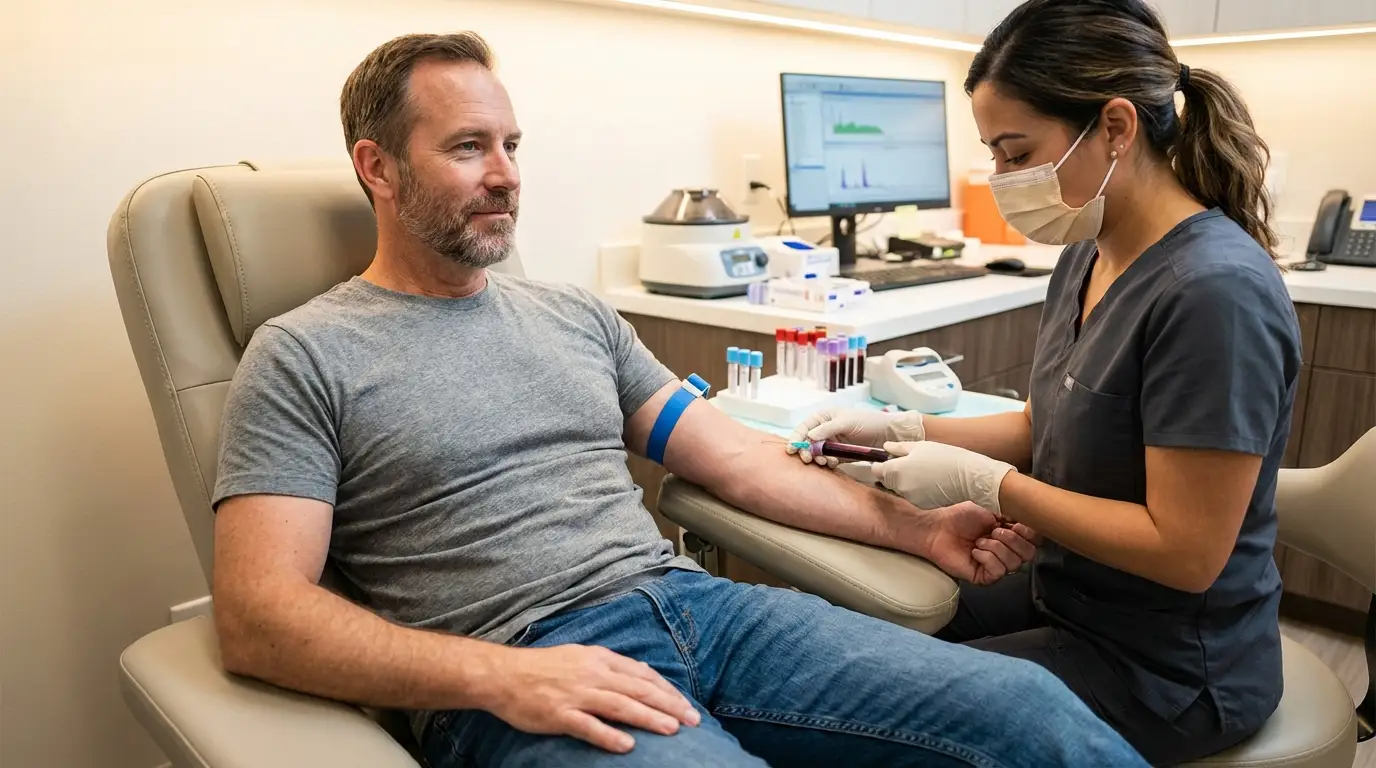
Monitoring on a combined protocol: Men combining TRT and peptides should expect regular lab work including testosterone levels, IGF-1, blood glucose, hematocrit, and a comprehensive metabolic panel. If you want to understand what standard TRT monitoring involves, our article on TRT blood work is a helpful starting point. Comprehensive monitoring is not a burden — it's what makes these protocols both safe and effective.
How to Find a Provider Who Offers Both TRT and Peptide Therapy
Not every TRT clinic offers peptide therapy, and not every provider who prescribes peptides has deep expertise in testosterone optimization. Ideally, you want a provider who understands the full picture of male hormone health and can integrate both into a cohesive protocol tailored to your specific labs, symptoms, and goals.
When evaluating clinics, look for the following:
- Physicians or nurse practitioners with specific training in men's health, endocrinology, or anti-aging medicine
- Comprehensive initial lab work covering testosterone (total and free), IGF-1, thyroid, metabolic panel, and other relevant markers
- Clear explanations of the regulatory status and evidence base for any prescribed peptide
- Access to an accredited compounding pharmacy for peptide fulfillment
- Regular follow-up labs and protocol adjustments based on your individual response
Our guide to finding the best TRT clinic near you covers the key questions to ask during a consultation. You can also browse qualified providers directly through our clinic directory — find a TRT clinic near you that offers advanced hormone optimization protocols. Telemedicine has made this more accessible than ever; our review of the best telemedicine TRT providers includes several that offer integrated peptide therapy services.
If you're earlier in your hormone health journey and not yet sure whether you have low testosterone, start with the fundamentals. Our article on 10 signs of low testosterone in men can help you recognize symptoms, and your first consultation with a provider will include labs that clarify whether TRT, peptides, or a combination is appropriate for your situation.

Is Combining TRT and Peptide Therapy Right for You?
The honest answer is: it depends on your goals, your baseline hormonal status, and your overall health picture. Not every man on TRT needs to add peptide therapy, and a good provider will never push unnecessary treatments. But for men who have optimized their testosterone protocol and want to address residual concerns around body composition, recovery, sleep, or sexual health, trt and peptide therapy together represents a logical, evidence-informed next step.
Here's a simple framework for thinking about whether to explore this combination:
- You're already on TRT with stable, optimized testosterone levels but still struggling with fat loss, slow recovery, or poor sleep — GH secretagogues may be worth exploring.
- You experience joint discomfort or frequent minor injuries from training — BPC-157 or TB-500 could be valuable additions under medical supervision.
- You have low libido despite good testosterone levels — PT-141 may address the central neurological component that testosterone alone doesn't fully resolve. See our guide on TRT for low libido for more context.
- You're new to TRT — it generally makes sense to establish a solid testosterone protocol first, allow 3-6 months to assess your response, and then consider adding peptides. Our article on TRT before and after results shows what most men can realistically expect from testosterone therapy alone.
The bottom line is that trt and peptide therapy is not a one-size-fits-all approach — it's a personalized, medically supervised strategy for men who want to address hormonal optimization comprehensively. With the right provider, clear goals, and consistent monitoring, this combination is both safe and genuinely effective for many men. The first step is connecting with a qualified provider who can evaluate your full hormonal picture and build a protocol around your individual needs. Find a TRT clinic near you and schedule a consultation to explore whether combined hormone and peptide therapy is the right path forward for you.
Sources & References
- Testosterone and Growth Hormone Interaction in Men — Journal of Clinical Endocrinology and Metabolism / PubMed [Link]
- Growth Hormone Secretagogues: Mechanisms and Clinical Applications — Endocrine Reviews / PubMed [Link]
- BPC-157: A Review of its Regenerative and Protective Effects — Current Pharmaceutical Design / PubMed [Link]
- Bremelanotide (PT-141): FDA Approval and Mechanism of Action — U.S. Food and Drug Administration [Link]
- Testosterone Deficiency in Men: Clinical Guidelines — American Urological Association [Link]
- Tesamorelin for the Treatment of HIV-Associated Lipodystrophy — New England Journal of Medicine / PubMed [Link]
- The Role of Growth Hormone in Body Composition and Metabolic Function — StatPearls / National Center for Biotechnology Information [Link]
Frequently Asked Questions
Ready to Take the Next Step?
Check your symptoms with our free quiz or browse 2,500+ verified TRT clinics.