
Medical Disclaimer
The information on this website is for educational purposes only and is not a substitute for professional medical advice, diagnosis, or treatment. Always consult a qualified healthcare provider before starting any hormone therapy. Individual results may vary. TRTmatch does not provide medical services or prescribe medications.
Key Takeaways
- TRT can cause a modest PSA increase of 0.3–0.5 ng/mL in the first 3–6 months, which is a normal physiologic response and not an automatic cause for concern.
- The current evidence does not support a causal link between TRT and prostate cancer in men without pre-existing disease, according to the Endocrine Society and major urology organizations.
- All reputable TRT providers should check PSA at baseline, at 3–6 months, and annually thereafter as part of standard monitoring protocol.
- Men with benign prostatic hyperplasia (BPH) can often start TRT safely with appropriate monitoring and symptom tracking.
- A single PSA reading is less meaningful than the trajectory over time — rising PSA that stabilizes is very different from PSA that continues to climb.
- Finding a qualified TRT provider who integrates prostate monitoring into your care plan is the most important step you can take for long-term safety.
TRT, Prostate Health, and PSA: What Every Man Should Know
If you've been researching testosterone replacement therapy, you've probably come across concerns about trt prostate psa levels. It's one of the most common questions men ask before starting treatment — and it's a smart one. PSA (prostate-specific antigen) is a protein produced by the prostate gland, and its levels in the blood are used as a screening marker for prostate health. Understanding how TRT interacts with PSA is an important part of making an informed decision about your care.
Medical Disclaimer: This article is for educational purposes only and does not constitute medical advice. Always consult a licensed healthcare provider before starting, stopping, or changing any hormone therapy protocol.
The good news is that the relationship between TRT and PSA is well-studied, well-understood, and very manageable under proper medical supervision. A qualified TRT provider will monitor your PSA before and during treatment, so you're never flying blind. Let's break down exactly what the research shows, what's considered normal, and what you should expect your doctor to do.

What Is PSA and Why Does It Matter?
Prostate-specific antigen (PSA) is a protein produced almost exclusively by cells in the prostate gland. It circulates in small amounts in the bloodstream, and elevated levels can indicate a range of prostate conditions — including benign prostatic hyperplasia (BPH), prostate inflammation (prostatitis), or, in some cases, prostate cancer.
PSA testing is a standard part of men's preventive health care, typically recommended starting at age 50 for average-risk men, and earlier for those with a family history of prostate cancer. A PSA level below 4.0 ng/mL is generally considered within the normal range, though your doctor will interpret results in the context of your age, prostate size, and other factors.
It's important to understand that PSA is not a perfect cancer detector. Many men with elevated PSA have benign conditions, and some men with prostate cancer have normal PSA readings. That's why PSA is used as one tool among many — not a standalone diagnosis. Factors that can temporarily raise PSA include recent ejaculation, vigorous cycling, urinary tract infections, and even certain medications. Your provider will account for these variables when interpreting your results.
For men considering TRT, PSA serves as a critical monitoring biomarker throughout treatment. If you'd like to understand all the blood work involved in TRT, check out our guide on TRT Blood Work: Which Tests You Need (Before & During Treatment).
How TRT Affects Prostate PSA Levels
This is the core question most men have, and the research provides a reassuring answer. When men start TRT, PSA levels can rise modestly — typically in the first three to six months of treatment. This is expected and does not automatically signal a problem. Studies suggest that PSA may increase by approximately 0.3 to 0.5 ng/mL on average during early TRT, which is considered a physiologically normal response to testosterone stimulation of the prostate.
Here's the critical context: testosterone does stimulate the prostate, but the relationship is not linear in the way many men fear. Research published in the Journal of Clinical Endocrinology & Metabolism and by the Endocrine Society consistently shows that TRT does not appear to cause prostate cancer in men who did not already have it. The "saturation model" — developed by Dr. Abraham Morgentaler — explains that prostate androgen receptors become saturated at relatively low testosterone levels, meaning that pushing testosterone into the normal physiologic range produces only a limited additional stimulatory effect.
In practical terms: if your PSA rises slightly when you start TRT and then stabilizes, that's generally not a cause for concern. A qualified provider will track the trajectory — not just a single reading. What matters most is whether PSA continues to climb over time or rises rapidly, which would prompt further investigation.
For a broader look at prostate-related research, our article on TRT and Prostate Cancer: What the Research Really Shows goes deeper into the latest evidence.
What PSA Changes Are Considered Normal on TRT?
Understanding what to expect helps you stay calm and informed throughout your treatment. Here's a practical breakdown of PSA patterns and what they typically mean:
| PSA Change | Timeframe | Likely Meaning | Action |
|---|---|---|---|
| Rise of 0.3–0.5 ng/mL | First 3–6 months | Normal physiologic response | Continue monitoring |
| Stable or declining PSA | After 6 months | Good sign, prostate adapting | Routine annual check |
| Rise above 1.4 ng/mL in any 12-month period | Any point during TRT | Warrants further evaluation | Urology referral recommended |
| PSA above 4.0 ng/mL (or 3.0 ng/mL in younger men) | At any point | Requires investigation | Urology consultation |
The American Urological Association (AUA) guidelines recommend that men on TRT have their PSA checked at baseline (before starting treatment), then again at three to six months, and annually thereafter if levels remain stable. This routine monitoring protocol is what separates responsible TRT care from reckless prescribing — and it's something every reputable TRT clinic will follow.
A well-managed TRT protocol treats PSA monitoring as standard practice, not an afterthought. If your provider isn't checking your PSA regularly, that's a red flag worth addressing.
Pre-Screening: What Happens Before You Start TRT
Before any reputable provider starts you on testosterone therapy, they'll conduct a thorough evaluation of your prostate health. This is one of the most important safeguards in a well-run TRT program. Here's what that typically includes:
- Baseline PSA test: Establishes your personal reference point before any hormonal changes occur.
- Digital rectal exam (DRE): Recommended for men over 40 or those with prostate symptoms, though practice varies by provider.
- Review of symptoms: Urinary symptoms like frequent urination, weak stream, or nighttime urination can indicate BPH, which TRT may affect.
- Family history assessment: A first-degree relative with prostate cancer increases risk and may influence monitoring frequency.
- Active prostate cancer screening: TRT is contraindicated in men with known or suspected prostate cancer. Any red-flag PSA result will be investigated before treatment begins.
This pre-treatment screening process is why finding a knowledgeable, qualified provider matters so much. If you're not sure where to start, find a TRT clinic near you through the TRTmatch directory, where every listed provider follows evidence-based protocols.
You can also learn more about what to expect from your first appointment in our guide: Your First TRT Consultation: What to Expect.

TRT and Benign Prostatic Hyperplasia (BPH)
Benign prostatic hyperplasia — an enlarged prostate — is extremely common in men over 50, affecting roughly 50% of men in that age group and up to 90% by age 80. Many men considering TRT already have some degree of BPH, which raises understandable questions about whether testosterone will make it worse.
The current evidence suggests that TRT does not significantly worsen BPH in most men when properly monitored. A 2016 review published in the Journal of Sexual Medicine found no significant increase in lower urinary tract symptoms (LUTS) in men receiving TRT for hypogonadism. However, some men with severe, untreated BPH may experience mild symptom changes, particularly in the first few months of therapy.
If you already have BPH and are interested in TRT, this is not a reason to avoid treatment — it's a reason to work with a provider who will monitor you carefully. Urinary symptom scores (such as the International Prostate Symptom Score, or IPSS) are a helpful tool that some providers use alongside PSA to track prostate health over time. In men whose BPH symptoms are well-controlled, TRT can often be initiated safely with close follow-up.
The key takeaway: BPH and TRT can coexist successfully in most men when a qualified provider is managing both. Don't let concern about an enlarged prostate stop you from addressing the real impact of low testosterone on your quality of life. If you're experiencing symptoms of low T, take the free Low T symptom quiz to help clarify your picture before your next medical appointment.
Men With a History of Prostate Cancer: A Special Consideration
For men who have had prostate cancer, the question of TRT is more nuanced — but the conversation is evolving. Historically, TRT was considered absolutely contraindicated in any man with a history of prostate cancer, based on the theory that testosterone fuels prostate cancer growth. That blanket prohibition is being revisited in the medical literature.
Emerging research — including studies by Dr. Abraham Morgentaler and colleagues — suggests that carefully selected men who have been treated for low-risk or localized prostate cancer and have achieved remission may be candidates for TRT under very close supervision. A 2017 paper in the Journal of Urology reported no significant recurrence in a carefully selected group of post-treatment prostate cancer survivors who received TRT.
This does not mean TRT is appropriate for all prostate cancer survivors. Men with active, metastatic, or high-grade prostate cancer should not use testosterone therapy. But for men in remission who are suffering from symptomatic hypogonadism, the conversation with a urologist or oncologist is worth having. The decision is highly individualized and requires specialist input — and that's exactly the kind of personalized care a well-connected TRT provider can help coordinate.
To explore the broader safety profile of testosterone therapy, read our comprehensive resource: Is TRT Safe? Heart, Prostate & Long-Term Health Risks Explained.
How to Manage TRT Prostate PSA Levels Long-Term
Long-term success with TRT and prostate health comes down to one thing: consistent, structured monitoring. Men who remain on testosterone therapy for years can do so safely when their PSA is tracked systematically and any changes are acted upon promptly. Here's what a sound long-term monitoring approach looks like:
- PSA at baseline: Before starting TRT, so you have a personal reference point.
- PSA at 3–6 months: Captures the initial physiologic response to testosterone.
- Annual PSA thereafter: Assuming levels are stable and within normal range.
- More frequent monitoring if needed: Men with elevated baseline PSA, BPH, or family history of prostate cancer may be monitored every 6 months.
- Urology referral triggers: A rise of more than 1.4 ng/mL in 12 months, or any PSA above 4.0 ng/mL (or 3.0 ng/mL in younger men), warrants specialist evaluation.
Beyond PSA, a comprehensive TRT provider will also monitor hematocrit, estradiol, lipids, and other metabolic markers. Understanding all the moving parts of your lab work helps you be an active participant in your own health. See our full guide on Hematocrit and TRT: Why Your Levels Matter for more on the other key biomarkers involved.
Managing trt prostate psa levels well isn't complicated — it just requires the right provider and a commitment to staying on top of your labs. For most men, PSA monitoring becomes a routine part of their annual health picture, no more stressful than a cholesterol check.
Finding the Right TRT Provider for Prostate-Safe Therapy
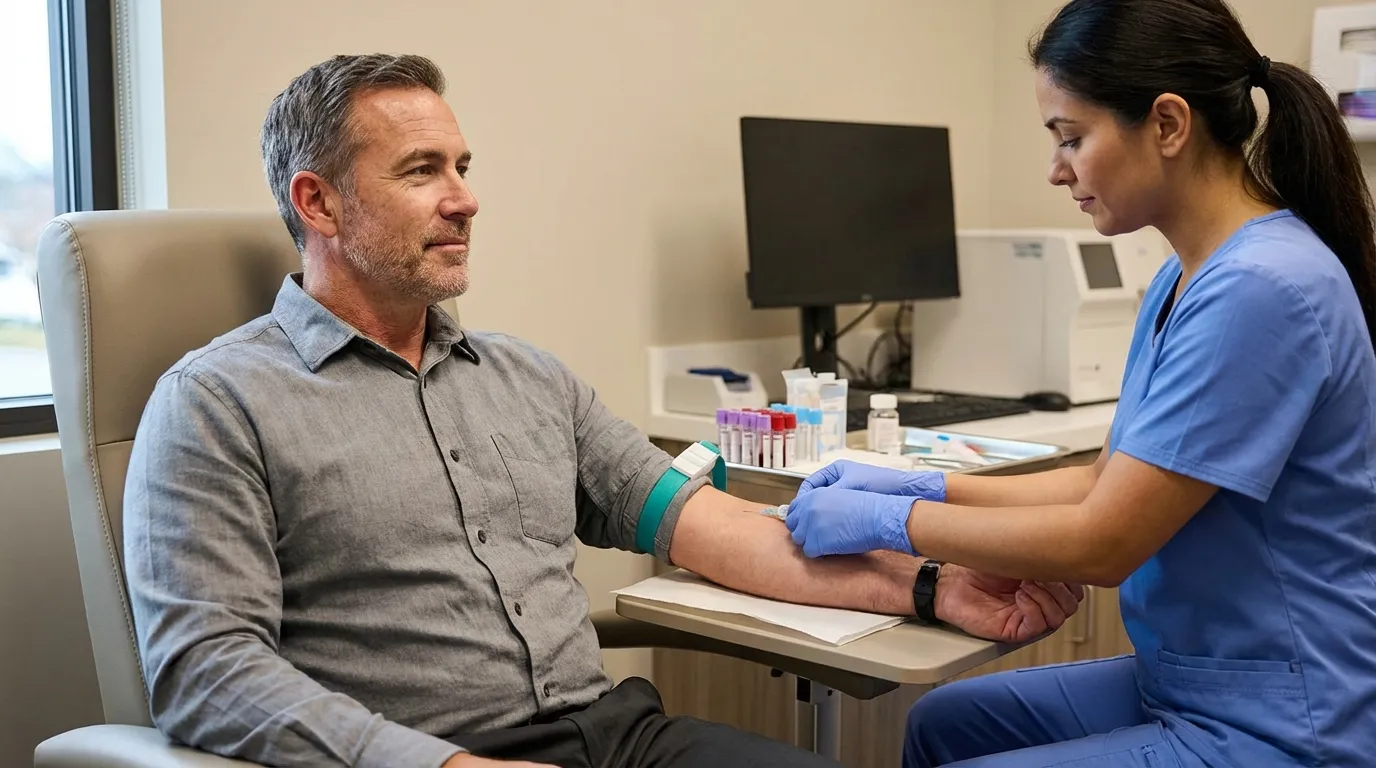
The single most important factor in safe, prostate-conscious TRT is the quality of your provider. A well-trained TRT specialist will integrate PSA monitoring seamlessly into your care plan, screen you appropriately before starting, adjust your protocol if needed, and know when to refer you to a urologist. This is what separates excellent TRT care from care that cuts corners.
When evaluating a TRT provider, ask these questions:
- Do you check PSA before starting treatment?
- How often will you monitor my PSA during therapy?
- What is your threshold for pausing or adjusting TRT if PSA rises?
- Do you coordinate care with urologists when needed?
- What other markers do you track alongside testosterone levels?
A provider who gives you clear, confident answers to all of these questions is one worth trusting. If you're not sure where to find that kind of care, our TRT Clinic Near Me: How to Find the Best One guide walks you through exactly what to look for. You can also browse verified providers directly through the TRTmatch clinic directory.
Remember, the goal of TRT isn't just symptom relief — it's optimized, sustainable health. That means treating your prostate, heart, and every other system as part of the same picture. When the right provider is managing trt prostate psa levels alongside your broader hormone panel, TRT becomes a thoroughly safe and evidence-backed path forward. Don't let unanswered questions hold you back from addressing real symptoms that affect your quality of life — get the facts, find a qualified provider, and take the next step with confidence.
Sources & References
- Testosterone Therapy and Prostate Cancer: A Systematic Review — NCBI PubMed / Journal of Sexual Medicine [Link]
- AUA Guideline: Evaluation and Management of Testosterone Deficiency — American Urological Association [Link]
- Endocrine Society Clinical Practice Guideline: Testosterone Therapy in Men with Hypogonadism — The Journal of Clinical Endocrinology & Metabolism [Link]
- Testosterone and the Prostate: The Pros and Cons of Testosterone Therapy for Men with Benign Prostate Conditions — NCBI PubMed / Asian Journal of Andrology [Link]
- PSA Screening and Prostate Cancer — Overview — American Cancer Society [Link]
- Prostate-Specific Antigen (PSA) Test — Clinical Overview — Mayo Clinic [Link]
- Testosterone Replacement Therapy and Prostate Health — Cleveland Clinic [Link]
Frequently Asked Questions
Ready to Take the Next Step?
Check your symptoms with our free quiz or browse 2,500+ verified TRT clinics.