
Medical Disclaimer
The information on this website is for educational purposes only and is not a substitute for professional medical advice, diagnosis, or treatment. Always consult a qualified healthcare provider before starting any hormone therapy. Individual results may vary. TRTmatch does not provide medical services or prescribe medications.
Key Takeaways
- The fear that TRT causes prostate cancer stems from a 1941 study and has not been supported by modern randomized controlled trials, including the 2023 TRAVERSE trial.
- The Saturation Model explains why adding testosterone above castrate levels does not proportionally increase prostate stimulation — androgen receptors become saturated at relatively low testosterone concentrations.
- PSA monitoring before and during TRT is essential and provides an important cancer surveillance benefit many men would otherwise miss.
- Men with treated, low-risk prostate cancer in remission may be candidates for TRT under specialist supervision — this is no longer considered an absolute contraindication in all cases.
- Benign prostatic hyperplasia (BPH) is generally not worsened by well-managed TRT, according to multiple clinical trials.
- Working with a qualified TRT provider who follows AUA and Endocrine Society guidelines is the most effective way to protect prostate health while on testosterone therapy.
The Old Fear About Testosterone and the Prostate
For decades, men considering testosterone replacement therapy were met with a sobering warning: testosterone feeds prostate cancer. This belief traces back to a 1941 study by Charles Huggins, who showed that castrating men with metastatic prostate cancer caused tumor regression. The logical — but ultimately flawed — leap was that if removing testosterone helped, adding it must be harmful.
That fear shaped clinical practice for more than 60 years. But if you're a man dealing with symptoms of low testosterone and wondering about trt and prostate health, the current body of evidence tells a meaningfully different and more reassuring story. This article is for educational purposes only and does not constitute medical advice. Always consult a qualified healthcare provider before starting or adjusting any hormone therapy.
If you've been experiencing fatigue, low libido, brain fog, or loss of muscle mass, you may already be familiar with the broader picture. 10 Signs of Low Testosterone in Men outlines the most common symptoms that prompt men to seek evaluation in the first place. The good news is that the prostate risk question has been studied extensively — and the findings are more nuanced and more favorable than most men expect.

What Does Testosterone Actually Do to the Prostate?
The prostate is an androgen-sensitive gland, meaning it responds to testosterone and its potent metabolite, dihydrotestosterone (DHT). Testosterone binds to androgen receptors in prostate tissue, influencing cell growth and function. This is why androgen deprivation therapy — reducing testosterone to castrate levels — is a cornerstone treatment for advanced prostate cancer.
However, the relationship between testosterone concentration and prostate cell stimulation is not linear. Researchers Abraham Morgentaler and Claus Roehrborn proposed the Saturation Model, which argues that androgen receptors in prostate tissue become fully saturated at relatively low testosterone concentrations — around 200 ng/dL. Beyond that saturation point, adding more testosterone does not proportionally increase prostate stimulation.
This model helps explain a puzzling finding in the epidemiological data: men with higher baseline testosterone levels do not have higher rates of prostate cancer than men with lower levels. In fact, several large studies show the opposite trend — low testosterone is associated with more aggressive prostate cancer at diagnosis. A 2016 analysis published in European Urology found that hypogonadal men were more likely to harbor high-grade prostate cancer at biopsy than eugonadal men.
Understanding DHT levels on TRT is also important here, since DHT is the primary androgen acting on prostate tissue and monitoring it is part of responsible TRT management.
TRT and Prostate Health: What the Clinical Research Shows
The landmark TRAVERSE trial, published in the New England Journal of Medicine in 2023, followed over 5,200 hypogonadal men aged 45 to 80 with pre-existing cardiovascular risk factors over an average of 33 months. Participants were randomized to receive testosterone gel or placebo. The trial found no statistically significant increase in prostate cancer incidence in the testosterone group compared to placebo. This was one of the largest and most rigorous randomized controlled trials on TRT safety ever conducted.
Earlier meta-analyses also support this picture. A 2010 meta-analysis by Calof and colleagues, analyzing 19 randomized controlled trials, found no significant difference in prostate cancer rates between men receiving TRT and those on placebo. A 2016 systematic review in The Journal of Urology similarly concluded that TRT in hypogonadal men does not appear to increase prostate cancer risk in men without pre-existing disease.
Prostate-specific antigen (PSA) levels do tend to rise modestly after initiating TRT — typically by 0.3 to 0.5 ng/mL in the first six to twelve months. This rise is generally considered a normalization effect as the prostate responds to physiological testosterone levels, not evidence of malignancy. Experienced TRT providers monitor PSA closely during this period to distinguish normal adjustment from concerning changes. You can learn more about the full panel of tests used in TRT Blood Work: Which Tests You Need.
PSA Monitoring: Your Most Important Safety Tool
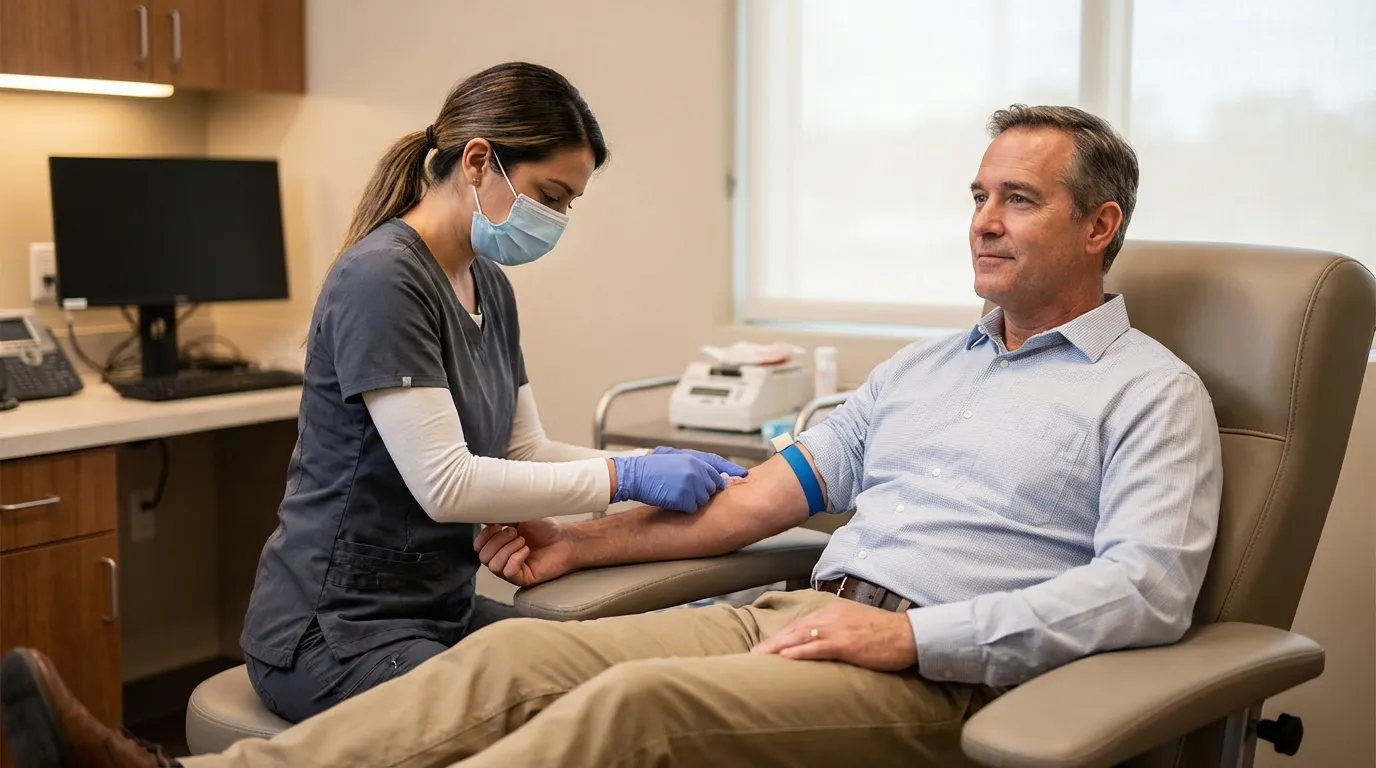
Even though the overall evidence is reassuring, monitoring PSA on TRT is non-negotiable. PSA is a protein produced by the prostate, and elevated or rapidly rising levels can signal prostate cancer, infection, or benign prostatic hyperplasia (BPH). Responsible TRT management includes a PSA baseline before therapy begins, followed by repeat testing at three to six months, then annually.
The key metric providers watch is the rate of PSA rise — called PSA velocity — rather than any single number. A rise greater than 1.4 ng/mL within any 12-month period on TRT, or a confirmed PSA above 4.0 ng/mL, typically prompts urology referral and possible biopsy. This doesn't mean stopping TRT automatically — it means investigating further with appropriate specialists.
Men who are diligent about monitoring actually benefit from an added layer of cancer surveillance they might not otherwise receive. Regular PSA testing may catch early-stage, treatable prostate cancer that would have gone undetected without the TRT workup. This is one reason some urologists consider TRT monitoring a net positive for prostate health outcomes in men who would otherwise avoid medical care.
Want to understand everything that goes into a thorough TRT evaluation? Your First TRT Consultation: What to Expect walks through the process step by step so you know exactly what to anticipate.
Who Should Be Cautious: Understanding Real Risk Factors
While the general population of hypogonadal men does not face elevated prostate cancer risk from TRT, there are specific situations that call for additional caution and careful provider involvement — not avoidance of therapy, but a more individualized approach.
TRT and Prostate Health in Men With a History of Prostate Cancer
Historically, a personal history of prostate cancer was considered an absolute contraindication to TRT. This view is now evolving. Several studies have examined TRT in men who have been successfully treated for localized, low-risk prostate cancer and are in remission. A 2011 study by Pastuszak and colleagues published in The Journal of Urology found no significant increase in PSA recurrence in carefully selected, treated prostate cancer survivors who received TRT under close monitoring.
This is not a blanket green light — men with high-grade disease, active treatment, or biochemical recurrence are not candidates for TRT. But for men with treated, low-risk disease and undetectable PSA, the conversation with a urologist and TRT specialist is now considered reasonable. The key is individualized assessment, not a categorical refusal.
Benign Prostatic Hyperplasia and Lower Urinary Tract Symptoms
BPH — an enlarged but non-cancerous prostate — is common in men over 50 and can cause urinary symptoms like frequency, urgency, and weak stream. Some men and clinicians worry that TRT might worsen BPH symptoms. The clinical evidence here is reassuring: multiple trials have shown that TRT does not significantly worsen lower urinary tract symptoms (LUTS) in men with BPH who are otherwise well-managed. In fact, some data suggest that normalizing testosterone may improve bladder function. A qualified provider will assess urinary symptoms before and during TRT using validated tools like the International Prostate Symptom Score (IPSS).
The Role of a Qualified TRT Provider in Protecting Prostate Health
The single most important factor in safely managing TRT and prostate health is working with a provider who follows evidence-based guidelines. The American Urological Association (AUA) and the Endocrine Society have both published clinical guidelines that include prostate health screening and monitoring protocols for men on TRT.
A reputable TRT provider will complete the following before starting therapy: thorough symptom evaluation, serum testosterone measurement, PSA baseline, digital rectal exam (DRE) in appropriate age groups, and a detailed personal and family history of prostate disease. During therapy, they'll monitor PSA at regular intervals, assess for urinary symptoms, and adjust or pause therapy if any concerning changes emerge.
Choosing the right provider makes all the difference. TRT Clinic Near Me: How to Find the Best One offers practical guidance on evaluating clinics and knowing what questions to ask. You can also find a TRT clinic near you using our directory of vetted providers across the country.
It's also worth noting that TRT involves more than just prostate considerations. For a complete picture of what responsible therapy looks like, Is TRT Safe? Heart, Prostate and Long-Term Health Risks Explained provides a comprehensive overview of the full safety landscape.
Common Misconceptions Men Have About TRT and the Prostate
Given decades of outdated messaging, it's no surprise that misconceptions are widespread. Here are the most common ones — and what the evidence actually says.
| Misconception | What the Evidence Shows |
|---|---|
| TRT causes prostate cancer | No randomized trials show TRT increases prostate cancer incidence in healthy hypogonadal men |
| High testosterone means high prostate cancer risk | Epidemiological data shows no correlation; some studies link low testosterone to more aggressive tumors |
| Any PSA rise on TRT is dangerous | A small initial PSA rise is normal and expected; rapid or large rises require investigation |
| Men with treated prostate cancer can never use TRT | Carefully selected survivors may be candidates under specialist supervision |
| TRT always worsens BPH symptoms | Clinical trials generally show no significant worsening of urinary symptoms with well-managed TRT |
These clarifications matter because fear of prostate harm is one of the leading reasons men with clinically low testosterone decline treatment — and continue suffering from symptoms that have a well-studied, effective solution.

Practical Steps Before and During TRT to Protect Your Prostate
Taking an active role in your prostate health while on TRT is straightforward with the right framework. Here's what evidence-based management looks like in practice.
Before starting TRT:
- Get a baseline PSA blood test and, if you're over 40 or have a family history of prostate cancer, discuss a digital rectal exam with your provider
- Disclose any urinary symptoms, family history of prostate or breast cancer, and prior prostate biopsies or abnormalities
- Review Free vs Total Testosterone: What Really Matters to understand how your hormone levels will be interpreted
During TRT:
- Have PSA retested at 3 and 6 months, then annually if stable
- Report any new or worsening urinary symptoms — hesitancy, frequency, painful urination — to your provider promptly
- Maintain regular follow-ups and don't skip lab work; consistent monitoring is what makes TRT safe over the long term
- Understand that managing TRT side effects is a normal, expected part of therapy — not a reason for alarm
If you're still in the information-gathering stage and wondering whether your symptoms are consistent with low testosterone, take the free Low T symptom quiz to get a clearer picture before your first provider conversation.
The Bottom Line on TRT and Prostate Health
The decades-old fear that testosterone fuels prostate cancer has not held up under rigorous scientific scrutiny. The weight of current evidence — including the landmark TRAVERSE trial, multiple meta-analyses, and the Saturation Model of androgen action — supports the conclusion that TRT does not meaningfully increase prostate cancer risk in appropriately screened, hypogonadal men.
That said, trt and prostate health should always be approached with individualized care, regular PSA monitoring, and open communication between patient and provider. For most men, the risk of leaving low testosterone untreated — including reduced quality of life, metabolic deterioration, and increased cardiovascular risk — is a greater clinical concern than the well-managed, evidence-based prostate considerations associated with TRT.
Men deserve accurate information, not outdated fears. If you're experiencing symptoms of low testosterone and have hesitated because of prostate concerns, the right next step is a conversation with a qualified provider who follows current guidelines. How to Find a TRT Doctor can help you get started, and you can find a TRT clinic near you in our national directory. The research is on your side — and so is the right provider.
Sources & References
- Cardiovascular Safety of Testosterone-Replacement Therapy (TRAVERSE Trial) — New England Journal of Medicine [Link]
- Testosterone Therapy in Men with Prostate Cancer: Scientific and Ethical Considerations — PubMed / Journal of Urology [Link]
- Testosterone Supplementation Therapy for Older Men: Potential Benefits and Risks — PubMed / Journal of the American Geriatrics Society [Link]
- The Saturation Model: Androgen Receptor Saturation and Prostate Cancer Risk — PubMed / European Urology [Link]
- Testosterone and Prostate Cancer: An Evidence-Based Review of Pathogenesis and Oncologic Risk — PubMed / Therapeutic Advances in Urology [Link]
- Testosterone Therapy and Prostate Health: AUA Guidelines — American Urological Association [Link]
- Testosterone Therapy in Adult Men with Androgen Deficiency Syndromes — Endocrine Society / Journal of Clinical Endocrinology and Metabolism [Link]
Frequently Asked Questions
Ready to Take the Next Step?
Check your symptoms with our free quiz or browse 2,500+ verified TRT clinics.