
Medical Disclaimer
The information on this website is for educational purposes only and is not a substitute for professional medical advice, diagnosis, or treatment. Always consult a qualified healthcare provider before starting any hormone therapy. Individual results may vary. TRTmatch does not provide medical services or prescribe medications.
Key Takeaways
- Testosterone pellets cost between $500 and $1,200 per insertion session, with most men requiring 2–3 insertions per year, putting annual costs at $1,000–$3,600.
- The insertion procedure is quick (under 30 minutes), minimally invasive, and performed under local anesthetic — with most men returning to normal activity within a few days.
- Pellets provide one of the most stable, consistent testosterone release profiles of any TRT delivery method, which many men find translates to smoother energy, mood, and libido throughout the day.
- Most commercial insurance plans do not cover compounded testosterone pellets, but HSA and FSA accounts can often be used to offset the cost.
- Side effects specific to pellets — such as insertion site reactions and difficulty adjusting mid-cycle dose — are manageable with an experienced, medically qualified provider.
- Working with a qualified TRT provider who performs comprehensive lab screening and individualized dosing is the single most important factor in a successful pellet therapy outcome.
What Are Testosterone Pellets and Who Are They For?
If you've been researching testosterone replacement therapy, you've likely come across pellet therapy as one of the delivery options. Testosterone pellets are small, rice-grain-sized implants — typically composed of crystalline testosterone — that are inserted just beneath the skin, usually near the upper buttock or hip. Once in place, they dissolve gradually over three to six months, releasing a steady stream of testosterone directly into the bloodstream.
Testosterone Pellets Cost is an important topic for men considering testosterone therapy.
Medical disclaimer: This article is for educational purposes only and does not constitute medical advice. Always consult a licensed healthcare provider before starting any hormone therapy.
Understanding testosterone pellets cost is one of the first questions men ask when comparing TRT delivery methods. It's a fair question — pellets are priced differently from injections, gels, or creams, and the upfront investment can look higher at first glance. But when you factor in the convenience, consistency, and reduced need for daily or weekly administration, many men find the value proposition compelling.
Pellet therapy tends to appeal to men who want a "set it and forget it" approach to TRT. If you're tired of remembering weekly injections or applying daily gels, pellets eliminate that routine entirely. They're also popular with men who experience hormonal fluctuations on other delivery methods, since pellets provide one of the most stable testosterone release profiles available. If you're unsure whether your symptoms point to low testosterone, you can take the free Low T symptom quiz to get a clearer picture before your first appointment.
Pellets are typically prescribed for men who have confirmed low testosterone through blood work, have ruled out secondary causes of low T, and are looking for a long-acting, hands-off delivery method. They are an FDA-recognized treatment when compounded by licensed pharmacies and administered by qualified medical providers.
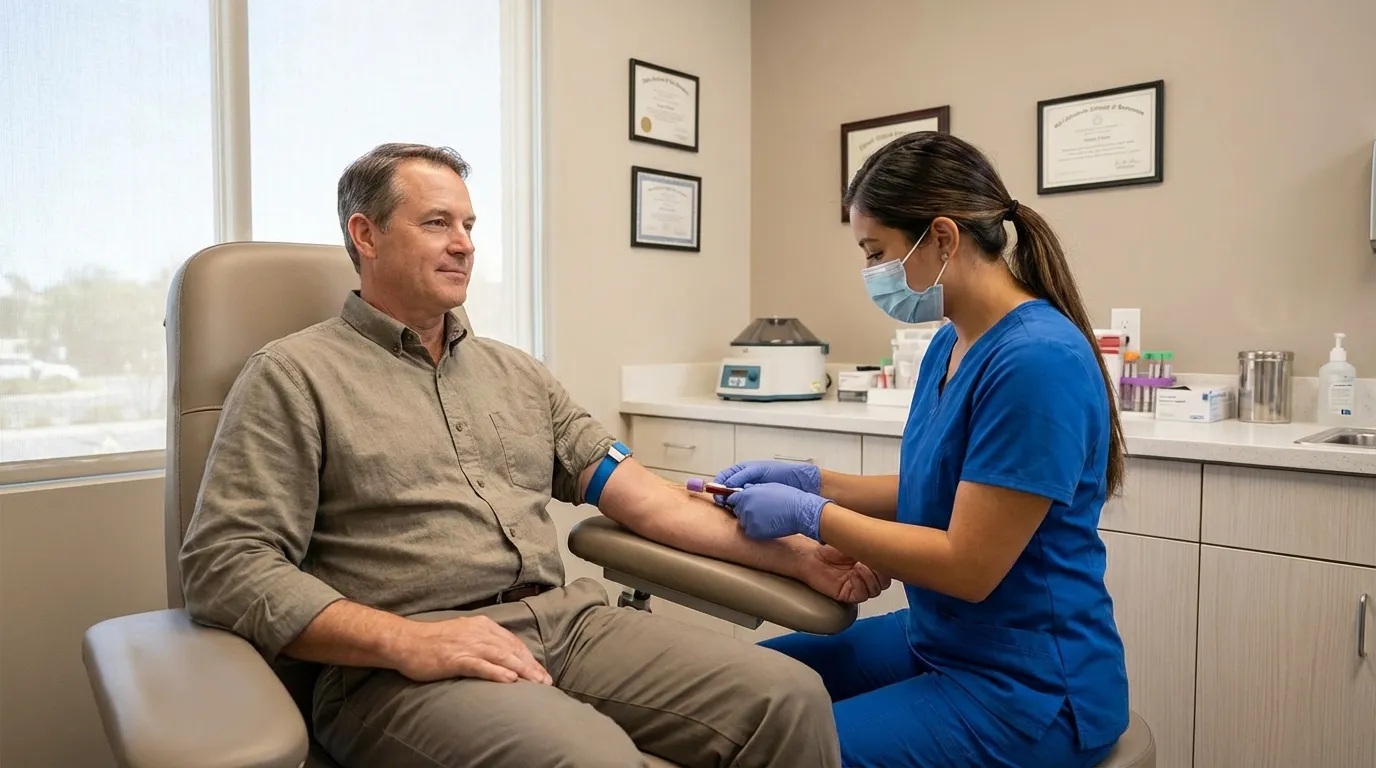
How the Pellet Insertion Procedure Works
The insertion procedure is quick — most appointments take under 30 minutes from start to finish. Here's what to expect when you arrive at a TRT clinic for pellet therapy:
- Consultation and labs review: Your provider will review your most recent testosterone blood work and symptoms before proceeding. If you haven't had labs done recently, they'll order them. You can learn more about what tests are involved in our guide to TRT Blood Work: Which Tests You Need.
- Site preparation: The insertion site — usually the upper buttock or flank — is cleaned and numbed with a local anesthetic.
- Trocar insertion: Using a small instrument called a trocar, the provider creates a tiny incision and places the pellets beneath the subcutaneous fat layer.
- Closure: The incision is closed with a small adhesive strip. No stitches are typically required.
- Recovery: You'll be advised to avoid submerging the area in water for a few days and to limit intense lower-body exercise for about a week.
The number of pellets inserted depends on your body weight, baseline testosterone levels, activity level, and clinical goals. Most men receive between 6 and 12 pellets per insertion session. The procedure itself is well-tolerated — the local anesthetic means most men feel only minor pressure during the procedure and mild soreness at the insertion site for a day or two afterward.
For a detailed side-by-side comparison of pellets versus injections — including how the procedure experience differs — see our full breakdown in Testosterone Injections vs Pellets: Full Comparison.
Testosterone Pellets Cost: What You'll Pay in 2025
Let's get into the numbers. Testosterone pellets cost more per session than a vial of injectable testosterone, but the comparison isn't always apples-to-apples. Here's a realistic breakdown of what men pay across the United States:
| Cost Component | Typical Price Range |
|---|---|
| Initial consultation and labs | $200–$500 |
| Pellet insertion (per session) | $350–$700 |
| Pellets themselves (compounded) | $200–$500 per insertion |
| Total per insertion cycle | $500–$1,200 |
| Annual cost (2–3 insertions/year) | $1,000–$3,600 |
The wide range reflects real variation in geographic location, clinic type, and how many pellets are required per session. Men with higher body weight or greater testosterone deficiency may need more pellets per insertion, which increases the per-session cost. Clinics in major metro areas like New York, Los Angeles, or Miami tend to charge more than practices in smaller markets.
It's also important to distinguish between the pellet cost and the procedure fee — many clinics bundle these together, while others list them separately. Always ask for an all-in quote before committing. For a broader look at how pellets compare to other TRT delivery methods on a monthly basis, our TRT Cost Per Month guide breaks down the full picture across injections, gels, patches, and pellets.
Does Insurance Cover Testosterone Pellets Cost?
This is one of the most common questions men ask — and the answer is nuanced. Most commercial insurance plans do not cover compounded testosterone pellets specifically, because the pellets are typically compounded (custom-made) rather than FDA-approved proprietary products. However, some plans may cover associated lab work or the consultation visit if billed correctly.
Medicare and Medicaid coverage varies by state and plan. Out-of-pocket payment is the norm for the pellet insertion itself. Some clinics offer payment plans or health savings account (HSA) and flexible spending account (FSA) compatibility, which can meaningfully reduce the effective out-of-pocket burden. For a deep dive on insurance coverage for all forms of TRT, read our guide: Does Insurance Cover TRT? What You Need to Know. If cost is a primary concern, explore Affordable TRT Online: Best Budget-Friendly Options for lower-cost alternatives.

Pellets vs Other TRT Delivery Methods: Value Comparison
When evaluating testosterone pellets cost against other delivery methods, it helps to look beyond the sticker price and consider the full value equation — including convenience, hormonal stability, and time investment.
Injectable testosterone (cypionate or enanthate) is typically the least expensive option, often running $40–$120 per month when self-administered at home. However, weekly or twice-weekly injections require ongoing management, and some men experience peaks and troughs in energy and mood between injection days. If you're curious about how injection frequency affects your experience, see our article on TRT Injection Frequency: Once vs Twice Weekly.
Testosterone gels and creams cost roughly $100–$300 per month and require daily application, careful skin-to-skin transfer precautions (especially important if you have children or a partner), and consistent routine. Many men find the daily reminder burdensome over time.
Pellets, by contrast, require attention only two to three times per year. Once inserted, you simply live your life. There's no cream to apply, no injection to prepare, no dose to remember. For men who travel frequently, have demanding schedules, or simply prefer low-maintenance healthcare, that hands-off nature has real value that doesn't show up in a simple dollar comparison. You can explore more about the experience of different TRT options in our guide to TRT Injections vs Gel: Which Is Better?
Hormonal stability is another key differentiator. Pellets provide one of the smoothest, most consistent testosterone release profiles of any delivery method, which some men find translates to more consistent energy, mood, and libido. If you've experienced mood changes on other TRT forms, our article on TRT and Depression: Can Testosterone Improve Your Mood? may offer useful context.
What Results Can You Expect From Pellet Therapy?
Most men begin noticing the effects of testosterone pellets within two to four weeks of insertion, with full effects typically felt by weeks six to eight as testosterone levels stabilize. Here's what clinical data and patient experience suggest you can realistically expect:
- Energy and fatigue: Many men report meaningful improvements in daily energy within the first month. The steady release profile avoids the energy spikes and crashes that some men experience with injections.
- Libido and sexual function: Improvements in sex drive are among the most commonly reported benefits. Men with low-T-related erectile concerns may also see improvement, though ED has multiple contributing factors. For more on this topic, see TRT for Erectile Dysfunction: Does Testosterone Fix ED?
- Mood and mental clarity: Optimized testosterone levels support mood stability, cognitive sharpness, and reduced brain fog. Results vary by individual baseline and co-existing factors.
- Body composition: Over several months, men on TRT commonly experience modest improvements in lean muscle mass and reductions in body fat, particularly with consistent resistance training. See TRT and Muscle Growth: What to Expect for realistic timelines.
- Bone density: Longer-term TRT, including pellet therapy, is associated with improvements in bone mineral density in men with low testosterone — a clinically meaningful benefit for men over 50.
It's worth noting that individual results depend heavily on your starting testosterone levels, overall health, lifestyle factors, and how well your dose is calibrated. The first insertion cycle is often an optimization phase — your provider may adjust the pellet dose at subsequent insertions based on your symptom response and follow-up lab work.
Potential Side Effects and How They're Managed
Like all forms of TRT, testosterone pellets carry a profile of potential side effects that are well-understood and manageable with appropriate medical oversight. The most common concerns specific to pellet delivery include:
Insertion site reactions: Mild bruising, swelling, or tenderness at the insertion site is common and typically resolves within a few days. In a small percentage of cases — estimated at 1–3% — pellets may partially extrude (work their way toward the skin surface). A qualified provider will monitor for this and address it promptly if it occurs.
Difficulty adjusting the dose mid-cycle: Unlike injections or gels, once pellets are inserted, the dose cannot be easily changed until the next insertion cycle. This is the key trade-off of the pellet format. Skilled providers minimize this risk by carefully calibrating dose from the outset and using conservative starting doses for new patients.
Polycythemia (elevated red blood cells): TRT of any form can cause hematocrit to rise in some men. This is a well-monitored parameter — your provider will check your blood counts regularly. For a full explanation, see Hematocrit and TRT: Why Your Levels Matter.
Estrogen conversion: Testosterone naturally converts to estradiol. On pellets, some men experience elevated estrogen, which can contribute to water retention or breast sensitivity. This is addressed with aromatase inhibitors when clinically indicated. Learn more about managing estrogen in our article on High Estrogen on TRT: Symptoms and How to Fix It.
The reassuring reality is that all of these considerations are routine parts of TRT management. A qualified provider will screen for relevant risk factors before your first insertion and monitor your labs at each subsequent visit. For a comprehensive overview of side effects across all TRT methods, see TRT Side Effects: What to Expect and How to Manage Them.

How to Find a Qualified Testosterone Pellet Provider
Not every TRT clinic offers pellet therapy, and not every provider who offers pellets has equal experience with dosing and insertion technique. Choosing the right provider is the single most important factor in a successful pellet therapy experience — more so than the brand of pellets or the clinic's marketing materials.
Here's what to look for when evaluating a pellet therapy provider:
- Medical oversight: Pellet therapy should be prescribed and supervised by a licensed physician, nurse practitioner, or physician assistant with documented experience in hormone therapy — not simply a wellness spa with limited medical oversight.
- Comprehensive lab panel: A reputable provider will require a full hormone panel before your first insertion — total and free testosterone, estradiol, PSA, CBC, and metabolic markers at minimum. Be cautious of providers who skip thorough baseline labs.
- Individualized dosing: Your pellet dose should be calculated based on your labs, symptoms, body weight, and activity level — not a one-size-fits-all protocol.
- Ongoing monitoring: Follow-up labs 4–6 weeks after insertion to assess response, and continued monitoring at each subsequent cycle, are standard of care.
- Transparent pricing: A trustworthy clinic will provide clear, all-in pricing before your procedure. Ask specifically whether the quote includes the consultation, labs, pellets, and insertion fee.
You can use TRTmatch.com to find a TRT clinic near you that offers pellet therapy and meets these standards. Our directory includes vetted providers across the country, making it easier to connect with a qualified specialist in your area. If you'd like a step-by-step walkthrough of the process, our guide to How to Find a TRT Doctor is a great starting point. For men in specific states, browse providers in TRT clinics in Florida, TRT clinics in Texas, or TRT clinics in California.
Is the Testosterone Pellets Cost Worth It? A Final Assessment
At the end of the day, whether testosterone pellets cost is "worth it" depends on what you value most in a TRT protocol. If your priority is the lowest possible monthly expense and you're comfortable with weekly self-injection, injectable testosterone may be the more economical choice. But if you want consistent hormone levels, zero daily maintenance, and the freedom to forget about your TRT between appointments, pellets offer a compelling experience that many men are willing to pay a premium for.
The clinical evidence supports pellet therapy as a legitimate, effective form of testosterone replacement. Research published in peer-reviewed journals has demonstrated that subdermal testosterone pellets achieve stable serum testosterone levels comparable to or exceeding those from injections, with high patient satisfaction rates. A 2019 study in the Journal of Sexual Medicine found that pellet therapy was associated with significant improvements in sexual function, energy, and quality of life in hypogonadal men.
The key to a positive pellet therapy experience is working with a provider who knows how to calibrate doses accurately, monitors your labs diligently, and adjusts your protocol as needed over time. With the right clinical partner, testosterone pellets cost becomes an investment in a smoother, more consistent TRT experience — one that fits into your life without demanding constant attention.
If you're still exploring whether TRT is right for you, take the free Low T symptom quiz to assess your symptoms, then use our clinic directory to find a qualified TRT provider near you who can guide you through your options — including whether pellet therapy is the best fit for your goals, lifestyle, and budget. Understanding testosterone pellets cost is just the first step — the right provider will help you make an informed, confident decision.
Sources & References
- Testosterone Pellets in the Management of Hypogonadism: A Clinical Review — PubMed / Current Urology Reports [Link]
- Testosterone Therapy in Men With Hypogonadism: An Endocrine Society Clinical Practice Guideline — Journal of Clinical Endocrinology & Metabolism [Link]
- Subcutaneous Testosterone Pellet Implants: A Comparison of Pellet and Transdermal Testosterone Delivery — PubMed / Journal of Sexual Medicine [Link]
- Testosterone Replacement Therapy Overview — Mayo Clinic [Link]
- Testosterone Therapy: What Men Need to Know — Cleveland Clinic [Link]
- American Urological Association Guidelines on Testosterone Deficiency — American Urological Association [Link]
- Pellet Implants for Testosterone Replacement in Hypogonadal Males: Patient Satisfaction and Adverse Events — PubMed / Sexual Medicine [Link]
Frequently Asked Questions
Ready to Take the Next Step?
Check your symptoms with our free quiz or browse 2,500+ verified TRT clinics.