
Medical Disclaimer
The information on this website is for educational purposes only and is not a substitute for professional medical advice, diagnosis, or treatment. Always consult a qualified healthcare provider before starting any hormone therapy. Individual results may vary. TRTmatch does not provide medical services or prescribe medications.
Key Takeaways
- TSA permits injectable testosterone and supplies in carry-on bags under the medical liquid exemption — declare them at the checkpoint for a smooth experience.
- Always pack testosterone in your carry-on, not checked luggage, to avoid temperature extremes and the risk of lost bags.
- Carry your prescription label for domestic travel; a doctor's letter is strongly recommended for international trips.
- Research the laws of your destination country before traveling internationally, as testosterone is a controlled substance in many nations.
- Minor adjustments to your injection schedule to accommodate time zones are generally safe with long-acting esters like cypionate — confirm with your provider first.
- Pack a complete TRT travel kit including extra needles, alcohol swabs, and a travel-sized sharps disposal container.
Traveling with Testosterone and TSA: What Every TRT Patient Should Know
If you're on testosterone replacement therapy, one of the most common questions that comes up before a trip is: Can I bring my medication on a plane? The good news is that traveling with testosterone TSA guidelines are straightforward once you understand the rules — and with a little preparation, flying with your TRT supplies is entirely manageable. This article is for informational purposes only and does not constitute medical advice. Always consult your prescribing provider before making changes to your treatment protocol while traveling.
Whether you're heading out on a business trip, a family vacation, or an international adventure, staying on your testosterone therapy schedule matters. Disrupting your protocol — even for a few days — can cause your levels to fluctuate, potentially affecting your mood, energy, and overall sense of well-being. If you're still exploring whether TRT is right for you, take the free Low T symptom quiz to get a clearer picture of where you stand.
Let's walk through everything you need to know, from TSA rules to international travel considerations, so you can travel confidently and stay on track with your therapy.
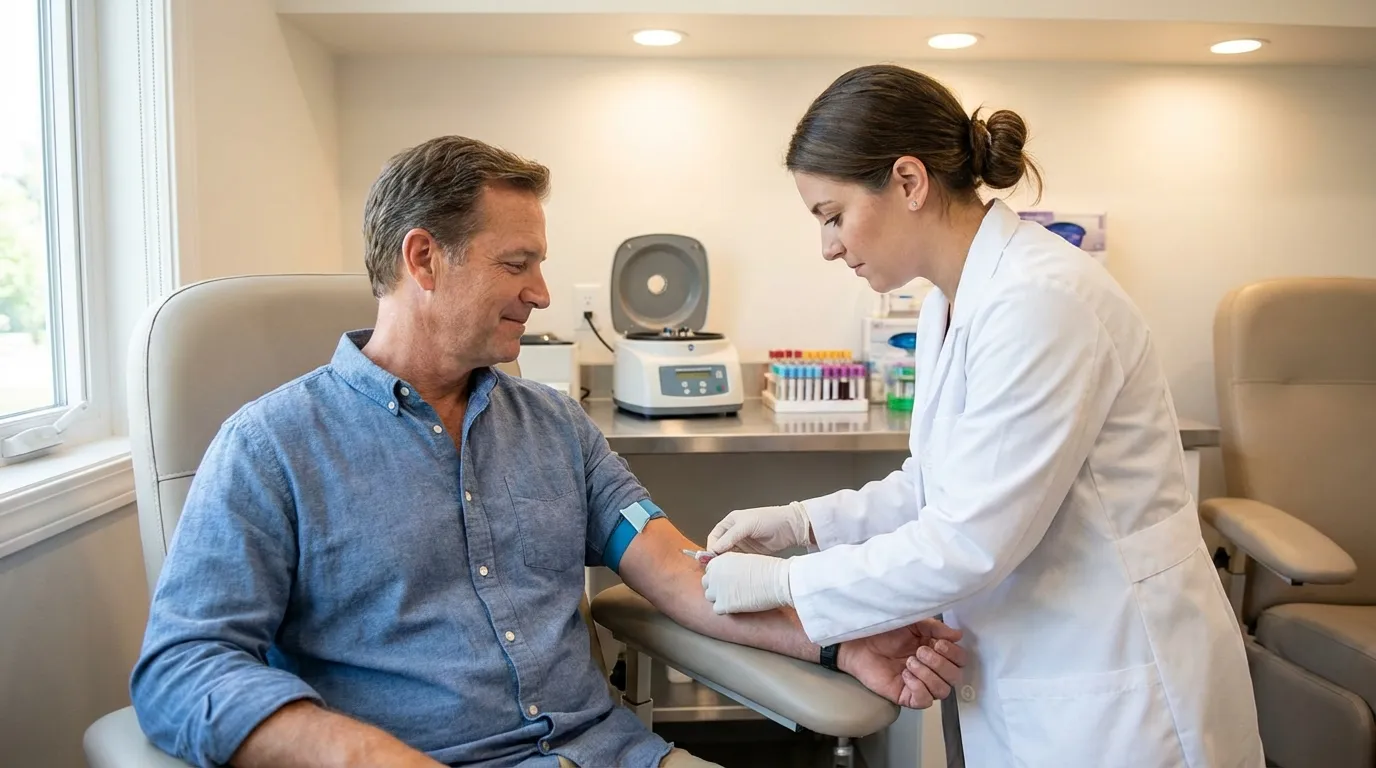
TSA Rules for Traveling with Testosterone Injections
The Transportation Security Administration (TSA) allows passengers to carry prescription medications — including injectable testosterone — through security checkpoints. When it comes to traveling with testosterone TSA policy is clear: injectable medications and their associated supplies are permitted in both carry-on and checked baggage. Here's what the TSA officially allows:
- Vials of injectable testosterone (testosterone cypionate, testosterone enanthate, or other formulations)
- Syringes and needles, provided they are accompanied by the injectable medication
- Alcohol swabs, gauze, and other injection supplies
- Sharps disposal containers
Liquids in your carry-on are normally limited to 3.4 oz (100 ml), but the TSA's 3-1-1 liquids rule has a medical exemption. Medically necessary liquids, gels, and aerosols in quantities greater than 3.4 oz are allowed in carry-on bags. You should declare these items to the TSA officer at the start of the screening process. They may ask to inspect the vials, but this is routine and nothing to be concerned about.
Testosterone vials are typically 10 ml, which exceeds the standard 3.4 oz limit but falls comfortably within the medical exemption. To make the screening process as smooth as possible, keep your medication clearly labeled and separate from your other carry-on items so it's easy to present for inspection. Most travelers report that TSA officers are familiar with injectable medications and the process takes only a minute or two.
The TSA recommends — but does not require — that you travel with your prescription label or a letter from your doctor. In practice, having documentation is a smart precaution, especially for longer trips or when traveling through airports with stricter screening procedures. Understanding the full range of TRT side effects and how to manage them also helps you communicate clearly with healthcare providers if needed while on the road.
Should You Pack Testosterone in Carry-On or Checked Luggage?
This is one of the most debated questions among men on TRT who travel frequently, and the answer is almost always: carry-on baggage. Here's why.
Checked baggage is subject to temperature extremes in the cargo hold of an aircraft. Testosterone in oil-based solutions (like cypionate or enanthate) should generally be stored at room temperature — between 68°F and 77°F (20°C to 25°C) — and protected from freezing and excessive heat. The cargo hold can dip well below freezing on long flights, particularly over the winter months. Freezing doesn't necessarily ruin the medication, but it can cause the oil to solidify and potentially affect the integrity of the vial.
More importantly, checked bags can be lost or delayed. If your testosterone ends up on a different flight, you could miss a dose — something that's especially disruptive if you're on a frequent injection protocol. Keeping your medication in your carry-on eliminates that risk entirely.
If you're packing a multi-week supply or bringing enough for an extended trip, consider splitting your supply between your carry-on and checked bag as a backup strategy, but always keep at least one full dose's worth on your person.
For travelers using testosterone gel or cream rather than injections, the same medical liquid exemption applies. Testosterone gel tubes are typically 75g or more and would normally exceed the 3-1-1 limit, but as a medically necessary item, they are permitted. If you're curious about how different delivery methods compare, check out this breakdown of TRT injections vs gel to see which might be most travel-friendly for your lifestyle.
Documentation: What to Bring and Why It Helps
While the TSA does not legally require you to carry documentation for your prescription medication, having the right paperwork can save you time, reduce stress, and prevent complications — especially when traveling internationally or through busy hub airports.
Recommended Documents for Traveling with Testosterone (TSA and Beyond)
- Prescription label: The label on your medication vial or gel box, which includes your name, prescribing doctor's name, pharmacy name, and medication details.
- Doctor's letter: A brief letter on official letterhead from your prescribing provider confirming your diagnosis and treatment. This is especially useful for international travel.
- Pharmacy receipt or dispensing record: Useful backup documentation showing the medication was legally dispensed in your name.
For domestic travel within the United States, your prescription label is usually sufficient. For international travel, a doctor's letter becomes significantly more valuable. Many countries regulate testosterone as a controlled substance, and customs officials may ask for proof that you're carrying it for legitimate medical use. We'll cover international travel in more detail below.
If you work with an online TRT clinic or telemedicine provider, they should be able to generate documentation quickly — many do so as a standard service for traveling patients. If you're still looking for the right provider, find a TRT clinic near you using our directory to connect with a qualified doctor who can support your travel needs.
International Travel with Testosterone: Key Considerations
International travel introduces a layer of complexity that domestic trips don't. Testosterone is a controlled substance in many countries, and the rules vary significantly from one nation to the next. Before traveling abroad with your testosterone, research the specific regulations of your destination country — this is non-negotiable.
Countries That Require Special Permits or Ban Testosterone Altogether
Some countries, particularly in the Middle East and parts of Asia, have strict drug importation laws that may classify testosterone as a prohibited or heavily restricted substance. Japan, for example, requires advance permission through a procedure called a Yunyu Kakunin-sho (import certificate) for certain medications, including testosterone. The UAE and other Gulf states have strict narcotics and controlled substance laws that could create complications at customs.
Before any international trip, take these steps:
- Check the destination country's embassy website or contact them directly for medication importation rules.
- Consult your prescribing provider and request a detailed doctor's letter specific to international travel.
- Research whether your TRT formulation is available locally in case of an emergency refill situation.
- Carry only the amount you need for the trip, plus a modest buffer — bringing industrial quantities of testosterone through international customs is likely to raise flags.
For men whose TRT protocol requires regular blood work to monitor levels, planning around your lab schedule is also worth factoring into trip logistics. Learn more about TRT blood work and which tests you need to stay on top of your monitoring even when traveling.

How to Store Testosterone Properly While Traveling
Proper storage is one of the most overlooked aspects of traveling with TRT medication, but it matters for both safety and efficacy. Testosterone cypionate and testosterone enanthate are oil-based injectable solutions that are sensitive to temperature extremes. Testosterone gel and cream formulations have similar storage requirements.
Standard storage guidelines from manufacturers recommend keeping testosterone at controlled room temperature — generally between 68°F and 77°F (20°C and 25°C). Brief exposure to temperatures outside this range during transit is unlikely to cause significant degradation, but sustained exposure to heat or cold should be avoided.
Practical Storage Tips for TRT Travelers
- Use an insulated travel case: A small insulated medication case or lunch bag with a mild ice pack can protect your vials during transit, especially in hot climates. Avoid direct contact between ice and the vial — you want to buffer the temperature, not freeze the oil.
- Hotel room storage: Store your testosterone in a bedside drawer or cabinet away from direct sunlight. Most hotel room temperatures are well within the acceptable range. Avoid leaving it in a hot car or by a sunny window.
- Cruise ships and resorts: If you're in a tropical climate, be mindful of ambient temperatures. Air-conditioned spaces are generally fine. Request a small refrigerator from the hotel if you're concerned about heat — a standard fridge (35–40°F) is actually too cold for long-term storage, but fine for short-term temperature management if the room gets very warm.
If you're on a pellet-based testosterone protocol, travel is considerably simpler since pellets are implanted and require no packing or daily administration. You can read more about the differences between delivery methods in our testosterone injections vs pellets comparison.
Staying on Your TRT Schedule While Traveling Across Time Zones
One of the more nuanced challenges of TRT travel is maintaining your injection or application schedule across time zones. The good news is that testosterone — especially long-acting esters like cypionate and enanthate — has a relatively long half-life (roughly 7–10 days for cypionate), which means minor schedule shifts of a day or two have minimal clinical impact on your levels.
For men on weekly or twice-weekly injections, adjusting your schedule by a day in either direction to accommodate travel is generally fine. For daily gel or cream users, time zone shifts are even less of a concern since you're maintaining more consistent daily levels.
Here are a few practical strategies:
- Shift gradually before the trip: If you're crossing many time zones, consider shifting your injection day by one day before departure so it aligns better with your travel schedule.
- Communicate with your provider: Let your TRT doctor know you're traveling and ask for specific guidance on timing adjustments. Most are happy to accommodate this.
- Set a travel-specific reminder: Update your phone's medication reminder to reflect the local time at your destination.
If you experience fatigue, mood changes, or other symptoms during travel — some of which may simply be jet lag — understanding your baseline is helpful. Resources like our guide on TRT and depression and why you might still feel tired on TRT can help you distinguish between travel-related effects and protocol issues.
Packing Checklist for TRT Travelers
Organization is your best friend when traveling with injectable testosterone. A forgotten needle or a missing sharps container can turn a smooth trip into a stressful scramble. Use this checklist to make sure you're fully prepared before every trip.
Essential TRT Travel Packing List
| Item | Notes |
|---|---|
| Testosterone vials | Enough for your trip plus 1–2 extra doses as buffer |
| Syringes and needles | Bring extras — they bend, break, and get contaminated |
| Alcohol swabs | Individual packets are TSA-friendly and compact |
| Gauze or cotton balls | For post-injection pressure |
| Sharps disposal container | Travel-sized containers are available at most pharmacies |
| Prescription label or documentation | Original pharmacy label on the vial; doctor's letter for international travel |
| Insulated travel case | Soft-sided works well for carry-on |
| Ancillary medications | Anastrozole, HCG, or other prescribed adjuncts |
If you use any ancillary medications alongside your testosterone — such as an aromatase inhibitor or HCG — the same TSA rules apply. These are prescription medications and are permitted with appropriate labeling. For men curious about why providers sometimes prescribe HCG alongside testosterone, this article on HCG and TRT explains the reasoning in detail.
One often-overlooked item: a travel-sized sharps container. Many states and countries have regulations about disposing of needles in regular trash, and proper disposal is both a legal and ethical responsibility. Small puncture-resistant containers designed for travel are inexpensive and widely available at pharmacies. Some airlines also have procedures for accepting filled sharps containers — check with your carrier before your flight.

Traveling with Testosterone TSA: Final Tips and Takeaways
Traveling with testosterone TSA guidelines in mind doesn't have to be stressful. The key is preparation: know the rules, carry your documentation, pack smart, and communicate with your provider before any significant trip. The vast majority of men on TRT travel domestically and internationally without any issues at security checkpoints or customs.
Here's a quick summary of the most important points to remember:
- TSA allows injectable testosterone and supplies in carry-on bags under the medical liquid exemption — declare them at security.
- Always carry your prescription label; bring a doctor's letter for international travel.
- Keep medication in your carry-on to avoid temperature extremes and lost baggage risks.
- Research destination country laws before international trips — rules vary widely.
- Minor schedule adjustments for long-acting esters are generally safe; confirm with your provider.
- Pack a travel-sized sharps container and dispose of needles responsibly.
If you're new to TRT and thinking about how therapy might fit into your active, mobile lifestyle, the best first step is connecting with a qualified provider who understands your needs. Whether you prefer an in-person clinic or the convenience of telemedicine, find a TRT clinic near you and start a conversation. You can also learn more about what to expect from your first appointment in our guide to your first TRT consultation.
Life doesn't stop because you're on testosterone therapy — and it shouldn't. With the right preparation, traveling with testosterone and navigating TSA checkpoints becomes second nature. Stay informed, stay organized, and enjoy the journey.
This article is for informational purposes only and does not constitute medical advice. Always consult a licensed healthcare provider before making decisions about your TRT protocol, especially related to travel.
Sources & References
- Traveling with Medication — TSA Guidelines — U.S. Transportation Security Administration [Link]
- Testosterone Cypionate Prescribing Information — Storage and Handling — U.S. Food and Drug Administration [Link]
- Testosterone Therapy in Adult Men with Androgen Deficiency Syndromes — The Endocrine Society [Link]
- Traveling Abroad with Medicine — Centers for Disease Control and Prevention [Link]
- Testosterone Replacement Therapy: Current Trends and Future Directions — PubMed / National Library of Medicine [Link]
- Hypogonadism in Men — Diagnosis and Treatment — Mayo Clinic [Link]
Frequently Asked Questions
Ready to Take the Next Step?
Check your symptoms with our free quiz or browse 2,500+ verified TRT clinics.